Fire doors are designed to save lives by containing fire and smoke and protecting escape routes. Yet across the UK, they are routinely wedged open for convenience in offices, blocks of flats, schools and care homes.
This is not a minor oversight. A wedged fire door cannot perform its life-safety function, may breach UK fire safety law, and can significantly increase risk to occupants in the event of a fire.
If you are a Responsible Person, landlord, managing agent or building owner, ensuring fire doors are not wedged open is both a legal duty and a critical part of fire risk management.
In simple terms: fire doors must not be wedged open in the UK. Doing so defeats their fire-resisting performance and can constitute a breach of fire safety legislation. Fire doors are designed to remain closed unless held open by an approved automatic release device connected to the fire alarm system.
Contents
- 1 What Is The Purpose Of A Fire Door?
- 2 Why Wedging A Fire Door Open Is Dangerous
- 3 What Does UK Law Say About Wedging Fire Doors?
- 4 Why Do People Wedge Fire Doors Open?
- 5 Common Misconceptions About Wedging Fire Doors
- 6 Are There Lawful Ways To Hold A Fire Door Open?
- 7 The Role Of Fire Risk Assessments
- 8 What Responsible Persons Should Do
- 9 Why This Matters Commercially
- 10 Conclusion
- 11 Frequently Asked Questions
What Is The Purpose Of A Fire Door?
A fire door is a tested and certified door assembly designed to resist fire and smoke for a specified period, typically:
- FD30 – 30 minutes fire resistance
- FD60 – 60 minutes fire resistance
Fire doors are part of a building’s compartmentation strategy. Their purpose is to:
- Protect escape routes
- Slow the spread of fire
- Contain smoke
- Protect life and property
- Support evacuation or stay-put strategies
Crucially, fire doors are designed to work closed.
Most fire doors are fitted with self-closing devices to ensure they shut automatically after use. If the self-closer is disabled, removed or overridden by a wedge, the door will not close during a fire and the integrity of the fire compartment is lost.
If the door does not close, it cannot perform its life-safety function.
Why Wedging A Fire Door Open Is Dangerous
Wedging a fire door open prevents it from closing in the event of a fire.
In practical terms, this means:
- Smoke can spread rapidly through corridors and stairwells
- Protected escape routes become compromised
- Fire can travel between compartments
- Occupants may lose critical evacuation time
Smoke inhalation is the primary cause of death in fires. A wedged fire door allows smoke to travel freely — often long before flames reach an area.
In blocks of flats, a wedged door can undermine a stay-put strategy. In workplaces, it can compromise means of escape.
Even a small wedge can render a fire door ineffective.
What Does UK Law Say About Wedging Fire Doors?
Under the Regulatory Reform (Fire Safety) Order 2005, the Responsible Person must ensure that:
- Fire safety measures are maintained in efficient working order
- Fire doors function as intended
- Escape routes remain protected
In addition to statutory legislation, fire safety guidance such as Approved Document B of the Building Regulations and BS 9999 (Code of practice for fire safety in the design, management and use of buildings) make clear that fire-resisting doors forming part of compartmentation or protected escape routes must remain self-closing and effective.
A fire door that is wedged open is not being maintained in efficient working order.
In residential buildings, additional duties now arise under:
Where fire doors form part of the building’s fire precautions, they must be inspected and kept operational.
If a fire authority identifies wedged fire doors during inspection, this can lead to:
- Enforcement notices
- Prohibition notices
- Prosecution
- Unlimited fines
- Reputational damage
Wedging a fire door open is not a minor issue — it is a compliance failure.
Fire and Rescue Authorities regularly identify wedged or non-functioning fire doors during audits of residential blocks and commercial premises. In serious cases, failure to maintain fire doors has formed part of successful prosecutions following fire incidents.
Why Do People Wedge Fire Doors Open?
Common reasons include:
- Ventilation
- Convenience in high-traffic areas
- Moving goods or equipment
- Accessibility concerns
- Noise reduction
While these issues are understandable, wedging a fire door is never an acceptable solution.
Risk cannot be traded for convenience.
Common Misconceptions About Wedging Fire Doors
A common belief is that a fire door only needs to close if a fire is nearby. This is incorrect. Fire doors form part of a wider compartmentation strategy and must be capable of closing immediately when a fire alarm activates.
Another misconception is that leaving a fire door open for “just a few minutes” is harmless. Fires develop rapidly. Smoke can spread within seconds, and a wedged door can allow smoke to compromise escape routes before occupants are aware of danger.
Fire safety relies on systems working automatically — not on someone remembering to shut a door.
Are There Lawful Ways To Hold A Fire Door Open?
Yes — but only if compliant systems are used.
Approved Options Include:
- Electromagnetic hold-open devices: These keep the door open but release automatically when the fire alarm activates.
- Free-swing door closers: Allow doors to operate like normal doors but close when triggered by the alarm.
- Acoustic hold-open devices: Respond to the sound of a fire alarm and release the door.
All such devices must be:
- Correctly specified
- Installed by competent persons
- Integrated with the fire alarm system
- Maintained regularly
Unapproved wedges, hooks, furniture or improvised solutions are not compliant.
The Role Of Fire Risk Assessments
A suitable and sufficient Fire Risk Assessment should:
- Identify wedged or non-functioning fire doors
- Assess the impact on compartmentation
- Recommend corrective action
- Consider whether compliant hold-open devices are appropriate
Regular fire door inspections are critical, particularly in:
- Blocks of flats
- HMOs
- Care homes
- Schools
- Offices
- High-rise residential buildings
Fire doors are frequently the most common compliance issue identified during fire risk assessments.
What Responsible Persons Should Do
If fire doors are being wedged open in your building:
- Remove wedges immediately
- Brief occupants on fire safety risks
- Assess whether compliant hold-open devices are required
- Ensure doors self-close effectively
- Include fire door checks in your inspection regime
Education is essential. Occupants often wedge doors open without understanding the risk.
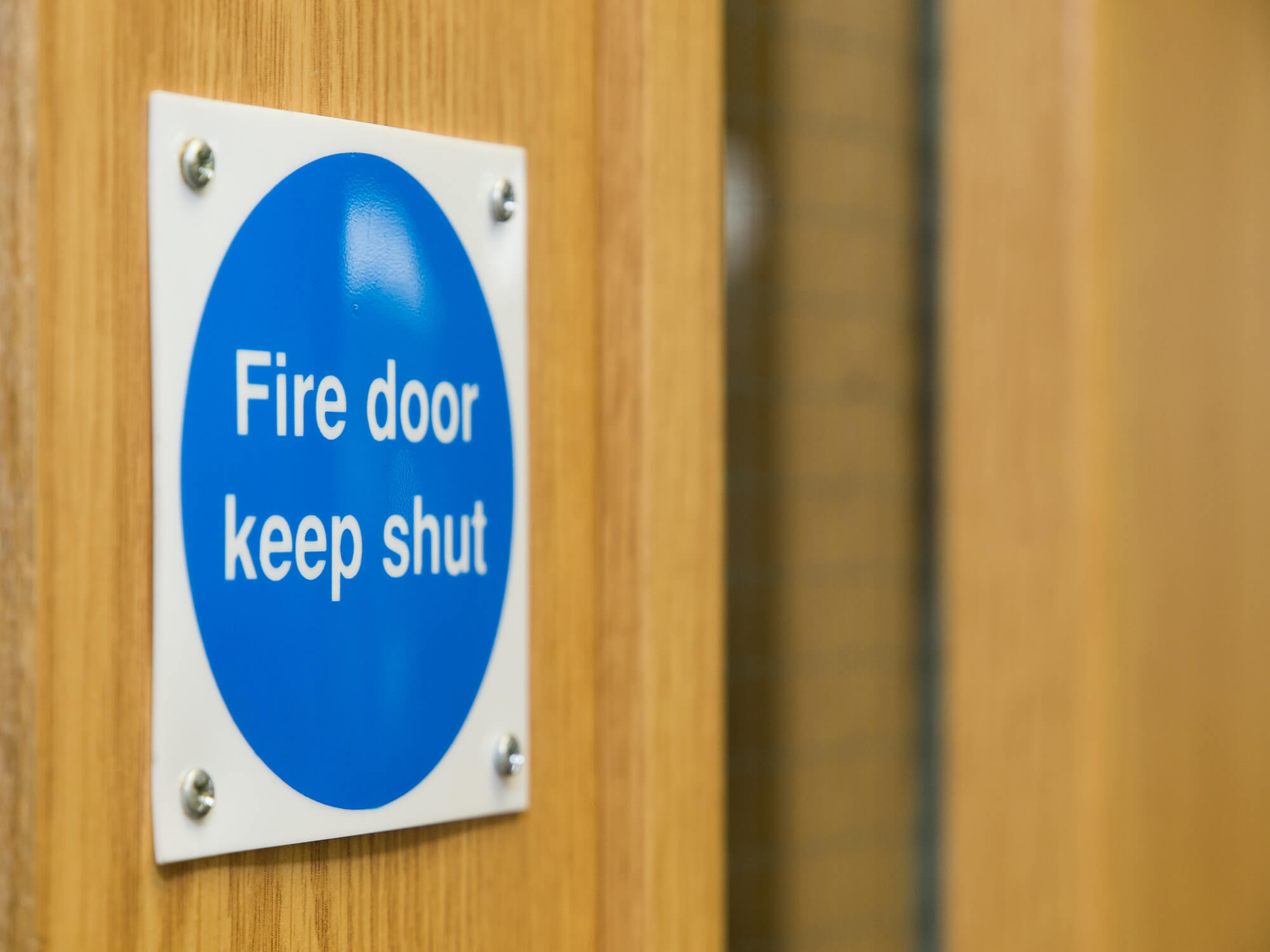
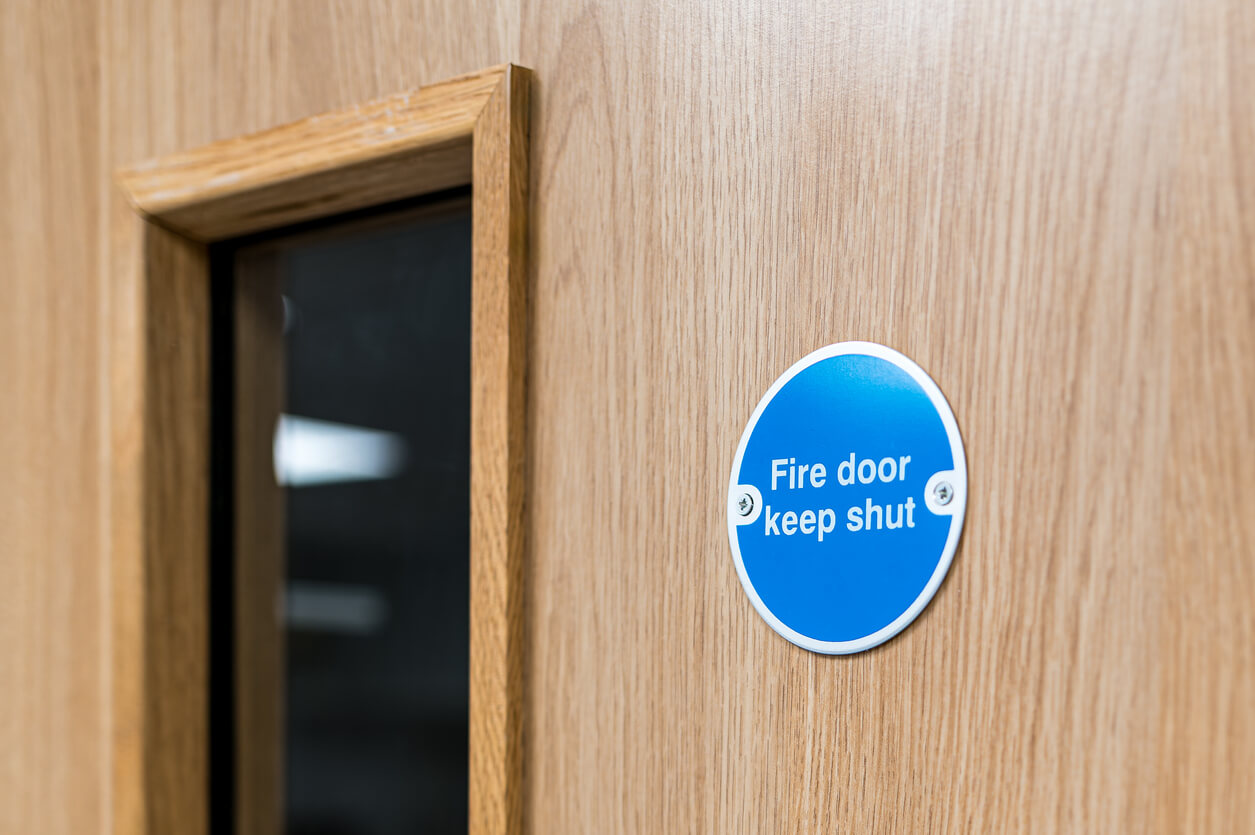
Clear signage and routine checks can significantly reduce non-compliance.
Why This Matters Commercially
Correct fire door management:
- Reduces enforcement risk
- Protects residents and staff
- Supports insurance compliance
- Demonstrates due diligence
- Protects asset value
For landlords, managing agents and organisations, wedged fire doors represent both a life safety risk and a legal liability.
Proactive management is far less costly than enforcement action.
Conclusion
Fire doors are life-saving systems — not optional barriers.
Wedging them open may seem harmless, but it undermines compartmentation, breaches legal duties and places occupants at serious risk.
If your premises contain fire doors that are routinely wedged open, this should be treated as an urgent fire safety management issue. A competent Fire Risk Assessment and fire door inspection can identify non-compliance and recommend proportionate, lawful solutions that protect both occupants and your legal position.
Fire doors only save lives when they are allowed to close.
Frequently Asked Questions
Is It Ever Legal To Wedge A Fire Door Open?
No. Wedging a fire door open defeats its fire-resisting function and breaches fire safety requirements. Only approved automatic hold-open devices linked to a fire alarm system are acceptable.
Why Must Fire Doors Be Kept Closed?
Fire doors are designed to stop fire and smoke spreading between compartments. If left open, they cannot contain smoke or flames and escape routes may become unsafe.
Can A Fire Risk Assessment Fail Because Of Wedged Doors?
Yes. Wedged fire doors are commonly recorded as significant findings during fire risk assessments and may require urgent corrective action.
What Is The Penalty For Wedging A Fire Door Open?
If identified by enforcing authorities, it can contribute to enforcement notices, prosecution and unlimited fines under UK fire safety legislation.
What Should I Do If Occupants Keep Wedging Doors Open?
Provide fire safety education, install compliant hold-open devices if justified by risk assessment, and include regular monitoring in your fire safety management procedures.