
Fire compartmentation is a fundamental principle of building fire safety design.
It refers to the practice of dividing a building into separate fire-resisting sections — known as compartments — to slow the spread of fire and smoke.
The purpose is simple: to protect escape routes, limit fire damage, and give occupants time to evacuate safely.
Without effective compartmentation, fire and smoke can spread rapidly through a building, putting lives at risk and significantly increasing property damage.
If you are a Responsible Person, landlord, managing agent, housing provider or facilities manager, understanding fire compartmentation is essential for legal compliance and life safety.
Quick Answer: What Is Fire Compartmentation?
Fire compartmentation is the subdivision of a building into fire-resisting compartments using walls, floors, doors and fire-stopping systems. These elements are designed to contain fire and smoke for a specified period (e.g. 30, 60 or 120 minutes), limiting fire spread and protecting escape routes.
Contents
- 1 Quick Answer: What Is Fire Compartmentation?
- 2 Fire Compartmentation as Passive Fire Protection
- 3 How Fire Compartmentation Works
- 4 Why Fire Compartmentation Is Critical
- 5 Where Fire Compartmentation Is Found in a Building
- 6 Fire Compartmentation in Blocks of Flats
- 7 Fire Compartmentation and Building Regulations
- 8 Legal Requirements in the UK
- 9 Common Fire Compartmentation Failures
- 10 When Is a Fire Compartmentation Survey Required?
- 11 Why Compartmentation Surveys Matter for Responsible Persons
- 12 Conclusion
- 13 Frequently Asked Questions
- 13.1 What is fire compartmentation in simple terms?
- 13.2 Is fire compartmentation a legal requirement in the UK?
- 13.3 What is the difference between fire-stopping and compartmentation?
- 13.4 What is the difference between active and passive fire protection?
- 13.5 What happens if fire compartmentation fails?
- 13.6 How often should fire compartmentation be inspected?
Fire Compartmentation as Passive Fire Protection
Fire compartmentation forms part of a building’s passive fire protection (PFP) system. Unlike active systems such as alarms and sprinklers, passive fire protection is built into the structure of the building and works automatically by resisting fire spread.
How Fire Compartmentation Works
Compartmentation works by creating physical barriers that resist the passage of fire and smoke.
These barriers include:
- Fire-resisting walls
- Fire-resisting floors and ceilings
- Fire doors
- Fire dampers in ductwork
- Fire-stopping around service penetrations
Each compartment is designed to contain a fire within a defined area for a specific duration. This:
- Prevents rapid horizontal spread
- Prevents vertical fire spread between floors
- Protects stairwells and escape routes
- Supports stay-put strategies in residential blocks
The level of fire resistance required depends on the building type, height and use.
Why Fire Compartmentation Is Critical
Effective compartmentation:
- Protects life by slowing fire development
- Reduces smoke migration
- Protects firefighters
- Limits structural damage
- Reduces business interruption
In many high-profile fires, uncontrolled spread has been linked to failures in compartmentation — particularly around service penetrations and cavity barriers.
When compartmentation fails, fire and smoke can bypass intended barriers, making escape routes unusable.
Where Fire Compartmentation Is Found in a Building
Compartmentation is built into multiple elements of a structure.
Compartment lines are typically shown on fire strategy drawings and define the boundaries of fire-resisting construction within the building.
Fire-Resisting Walls and Floors
Walls and floors are designed to achieve a specific fire resistance rating — commonly:
- 30 minutes (EI30)
- 60 minutes (EI60)
- 90 or 120 minutes in larger or higher-risk buildings
These structural elements form the primary compartment lines.
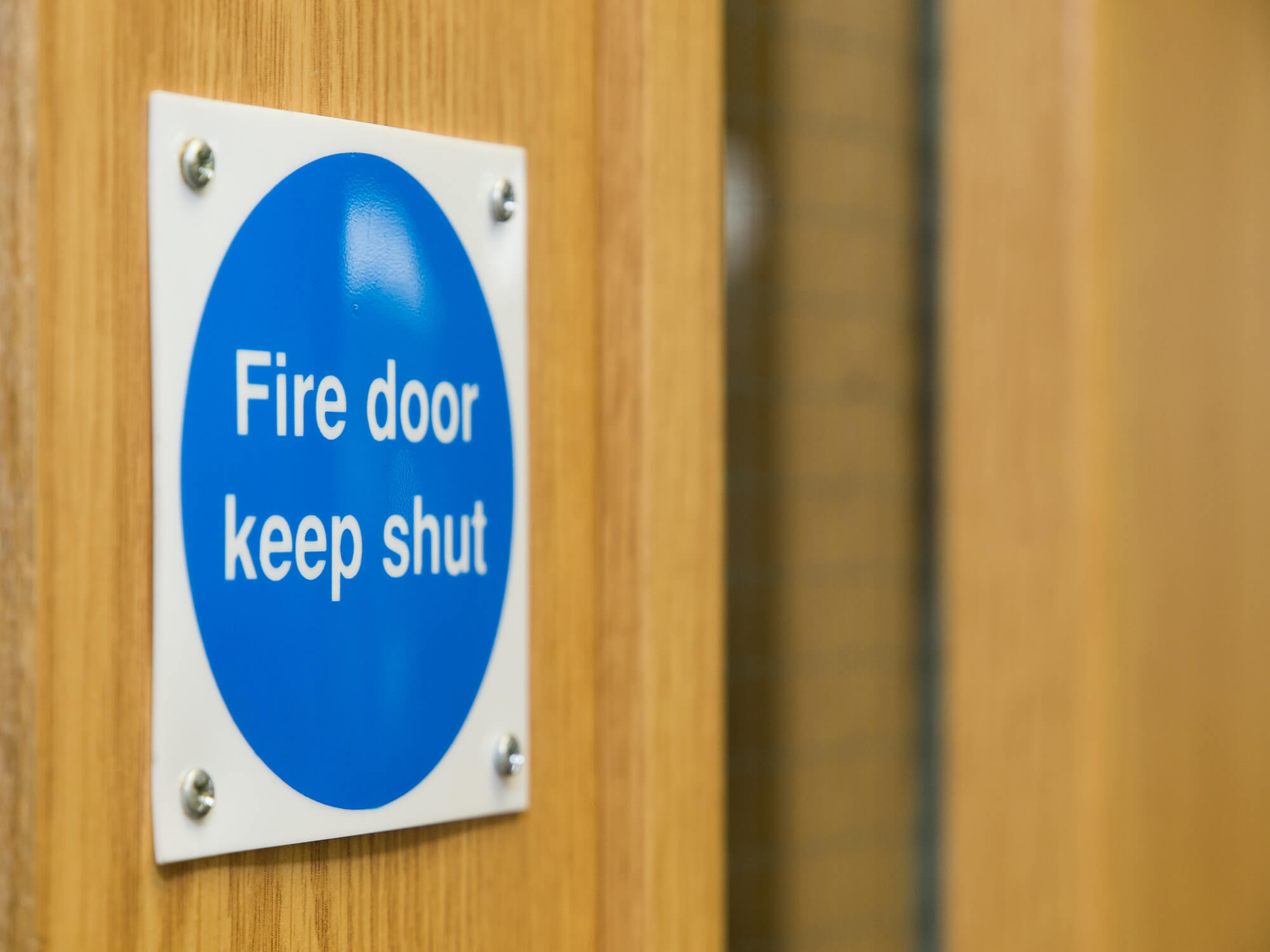
Fire Doors
Fire doors protect openings within compartment walls.
They must:
- Be correctly installed
- Include intumescent strips and smoke seals
- Be self-closing
- Be properly maintained
A missing or defective fire door can compromise an entire compartment.
(See also: Fire Door Inspections)
Service Penetrations and Fire-Stopping
One of the most common weaknesses in compartmentation is poor fire-stopping around:
- Electrical cables
- Pipework
- Ventilation ducts
- Data cabling
Any gap created during installation or maintenance must be properly sealed with tested fire-stopping systems.
Unsealed penetrations are a frequent finding during compartmentation surveys.
Fire Compartmentation in Blocks of Flats
In residential buildings — particularly purpose-built blocks of flats — compartmentation is critical.
It supports the stay-put strategy, where residents remain in their flats unless directly affected by fire.
Each flat is typically designed as a separate fire compartment, protected by:
- Fire-resisting walls and floors
- Fire-resisting flat entrance doors
- Protected stairwells
Failure of compartmentation in residential buildings can undermine the entire fire strategy.
Fire Compartmentation and Building Regulations
Fire compartmentation requirements are primarily set out in Approved Document B of the Building Regulations. This guidance specifies:
- Minimum fire resistance periods
- Compartment size limits
- Requirements for cavity barriers
- Protection of escape routes
Buildings must be designed and constructed to meet these standards, and compartmentation must be maintained throughout the life of the building.
Legal Requirements in the UK
Under the Regulatory Reform (Fire Safety) Order 2005, Responsible Persons must:
- Maintain fire precautions
- Ensure escape routes are protected
- Keep fire protection measures in efficient working order
Following the Fire Safety Act 2021, the scope of the Fire Safety Order now explicitly includes:
- External walls
- Flat entrance doors
The Fire Safety (England) Regulations 2022 introduced additional duties for high-rise residential buildings, including inspection requirements.
Compartmentation is therefore not optional — it is a legal duty.
Failure to maintain effective compartmentation can result in enforcement notices, prosecution and unlimited fines.
Common Fire Compartmentation Failures
During inspections and surveys, common defects include:
- Unsealed service penetrations
- Missing cavity barriers
- Poorly installed fire-stopping
- Damaged or non-compliant fire doors
- Structural alterations breaching compartment walls
- Ceiling voids allowing concealed spread
These issues are especially common in older buildings or those that have undergone multiple refurbishments.
Even small defects can significantly reduce fire resistance performance.

When Is a Fire Compartmentation Survey Required?
A fire compartmentation survey may be required when:
- A fire risk assessment identifies potential concerns
- Refurbishment or service upgrades have occurred
- A building has unclear or missing fire strategy documentation
- Enforcement action requires verification
- You manage a higher-risk residential building
- You need due diligence evidence for compliance
A professional survey typically includes:
- Visual inspection of compartment lines
- Inspection of service penetrations
- Review of fire doors
- Photographic evidence
- Detailed reporting
- Remedial action recommendations
Why Compartmentation Surveys Matter for Responsible Persons
If you manage:
- Blocks of flats
- HMOs
- Commercial premises
- Care homes
- Mixed-use buildings
You are responsible for ensuring that compartmentation remains intact.
Refurbishments, contractor works and tenant alterations frequently compromise fire protection without being properly reinstated.
A compartmentation survey provides defensible evidence that:
- Fire barriers are performing as intended
- Defects have been identified
- Remedial works can be prioritised
This supports compliance, risk management and resident safety.
Conclusion
Fire compartmentation is one of the most important — and often least visible — elements of building fire safety.
By dividing a building into fire-resisting compartments, it slows fire spread, protects escape routes and supports life safety strategies.
However, compartmentation can be compromised over time through poor installation, building works or inadequate maintenance.
If you are unsure whether your building’s fire barriers remain intact, a professional fire compartmentation survey provides clarity, compliance assurance and defensible evidence of due diligence.
Frequently Asked Questions
What is fire compartmentation in simple terms?
Fire compartmentation is the practice of dividing a building into fire-resisting sections to slow the spread of fire and smoke. It uses walls, floors, fire doors and fire-stopping systems to contain a fire within a defined area for a set period of time.
Is fire compartmentation a legal requirement in the UK?
Yes. Under the Regulatory Reform (Fire Safety) Order 2005, Responsible Persons must maintain fire protection measures, including compartmentation. The Fire Safety Act 2021 clarified that this duty includes flat entrance doors and external walls in multi-occupied residential buildings.
What is the difference between fire-stopping and compartmentation?
Fire compartmentation refers to the overall system of fire-resisting walls, floors and doors that divide a building. Fire-stopping specifically refers to sealing gaps around service penetrations, such as pipes and cables, to maintain the fire resistance of those compartments.
What is the difference between active and passive fire protection?
Active fire protection systems require some form of activation to operate, such as fire alarms, smoke detectors, sprinklers or suppression systems.
Passive fire protection is built into the structure of the building and works automatically without activation. It includes fire-resisting walls and floors, fire doors, cavity barriers and fire-stopping systems. Fire compartmentation forms part of a building’s passive fire protection strategy.
What happens if fire compartmentation fails?
If compartmentation is breached or defective, fire and smoke can spread rapidly through voids, penetrations or damaged barriers. This can compromise escape routes, undermine stay-put strategies and significantly increase life safety risks.
When is a fire compartmentation survey required?
A compartmentation survey may be required where:
- A fire risk assessment identifies concerns
- Refurbishment works have taken place
- Fire strategy documentation is missing
- You manage a higher-risk residential building
- Enforcement authorities require verification
Surveys provide documented evidence of compliance and identify remedial actions.
How often should fire compartmentation be inspected?
There is no fixed national inspection frequency. Inspections should be risk-based and may be required after significant building works or where defects are suspected. Higher-risk residential buildings may require more regular verification as part of fire safety management.