Fire doors are a vital part of a building’s passive fire protection system. They help contain fire and smoke, protect escape routes, and buy critical time for evacuation.
However, a fire door will only perform as intended if it is properly installed, regularly inspected, and correctly maintained.
So what exactly is checked during a fire door inspection?
This guide explains what competent inspectors look for, why these checks matter, and what building owners and Responsible Persons should understand about fire door compliance.
Contents
- 1 Why Fire Door Inspections Are Necessary
- 2 What Is Checked During a Fire Door Inspection?
- 2.1 1. Door Certification and Fire Rating
- 2.2 2. Door Leaf Condition
- 2.3 3. Door Frame and Alignment
- 2.4 4. Gaps Around the Door
- 2.5 5. Intumescent and Smoke Seals
- 2.6 6. Hinges
- 2.7 7. Door Closers
- 2.8 8. Latching and Locking Mechanisms
- 2.9 9. Glazing and Vision Panels
- 2.10 10. Signage and Ironmongery
- 2.11 11. Evidence of Misuse
- 3 What Happens After an Inspection?
- 4 Who Should Carry Out a Fire Door Inspection?
- 5 Summary: What Is Checked During a Fire Door Inspection?
- 6 Need Help with Fire Door Inspections?
- 7 Conclusion
- 8 Frequently Asked Questions
Why Fire Door Inspections Are Necessary
Under the Regulatory Reform (Fire Safety) Order 2005, the Responsible Person must ensure that fire doors are maintained in efficient working order.
In residential buildings in England over 11 metres in height, the Fire Safety (England) Regulations 2022 require:
- Communal fire doors to be inspected at least every 3 months
- Flat entrance doors to be inspected at least every 12 months
British Standard BS 8214 and associated industry guidance reinforce the need for routine inspection and maintenance of fire door assemblies.
Regular inspections identify wear, damage, alterations, and misuse that could prevent a fire door from performing correctly in an emergency.
What Is Checked During a Fire Door Inspection?
A fire door inspection checks every component of the door assembly to confirm it will perform correctly in the event of a fire. A competent fire door inspection typically includes the following checks:
1. Door Certification and Fire Rating
Inspectors confirm that:
- The door is a certified fire door (e.g. FD30, FD60)
- Certification labels or plugs are present and legible
- The door assembly matches the manufacturer’s specification
A fire door must be installed as tested. Missing certification or unauthorised alterations may invalidate its fire rating.
2. Door Leaf Condition
The door leaf is examined for:
- Cracks, splits, or holes
- Damage from impact or misuse
- Unapproved modifications (e.g. excessive trimming)
- Incorrect glazing installations
Even small defects can compromise fire resistance.
3. Door Frame and Alignment
Inspectors check that:
- The frame is securely fixed
- There are no gaps between frame and wall
- The door sits squarely within the frame
- No distortion or warping is present
If the frame fails, the door assembly fails.
4. Gaps Around the Door
Correct gap sizes are critical.
Typically, inspectors look for:
- Inspectors measure the gaps around the door to ensure they fall within acceptable tolerances.
- An appropriate threshold gap (often up to 8mm depending on specification)
Excessive gaps allow smoke and flames to pass through.
5. Intumescent and Smoke Seals
Seals are checked for:
- Continuity (no breaks or missing sections)
- Correct size and type
- Damage, paint contamination, or removal
- Proper fitting within grooves
Intumescent seals expand under heat to seal gaps. Smoke seals restrict cold smoke before high temperatures are reached.
6. Hinges
Fire-rated hinges are examined to ensure:
- A minimum of three hinges are fitted (unless otherwise specified)
- They are securely fixed
- No missing screws
- No excessive wear or damage
Incorrect or loose hinges can cause the door to drop and fail to close properly.
7. Door Closers
Inspectors confirm that:
- The door self-closes fully from any open position
- The closer is securely attached
- No fluid leaks are present
- The closing action is smooth and controlled
A fire door must reliably close on its own. A wedged or non-functioning closer defeats its purpose.
8. Latching and Locking Mechanisms
Checks include:
- The latch engages fully when the door closes
- No sticking or misalignment
- Hardware is fire-rated and correctly installed
If the door does not latch properly, it may not contain fire or smoke.
9. Glazing and Vision Panels
Where glazing is present, inspectors check:
- Fire-rated glass is installed
- Glazing beads are secure
- Intumescent glazing seals are intact
- No cracks in glass
Incorrect glazing installations are a common failure point.
10. Signage and Ironmongery
Inspectors look for:
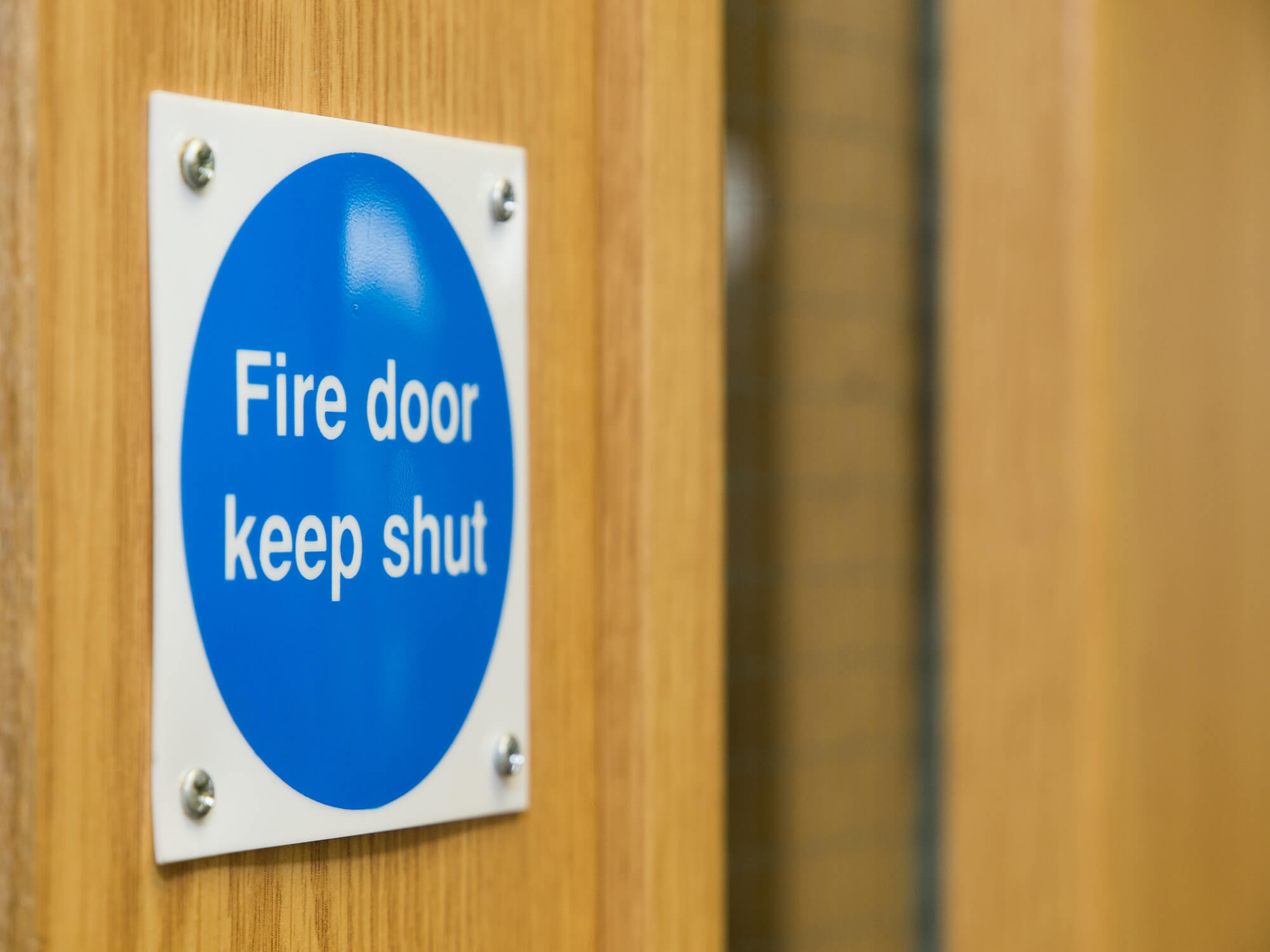
- Required “Fire Door Keep Shut” or “Fire Door Keep Locked” signage
- Fire-rated handles, push bars, or panic hardware
- No unauthorised hardware additions
Non-fire-rated ironmongery can compromise performance.
11. Evidence of Misuse
Common issues found include:
- Fire doors wedged open
- Door closers disconnected
- Missing seals
- Excessive decoration or overpainting
Inspections highlight behavioural and management issues as well as physical defects.
What Happens After an Inspection?
A professional fire door inspection should result in:
- A written report
- Clear identification of defects
- Risk-prioritised recommendations
- Remedial actions tracked to completion
Fire door inspections form part of a wider fire safety management strategy and should align with your fire risk assessment.
Who Should Carry Out a Fire Door Inspection?
Inspections must be conducted by someone competent — meaning they have:
- Appropriate training
- Knowledge of fire door standards
- Understanding of manufacturer certification requirements
Visual checks can be carried out more frequently by building managers, but formal inspections should be undertaken by qualified professionals.
Competency may include recognised fire door inspection training, third-party accreditation, or demonstrable experience in passive fire protection systems.
Summary: What Is Checked During a Fire Door Inspection?
A fire door inspection checks:
- Certification and rating
- Door leaf condition
- Frame integrity
- Gap measurements
- Seals (intumescent and smoke)
- Hinges and hardware
- Self-closing function
- Latching
- Glazing
- Signage
- Evidence of misuse
Each component forms part of a tested fire door assembly. If one element fails, the entire door’s fire resistance may be compromised.
Need Help with Fire Door Inspections?
If you are unsure whether your fire doors meet current legal and safety standards, a competent inspection can identify issues before they become enforcement problems.
Our fire safety consultants provide structured fire door inspections with clear reporting and practical remedial guidance to help Responsible Persons maintain compliance. We provide structured inspection reports with photographic evidence and clear remedial recommendations.
Conclusion
Fire doors are only effective if every component — from hinges and seals to closers and glazing — is correctly installed and properly maintained. A fire door inspection is not just a visual check; it is a structured assessment of the entire door assembly to ensure it will perform when needed.
Regular inspections help identify damage, wear, misuse, and non-compliant alterations before they compromise safety. For Responsible Persons, ensuring fire doors are inspected by a competent individual is a critical part of meeting legal duties under UK fire safety legislation.
If you are unsure whether your fire doors meet current standards, arranging a professional inspection provides clarity, documented evidence of compliance, and peace of mind.
Frequently Asked Questions
What is included in a fire door inspection?
A fire door inspection includes checks on certification, door leaf condition, frame integrity, gap sizes, intumescent and smoke seals, hinges, door closers, latching mechanisms, glazing, signage, and evidence of misuse or damage.
How long does a fire door inspection take?
The time required depends on the number of doors and building complexity. A single door inspection may take 10–20 minutes, while larger buildings require a structured survey process with detailed reporting.
Who can carry out a fire door inspection?
Fire door inspections should be carried out by a competent person with appropriate training and knowledge of fire door standards, manufacturer certification requirements, and current fire safety legislation.
What happens if a fire door fails inspection?
If defects are identified, they will be recorded in an inspection report with recommended remedial actions. Issues should be prioritised based on risk and corrected promptly to maintain compliance and safety.
Are fire door inspections a legal requirement?
Yes. Under the Regulatory Reform (Fire Safety) Order 2005, fire doors must be maintained in efficient working order. In certain residential buildings in England, the Fire Safety (England) Regulations 2022 specify inspection frequencies for communal and flat entrance doors.
How often should fire doors be inspected?
In most non-domestic buildings, fire doors should be inspected at least every six months. In residential buildings over 11 metres in England, communal doors must be inspected every three months and flat entrance doors at least every 12 months.