Most businesses and building owners in the UK want to know exactly what happens during a fire risk assessment visit — especially when an assessor comes on site. A fire risk assessment visit is a structured inspection of your premises that identifies fire hazards, evaluates people at risk, checks existing fire safety measures, and produces a clear action plan.
In simple terms, a fire risk assessment visit involves inspecting the building, reviewing fire safety systems, identifying hazards, and producing a written report with recommended actions.
Under the Regulatory Reform (Fire Safety) Order 2005, a Responsible Person must ensure a suitable and sufficient fire risk assessment is carried out. A visit to the premises is a key part of that process.
Contents
- 1 What Is a Fire Risk Assessment Visit?
- 2 Before the Visit — Preparation and Information Gathering
- 3 Fire Risk Assessment Visit — Step-by-Step Overview
- 4 During the Visit — What the Assessor Actually Does
- 5 After the Visit — Report Writing and Recommendations
- 6 How Long Does a Fire Risk Assessment Visit Take?
- 7 Do You Need to Prepare Anything for the Visit?
- 8 What the Assessor Does NOT Do
- 9 Conclusion
- 10 Frequently Asked Questions
What Is a Fire Risk Assessment Visit?
A fire risk assessment visit is when a competent fire risk assessor physically inspects your premises to:
- Identify fire hazards
- Assess who might be harmed
- Evaluate existing fire safety measures
- Recommend actions to reduce risk
This visit ensures the assessment meets UK legal requirements and provides an accurate picture of fire safety on site.
A visit is more than just “walking around” — it is a systematic process aligned to the recognised five steps of a fire risk assessment.
Before the Visit — Preparation and Information Gathering
A competent fire risk assessor will not simply arrive on site without preparation. Before the visit, they will usually request key information to ensure the assessment is thorough and proportionate.
The purpose of the visit is not to catch you out, but to identify any necessary improvements and ensure your building is legally compliant and safe for occupants.
Prior to attending, the assessor may:
- Request building plans or drawings
- Review any previous fire risk assessments or fire safety documentation
- Ask for details about occupancy levels and how the building is used
- Confirm access arrangements and key contacts on the day
This preparation helps focus the visit, reduces assumptions, and ensures that important areas are not overlooked.
Fire Risk Assessment Visit — Step-by-Step Overview
During a typical visit, an assessor will:
- Meet with the Responsible Person
- Inspect fire hazards and ignition sources
- Check escape routes and exits
- Review fire alarm and detection systems
- Examine emergency lighting and signage
- Inspect fire doors and compartmentation
- Review fire safety management procedures
- Prepare a written report with findings and actions
During the Visit — What the Assessor Actually Does
The core of a fire risk assessment visit is the on-site inspection. Assessors typically follow a structured process, including:
1. Opening Discussion with Responsible Person
At the start of the visit, the assessor will usually:
- Meet with the Responsible Person or nominee
- Confirm building use, occupancy patterns, shift changes
- Ask about known issues, complaints, or past incidents
This helps tailor the visit to the actual use of the building.
2. Inspection of Fire Hazards
The assessor will check for potential sources of ignition and fuel, such as:
- Electrical equipment and poor wiring
- Portable heaters and cooking equipment
- Faulty machinery or plant rooms
- Waste storage and combustible materials
Understanding ignition and fuel sources is the first step in evaluating overall fire risk.
3. Means of Escape and Evacuation Routes
A key focus area is how people will exit the building in a fire:
- Escape route widths and clearances
- Final exit locations
- Stairway protection
- Directional signage
- Travel distances
The assessor verifies that routes are unobstructed and adequate for the type and number of occupants.
4. Fire Detection, Alarm and Warning Systems
Depending on the building and risk profile, the assessor will check:
- Type of fire alarm system installed
- Location and spacing of detectors
- Test records and maintenance evidence
- Manual call points
- Audible/visual alarms
This ensures early warning systems are appropriate and functioning.
5. Emergency Lighting
Where required, emergency escape lighting is checked for:
- Adequate coverage of escape routes
- Test or maintenance records
- Obvious failures or faults
Adequate emergency lighting reduces confusion and risk during evacuation.
6. Passive Fire Protection
This includes features designed to contain fire and prevent spread, such as:
- Fire doors and their closing devices
- Compartmentation walls and ceilings
- Fire stopping around service penetrations
- Fire-resisting construction
Passive measures are essential to protect escape routes and limit fire growth.
7. Management Systems and Procedures
The assessor will review:
- Fire safety policies and procedures
- Training records and drill frequency
- Maintenance logs for fire equipment
- Previous incident records
This helps gauge how well fire safety is managed, not just what physical systems are present.
After the Visit — Report Writing and Recommendations
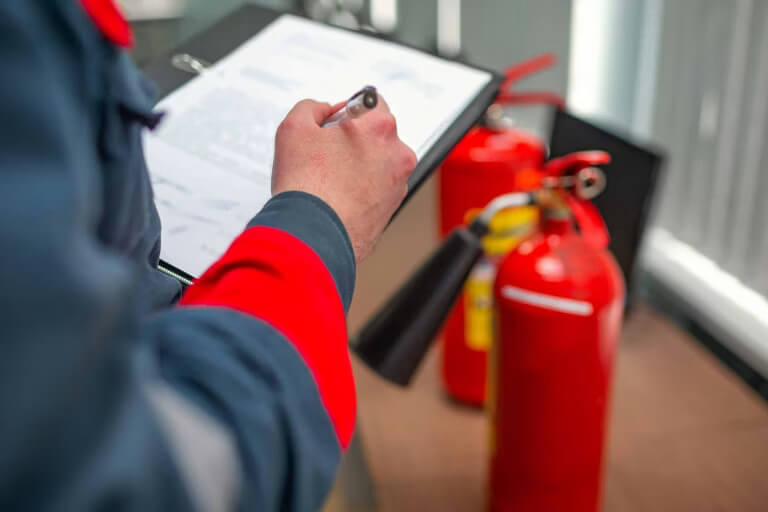
After the site visit, the assessor will:
- Prepare a detailed fire risk assessment report
- Record significant findings
- Assign priority levels to actions required
- Produce a clear action plan with responsible persons and timescales
- Recommend review intervals
The report should be easy to understand and actionable.
How Long Does a Fire Risk Assessment Visit Take?
The duration depends on:
- Size of the building
- Complexity of the layout
- Occupancy numbers
- Number of separate premises or floors
Typical times might be:
- Small office: 1–2 hours
- Medium retail or office: 2–4 hours
- Large or complex buildings: half to full day
These are estimates — your assessor will confirm timing before the visit.
Do You Need to Prepare Anything for the Visit?
Yes — being prepared makes the assessment more efficient:
- Provide plans or site drawings
- Gather fire safety records (alarms, drills, tests)
- Make a list of building occupancies
- Ensure access to plant rooms, basements, roof spaces
- Inform staff of the visit
Preparation reduces assumptions and improves the quality of the assessment.
What the Assessor Does NOT Do
It’s also useful to know what a fire risk assessor will not do during a visit:
- They do not service or repair fire alarms
- They don’t perform intrusive investigations unless agreed
- They don’t issue certificates for passive systems
- They don’t take responsibility for implementing actions
Their job is to assess risk and recommend improvements, not to carry out the work themselves.
Conclusion
A fire risk assessment visit is a structured, methodical process that goes well beyond a simple walk-around. It provides a legal foundation for managing fire safety and ensures you understand hazards, people at risk, and the control measures required to protect them.
At Fire Risk Assessment Network, our fire risk assessment visits are thorough, proportionate, and compliant with UK legislation. We use recognised methodologies and provide clear, actionable reports.
If you require a professional fire risk assessment visit or need your existing assessment reviewed, contact us today for a free quotation.
Frequently Asked Questions
How do I book a fire risk assessment visit?
You can contact a competent fire risk assessor directly — provide building details, occupancy, and access information to schedule a visit.
What does the assessor check for during the visit?
They check hazards, escape routes, fire alarms, emergency lighting, passive fire protection, and management systems.
Do I need to be present during the visit?
It’s helpful if the Responsible Person or a nominee is present, but not always essential if access is arranged and documentation provided.
Will I receive a certificate?
A fire risk assessment produces a written report outlining significant findings and required actions. It is not a pass-or-fail certificate. Certificates are typically issued for specific systems by other specialists.