A fire risk assessment is a fundamental legal requirement for most non-domestic premises in the UK. It is a structured, systematic review of a building and how it is used, designed to identify fire hazards, assess risks to people, and ensure appropriate fire safety measures are in place.
The process is structured and proportionate, and the level of detail required depends on the size, use, and risk profile of the premises.
Under UK fire safety law, fire risk assessments must be suitable and sufficient, kept under review, and acted upon. Failure to carry out an adequate assessment can result in enforcement action, prosecution, unlimited fines, and, in the most serious cases, imprisonment.
This guide explains what a fire risk assessment includes, how it is structured, and how recent legislation affects Responsible Persons.
Contents
- 1 What Does a Fire Risk Assessment Include?
- 2 What Is a Fire Risk Assessment?
- 3 Is a Fire Risk Assessment a Legal Requirement?
- 4 Who Is Responsible for a Fire Risk Assessment?
- 5 Does a Fire Risk Assessment Need to Be Carried Out by a Professional?
- 6 Our Fire Risk Assessment Services
- 7 Conclusion
- 8 Frequently Asked Questions
What Does a Fire Risk Assessment Include?
In practical terms, a fire risk assessment follows a recognised five-step process used across the UK to identify fire hazards, assess risks to people, and manage fire safety effectively. These steps form the basis of a suitable and sufficient fire risk assessment under UK fire safety law.
- Identify fire hazards: This includes sources of ignition, fuel, and oxygen that could contribute to a fire starting and spreading within the premises.
- Identify people at risk: Assess who may be affected by a fire, including employees, visitors, residents, and any vulnerable individuals who may need additional support to evacuate safely.
- Evaluate, remove, or reduce the risks: Review existing fire safety measures and determine whether risks can be eliminated or reduced to an acceptable level through physical controls, management arrangements, or both.
- Record findings and prepare an emergency plan: Document significant findings, remedial actions, and priorities, and ensure a clear emergency fire action plan is in place.
- Review and update the assessment regularly: Keep the fire risk assessment under review so it remains valid, reflecting changes to the building, its use, or fire safety arrangements.
While the level of detail required will vary depending on the size, use, and risk profile of the premises, this five-step structure underpins all compliant fire risk assessments in the UK.
1. Identifying Fire Hazards
The assessment begins by identifying potential fire hazards within the premises, including:
Sources of Ignition
- Electrical equipment and installations
- Heating systems
- Hot works and machinery
- Cooking equipment
- Smoking materials
Sources of Fuel
- Combustible materials
- Furniture and furnishings
- Waste storage
- Flammable liquids or gases
Sources of Oxygen
- Natural air flow
- Mechanical ventilation
- Oxygen cylinders (where present)
Understanding how these elements interact helps assess how a fire could start and develop.
2. Identifying People at Risk
The assessment identifies who may be at risk in the event of a fire, including:
- Employees and staff
- Visitors and members of the public
- Contractors
- Residents (in residential buildings)
Particular attention is given to vulnerable people, such as:
- Individuals with mobility impairments
- People with sensory impairments
- Children or elderly occupants
- Those unfamiliar with the building
This stage ensures that fire safety measures account for real-world use of the premises.
3. Evaluating, Removing, or Reducing the Risks
During a fire risk assessment, the assessor will typically examine whether existing fire safety measures are adequate, appropriate, and maintained.
A fire risk assessment typically reviews:
- Means of escape and escape route protection
- Fire detection and alarm systems
- Emergency lighting
- Fire doors and compartmentation
- Fire-fighting equipment
- Housekeeping and storage arrangements
- Fire safety signage
- Staff training and procedures
Risks should be eliminated where possible or reduced to an acceptable level through physical measures, management controls, or both.
4. Recording Findings and Preparing an Emergency Plan
Where required, the significant findings of the fire risk assessment must be recorded in writing.
A suitable and sufficient assessment will include:
- Identified hazards and risks
- Existing control measures
- Recommended remedial actions
- Priority levels and timescales
An emergency fire action plan should also be in place, setting out:
- What to do in the event of a fire
- Evacuation procedures
- Roles and responsibilities
- Arrangements for vulnerable occupants
Clear documentation supports compliance and demonstrates due diligence to enforcing authorities.
5. Reviewing and Updating the Fire Risk Assessment
Fire risk assessments are not a one-off exercise. They must be reviewed regularly and kept up to date.
A review is required:
- Periodically (commonly annually)
- Following significant changes to the building or its use
- After a fire or near-miss
- When there is reason to believe the assessment is no longer valid
Ongoing review ensures that fire safety arrangements remain effective as buildings and risks change.
What Is a Fire Risk Assessment?
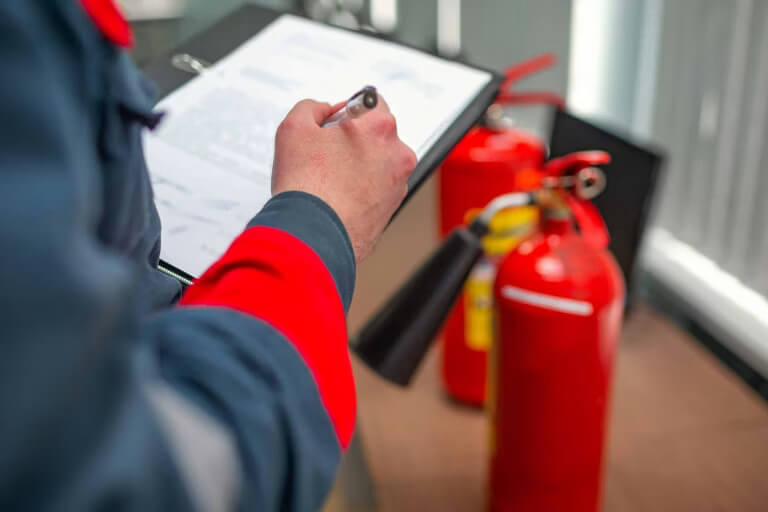
A fire risk assessment is a careful examination of a building to identify fire hazards, evaluate the risks to people, and determine whether existing fire safety measures are adequate.
It is not simply a checklist exercise. A suitable and sufficient fire risk assessment considers:
- How the premises are used
- Who may be at risk
- How a fire could start and spread
- Whether people can escape safely
- How fire safety is managed on an ongoing basis
Fire risk assessments form the foundation of effective fire safety management and are a legal requirement under UK legislation.
Is a Fire Risk Assessment a Legal Requirement?
Yes. Fire risk assessments are required under the Regulatory Reform (Fire Safety) Order 2005, which applies to most non-domestic premises, including:
- Workplaces
- Commercial buildings
- Communal areas of residential buildings
- HMOs and managed residential blocks
The Fire Safety Act 2021 clarified that the Fire Safety Order applies to the building structure, external walls, and flat entrance doors in buildings containing two or more domestic dwellings.
The Fire Safety (England) Regulations 2022 introduced additional duties for Responsible Persons in certain residential buildings, including requirements relating to fire doors, information sharing, and record keeping.
Together, these laws reinforce the importance of carrying out competent, up-to-date fire risk assessments and acting on their findings.
Who Is Responsible for a Fire Risk Assessment?
The Responsible Person is legally responsible for ensuring a suitable and sufficient fire risk assessment is carried out and maintained.
Depending on the premises, this may be:
- An employer
- A building owner or landlord
- A managing agent
- A facilities manager
Even where assessments are carried out by contractors or consultants, legal responsibility always remains with the Responsible Person.
Does a Fire Risk Assessment Need to Be Carried Out by a Professional?
The law allows fire risk assessments to be carried out by a competent person. However, competence requires sufficient:
- Knowledge
- Training
- Experience
- Understanding of fire safety legislation and building risk
For simple, low-risk premises, an in-house assessment may be appropriate. For larger, higher-risk, or complex buildings, using a competent professional fire risk assessor is strongly recommended and often expected by enforcing authorities.
Our Fire Risk Assessment Services
At Fire Risk Assessment Network, we provide professional, legally compliant fire risk assessments across a wide range of premises.
Our assessments:
- Reflect current UK fire safety legislation
- Are tailored to the building and its use
- Identify practical, proportionate solutions
- Provide clear, prioritised action plans
- Support ongoing compliance and fire safety management
We work with commercial, public sector, and residential clients to deliver assessments that are robust, defensible, and practical.
Conclusion
A fire risk assessment includes far more than a basic checklist. It is a structured, legally required process that identifies hazards, evaluates risks, protects people, and ensures buildings remain safe and compliant.
With recent changes to fire safety legislation, it is more important than ever that fire risk assessments are suitable and sufficient, kept up to date, and acted upon.
If you require a professional fire risk assessment or advice on your legal duties, contact Fire Risk Assessment Network today.
Frequently Asked Questions
Is a fire risk assessment a legal requirement in the UK?
Yes. Fire risk assessments are a legal requirement under the Regulatory Reform (Fire Safety) Order 2005. They apply to most non-domestic premises, including workplaces, commercial buildings, and the communal areas of residential buildings. Recent legislation has reinforced these duties and clarified the scope of what must be assessed.
What are the five steps of a fire risk assessment?
A fire risk assessment follows a recognised five-step process:
- Identify fire hazards
- Identify people at risk
- Evaluate, remove, or reduce risks
- Record significant findings and prepare an emergency plan
- Review and update the assessment regularly
This structured approach helps ensure risks are identified, controlled, and managed effectively.
How often should a fire risk assessment be reviewed?
Fire risk assessments should be reviewed regularly and whenever there is reason to believe they are no longer valid. A review is typically expected annually, or sooner if there are significant changes to the building, its use, occupancy, layout, or fire safety measures, or following a fire or near-miss.
Who is responsible for carrying out a fire risk assessment?
The Responsible Person is legally responsible for ensuring a suitable and sufficient fire risk assessment is carried out and kept up to date. This may be an employer, building owner, landlord, managing agent, or other person with control over the premises. Responsibility remains with the Responsible Person even if the assessment is carried out by a third party.
Does a fire risk assessment have to be done by a professional?
The law requires fire risk assessments to be carried out by a competent person. For simple, low-risk premises, this may be done in-house. However, for larger, higher-risk, or more complex buildings, using a competent professional fire risk assessor is strongly recommended and often expected by enforcing authorities.