For Responsible Persons overseeing multi-occupied residential buildings — including housing associations, managing agents, freeholders, supported housing providers and local authorities — evacuation compliance is becoming an increasingly critical area of focus.
From 6 April 2026, the Fire Safety (Residential Evacuation Plans) (England) Regulations 2025 introduce new legal duties designed to improve the safety of residents who may struggle to self-evacuate. These duties sit alongside existing Fire Risk Assessment obligations and, for higher-risk buildings, link directly into wider building safety governance and evidence expectations.
A core element of this change is the requirement to offer and, where accepted, carry out a Person-Centred Fire Risk Assessment (PCFRA) as part of the Residential PEEPs process.
At Fire Risk Assessment Network, we support duty holders by delivering structured, regulator-ready Fire Risk Assessments and evacuation compliance frameworks for residential and higher-risk buildings. Our approach integrates PCFRA processes into broader fire risk management systems, helping organisations demonstrate structured, defensible compliance.
Contents
- 1 What Is a Person-Centred Fire Risk Assessment?
- 2 Who Do the Residential PEEPs Duties Apply To?
- 3 Does This Apply to My Building?
- 4 PCFRA vs Residential PEEP: What’s the Difference?
- 5 What a PCFRA Should Cover in Practice
- 6 How PCFRAs Link to the Main Fire Risk Assessment
- 7 What to Document to Keep the Process Defensible
- 8 Common Mistakes That Increase Compliance Risk
- 9 Important Boundaries
- 10 How Fire Risk Assessment Network Can Support You
- 11 Conclusion
- 12 Frequently Asked Questions
What Is a Person-Centred Fire Risk Assessment?
A Person-Centred Fire Risk Assessment (PCFRA) is a resident-focused assessment that considers an individual’s ability to evacuate safely in the event of a fire, taking account of the building’s evacuation strategy and the resident’s specific circumstances.
A PCFRA is not a replacement for the building Fire Risk Assessment. It forms part of the Residential PEEPs process and is intended to identify whether additional measures are required to support a particular resident during an emergency.
The Legal Driver: Residential PEEPs Duties From 6 April 2026
The Fire Safety (Residential Evacuation Plans) (England) Regulations 2025 come into force on 6 April 2026.
These regulations require Responsible Persons in qualifying residential buildings to:
- Identify relevant residents who may require evacuation assistance
- Offer a Person-Centred Fire Risk Assessment (PCFRA)
- Prepare an emergency evacuation statement where appropriate
- Keep the process and associated documentation under review
A “relevant resident” generally refers to an individual who may have difficulty evacuating independently in the event of a fire due to mobility, sensory, cognitive or other functional limitations. Identifying relevant residents is a foundational step in the Residential PEEPs process and must be approached in a structured and proportionate way.
The legislation does not replace the building Fire Risk Assessment. Instead, it requires evacuation capability to be considered and documented at an individual level where appropriate.
These duties sit alongside the existing requirements of the Regulatory Reform (Fire Safety) Order 2005, which requires Responsible Persons to carry out a suitable and sufficient Fire Risk Assessment and to implement general fire precautions to ensure the safety of relevant persons.
The Residential PEEPs duties reinforce those obligations by requiring Responsible Persons to demonstrate that they have taken reasonable and proportionate steps to identify and address evacuation risks as part of their wider fire safety management responsibilities.
Further guidance on Residential PEEPs duties is available from GOV.UK.
Who Do the Residential PEEPs Duties Apply To?
The Residential PEEPs duties apply to Responsible Persons for certain residential buildings within the scope of the Fire Safety (Residential Evacuation Plans) (England) Regulations 2025.
In broad terms, the regulations apply to multi-occupied residential buildings where the Fire Safety Order already imposes duties on a Responsible Person in relation to the common parts of the premises.
This typically includes:
- Blocks of flats
- Residential buildings with shared escape routes
- Higher-risk residential buildings
- Supported housing where the Fire Safety Order applies to common areas
The duties relate to the common parts of the building and the management of fire safety within those areas. They do not extend to the internal layout or management of individual private dwellings beyond what is necessary to assess evacuation capability in the context of the building’s fire safety arrangements.
Where a building falls within scope, the Responsible Person must take reasonable and proportionate steps to identify relevant residents who may need assistance to evacuate and to implement a structured Residential PEEPs process accordingly.
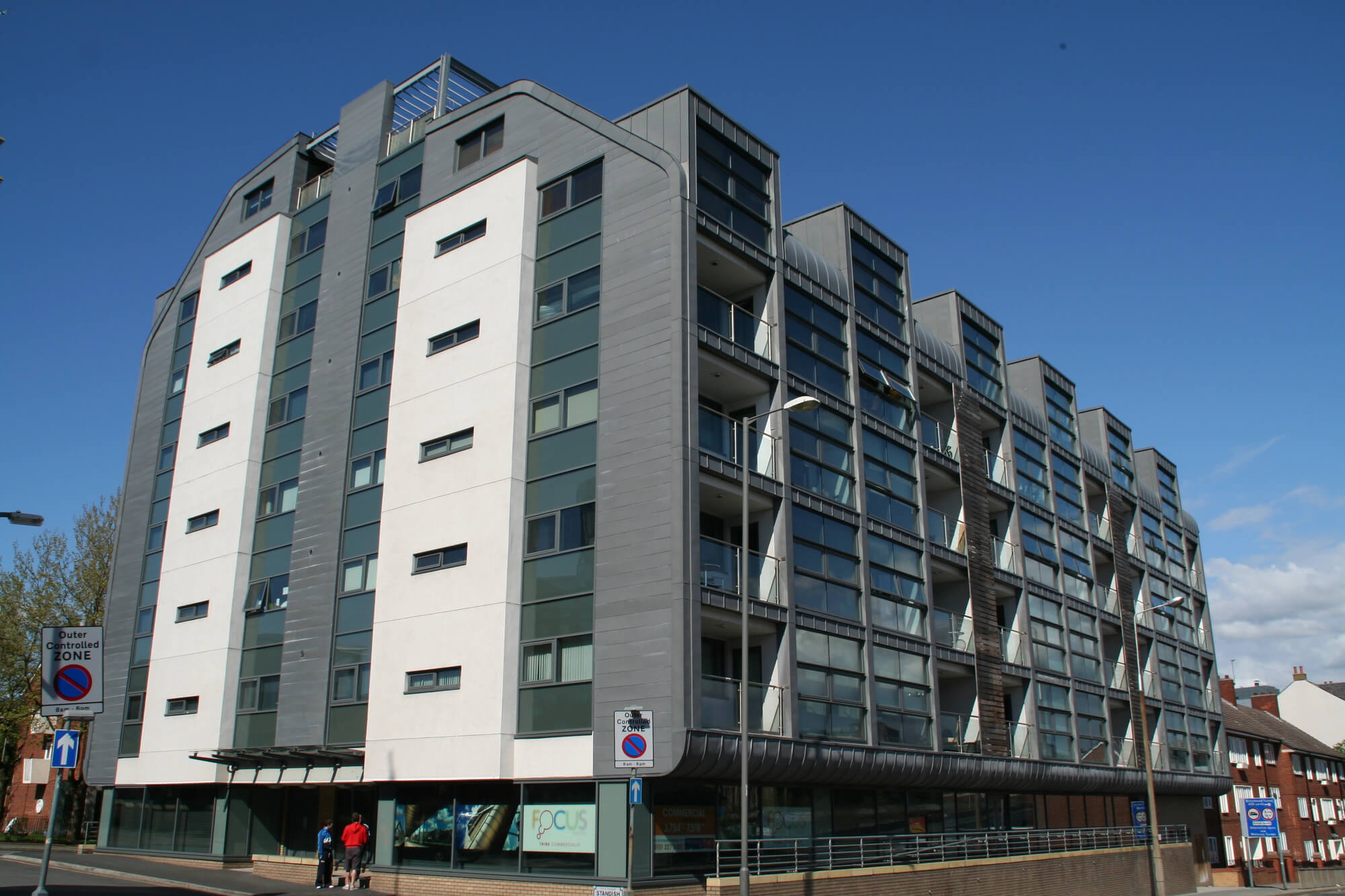
Does This Apply to My Building?
If you are unsure whether the Residential PEEPs duties apply to your building, consider the following:
Is your building a multi-occupied residential building?
The regulations apply to buildings containing two or more residential units where there are shared common parts (such as corridors, staircases or entrance halls).
Does the Fire Safety Order already apply to the common parts?
If you are required to carry out a Fire Risk Assessment for the common areas under the Regulatory Reform (Fire Safety) Order 2005, the building may fall within scope.
Is there a Responsible Person with duties for fire safety?
If you act as landlord, managing agent, freeholder or otherwise have control over the common parts and fire safety arrangements, you are likely to be the Responsible Person for the purposes of the regulations.
Are there residents who may struggle to self-evacuate?
Where residents may have mobility, sensory or cognitive limitations that could affect evacuation, a structured Residential PEEPs process will need to be considered.
If your building meets these criteria, you should review your current fire safety management arrangements and ensure that a structured, documented PCFRA and Residential PEEPs framework is in place.
If you are uncertain whether your building falls within scope, or how to implement a proportionate process, we can provide guidance tailored to your building type and management structure.
PCFRA vs Residential PEEP: What’s the Difference?
The terminology can cause confusion.
- A PCFRA is the assessment process used to understand evacuation capability.
- A Residential PEEP (or emergency evacuation statement) is the written outcome setting out what arrangements apply for that resident, where required.
In simple terms:
The PCFRA identifies the risk and required measures.
The Residential PEEP documents the agreed arrangements.
What a PCFRA Should Cover in Practice
A structured PCFRA process should include:
Resident Engagement and Consent
Residents must be offered a PCFRA, and participation should be documented appropriately.
Assessment of Evacuation Capability
Consideration of mobility, sensory impairment, cognitive factors, communication barriers and response capability.
Building Context and Strategy
Assessment of how the resident’s circumstances interact with the building’s evacuation strategy (e.g. stay put or simultaneous evacuation).
Identification of Mitigating Measures
Where required, identification of reasonable and proportionate measures and preparation of a written emergency evacuation statement.
Review and Ongoing Management
Clear review triggers and structured documentation to ensure arrangements remain appropriate.
How PCFRAs Link to the Main Fire Risk Assessment
The building Fire Risk Assessment identifies hazards and evaluates building-level control measures such as:
- Detection and warning systems
- Compartmentation
- Escape routes
- Fire doors
- Management and maintenance arrangements
A PCFRA evaluates how an individual resident interacts with those controls.
When implemented properly, PCFRA findings should feed into wider fire risk management by:
- Highlighting assumptions about evacuation strategy
- Identifying vulnerabilities that affect life safety risk
- Informing governance and review processes
This integration is particularly important where duty holders must demonstrate robust fire risk management and documented “reasonable steps”.

What to Document to Keep the Process Defensible
From a governance perspective, documentation is critical.
A defensible PCFRA and Residential PEEP framework should include:
- Records of how relevant residents are identified
- Evidence that a PCFRA was offered and accepted or declined
- Structured assessment records
- Written emergency evacuation statements where applicable
- Details of mitigating measures and maintenance responsibilities
- Review dates and triggers
- Appropriate handling of personal and sensitive data
Documentation should be capable of standing up to inspection or regulatory review and clearly demonstrate how evacuation risks have been identified, assessed and managed.
If the process cannot be evidenced, it becomes difficult to demonstrate compliance.
Common Mistakes That Increase Compliance Risk
In practice, issues often arise where organisations:
- Conduct informal discussions without structured documentation
- Assume stay put arrangements are universally appropriate
- Fail to record refusals or engagement attempts
- Confuse PCFRAs with Residential PEEPs
- Do not implement review mechanisms
- Fail to integrate evacuation findings into wider fire risk management
Addressing these weaknesses reduces regulatory risk and improves resident safety outcomes.
Failure to implement and evidence an appropriate Residential PEEPs process may expose duty holders to enforcement action under fire safety legislation. As with wider Fire Risk Assessment duties, the ability to demonstrate a structured and documented approach is central to regulatory scrutiny.
Important Boundaries
A Person-Centred Fire Risk Assessment is not a medical or clinical assessment.
It evaluates evacuation capability in the context of building fire safety arrangements and documents reasonable and proportionate measures within the Responsible Person’s duties.
How Fire Risk Assessment Network Can Support You
We support residential duty holders by providing:
- Structured Fire Risk Assessments for residential and higher-risk buildings
- Integrated PCFRA and evacuation compliance frameworks
- Clear, regulator-ready documentation
- Governance-aligned review processes
- Portfolio-level consistency across multiple sites
If you require assistance implementing a structured evacuation compliance process from April 2026, or integrating PCFRA processes into your wider fire risk management system, we can help.
Conclusion
Person-Centred Fire Risk Assessments are now a practical component of residential fire safety management, not simply an optional enhancement to existing processes.
Where Residential PEEPs duties apply, Responsible Persons must demonstrate that evacuation capability has been assessed in a structured, proportionate and evidence-based manner. A PCFRA provides the documented framework for doing this properly.
When integrated with the building Fire Risk Assessment and wider governance systems, PCFRAs help demonstrate that building safety risks are being identified, assessed and managed effectively — particularly for residents who may face barriers to self-evacuation.
By implementing a clear and defensible PCFRA process, duty holders can strengthen compliance, reduce enforcement risk, and improve safety outcomes for residents.
If you need support establishing or reviewing a structured evacuation compliance framework, Fire Risk Assessment Network can assist.
Frequently Asked Questions
Should PCFRAs be carried out by a competent fire risk assessor?
While the regulations focus on the Responsible Person’s duties, best practice is to ensure that PCFRAs are carried out or overseen by a competent individual with knowledge of fire risk assessment principles and evacuation strategy.
This helps ensure that decisions are proportionate, evidence-based and aligned with the building’s wider fire safety arrangements.
How should sensitive resident information be handled during a PCFRA?
PCFRAs may involve personal or sensitive information. Responsible Persons should:
- Obtain consent where required
- Limit information to what is necessary
- Store records securely
- Ensure data protection principles are followed
Documentation should be proportionate and focused on evacuation capability rather than medical diagnosis.
How often should a Person-Centred Fire Risk Assessment be reviewed?
PCFRAs should be reviewed:
- When the resident’s circumstances change
- After significant building works
- Following fire incidents
- When evacuation strategy changes
- As part of periodic compliance review
Regular review helps ensure arrangements remain effective and defensible.
How do PCFRAs link to the building Fire Risk Assessment?
The building Fire Risk Assessment evaluates building-level hazards and controls.
A PCFRA assesses how an individual resident interacts with those controls.
Where PCFRAs identify additional risks or limitations, those findings should inform ongoing review of the building’s fire risk management arrangements.