Fire doors play a critical role in slowing the spread of fire and smoke, protecting escape routes, and giving occupants time to evacuate safely. However, fire doors are only effective if they are regularly inspected and properly maintained.
So how often should fire doors be inspected, and what does the law actually require?
This guide explains fire door inspection frequencies, who is responsible, and how inspection requirements differ depending on the type of building.
Contents
- 1 What Does UK Fire Safety Law Say About Fire Door Inspections?
- 2 Fire Door Inspection Frequency (At a Glance)
- 3 Why Regular Fire Door Inspections Are Essential
- 4 What Is Checked During a Fire Door Inspection?
- 5 Who Is Responsible for Fire Door Inspections?
- 6 Relevant Standards and Guidance
- 7 What Happens If Fire Doors Are Not Inspected?
- 8 How Often Should Fire Doors Be Inspected? (Summary)
- 9 Need Help with Fire Door Inspections?
- 10 Conclusion
- 11 Frequently Asked Questions
- 11.1 How often should fire doors be inspected?
- 11.2 What does the Fire Safety (England) Regulations 2022 require?
- 11.3 Who is responsible for fire door inspections?
- 11.4 What is checked during a fire door inspection?
- 11.5 Do fire door inspections need to be recorded?
- 11.6 What happens if fire doors are not inspected?
What Does UK Fire Safety Law Say About Fire Door Inspections?
Under the Regulatory Reform (Fire Safety) Order 2005, the Responsible Person must ensure that fire doors are:
- Suitable for their purpose
- Maintained in efficient working order
- Kept under review as part of ongoing fire safety management
While the Fire Safety Order itself does not specify inspection intervals, government guidance and supporting regulations do.
Since the introduction of the Fire Safety (England) Regulations 2022, Responsible Persons have specific legal duties to regularly inspect fire doors in certain residential buildings.
Fire Door Inspection Frequency (At a Glance)
Non-Domestic Buildings
- Every 6 months (minimum recommended interval)
High-Traffic Areas
- Every 3 months (or more frequently if damage is likely)
Residential Buildings (England)
Under the Fire Safety (England) Regulations 2022:
- Communal fire doors: inspected every 3 months
- Flat entrance doors: inspected at least every 12 months
These checks apply to residential buildings over 11 metres in height.
Why Regular Fire Door Inspections Are Essential
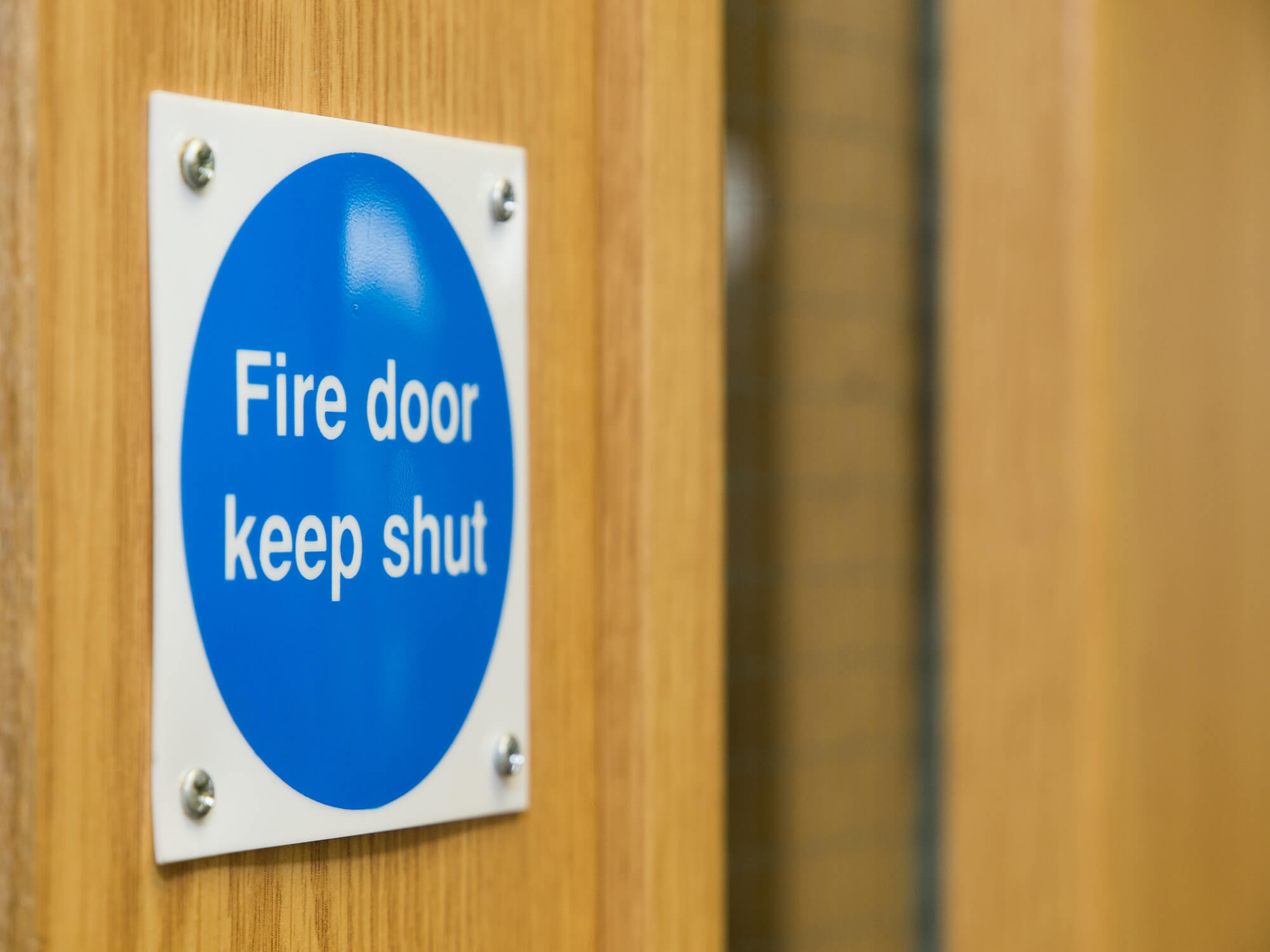
Fire doors are a key component of a building’s passive fire protection system and are installed to support compartmentation and means of escape, in line with the guidance set out in Approved Document B.
Fire doors are subject to constant use, wear, and damage. Even minor defects can significantly reduce performance.
Common issues found during inspections include:
- Door closers not fully closing the door
- Damaged or missing intumescent seals
- Excessive gaps around the door leaf
- Fire doors wedged or held open
- Non-fire-rated ironmongery
Regular inspections help ensure these issues are identified before they compromise safety.
What Is Checked During a Fire Door Inspection?
A competent fire door inspection typically includes checks on:
- Door leaf condition (damage, warping, unapproved alterations)
- Door frame integrity
- Gaps around the door (top, sides, and threshold)
- Intumescent and smoke seals
- Hinges, closers, and latching mechanisms
- Signage and certification markings
- Evidence of tampering or misuse
All findings should be recorded, with remedial actions tracked to completion.
Who Is Responsible for Fire Door Inspections?
The Responsible Person (as defined by fire safety legislation) is legally responsible for ensuring inspections take place.
This may be:
- A building owner
- A managing agent
- A facilities or estates manager
- A landlord or duty holder
Inspections must be carried out by someone competent, with appropriate knowledge of fire door standards and construction.
Fire door inspections should be planned and reviewed as part of a suitable and sufficient fire risk assessment.
Relevant Standards and Guidance
Fire door inspections are commonly aligned with:
These standards reinforce the need for routine inspection and maintenance, particularly in complex or high-risk buildings.
What Happens If Fire Doors Are Not Inspected?
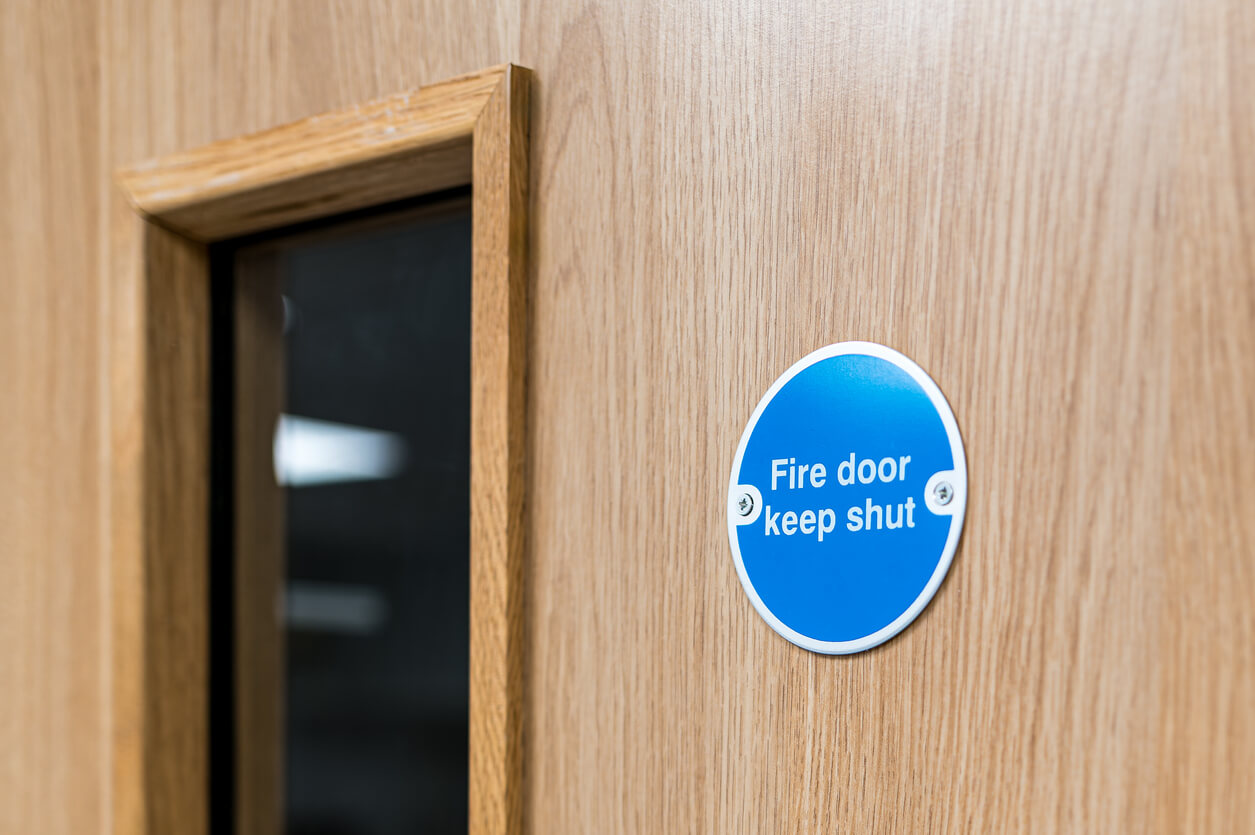
Failure to inspect and maintain fire doors can lead to:
- Enforcement action by Fire and Rescue Authorities
- Prosecution under fire safety legislation
- Invalidated insurance cover
- Increased risk to life in the event of fire
Fire door defects are among the most common enforcement findings during fire safety audits.
Regular inspection and timely fire door maintenance are essential to prevent defects leading to enforcement action.
How Often Should Fire Doors Be Inspected? (Summary)
- Every 6 months – general recommendation
- Every 3 months – communal doors in residential buildings
- Every 12 months – flat entrance doors (where required)
- More frequently – high-use or higher-risk environments
Inspection frequency should always reflect risk, usage, and building type.
Need Help with Fire Door Inspections?
If you are unsure how often your fire doors should be inspected — or whether your current checks are compliant — a competent inspection can provide clarity and peace of mind.
Regular fire door inspections form a vital part of effective fire safety management and legal compliance.
Our fire safety consultants regularly assess fire doors across a wide range of building types, supporting responsible persons with compliant inspection regimes and clear reporting.
Conclusion
Fire doors must be inspected at regular intervals to remain effective and legally compliant. In most non-domestic buildings, inspections should take place at least every six months, with more frequent checks required in high-traffic areas and residential buildings covered by the Fire Safety (England) Regulations 2022.
Inspection frequency should always be based on risk, usage, and building type. Regular checks help identify damage, misuse, or wear that could compromise a fire door’s performance in an emergency.
Ensuring inspections are carried out by a competent person — and that defects are recorded and remedied — is a critical part of effective fire safety management.
Frequently Asked Questions
How often should fire doors be inspected?
Fire doors should typically be inspected every six months in non-domestic buildings. In higher-risk or high-traffic areas, inspections may be required every three months. Residential buildings covered by the Fire Safety (England) Regulations 2022 have specific inspection intervals.
What does the Fire Safety (England) Regulations 2022 require?
The Fire Safety (England) Regulations 2022 require Responsible Persons to inspect communal fire doors at least every three months and flat entrance doors at least every 12 months in residential buildings over 11 metres in height.
Who is responsible for fire door inspections?
The Responsible Person is legally responsible for ensuring fire doors are inspected and maintained. This may be a building owner, landlord, managing agent, or facilities manager.
What is checked during a fire door inspection?
A fire door inspection typically checks the door leaf, frame, gaps, intumescent and smoke seals, hinges, closers, latches, signage, and evidence of damage or tampering.
Do fire door inspections need to be recorded?
Yes. Inspection findings should be documented, with any defects recorded and remedial actions tracked to completion as part of ongoing fire safety management.
What happens if fire doors are not inspected?
Failure to inspect and maintain fire doors can lead to enforcement action, prosecution, invalidated insurance, and increased risk to life in the event of a fire.