Higher-risk buildings need clear, current and accessible fire safety evidence. For building owners, managing agents, housing associations, freeholders, accountable persons and principal accountable persons, the issue is not only whether fire safety work has been done. It is whether the right evidence exists to show how fire and structural risks are being assessed, managed, reviewed and communicated.
In England, higher-risk residential buildings are regulated under the Building Safety Act 2022 regime. These buildings are generally high-rise residential buildings that are at least 18 metres high or have at least 7 storeys and contain at least 2 residential units. The Building Safety Regulator expects accountable persons to understand the building, manage building safety risks and keep information available as part of the wider golden thread.
This guide explains what fire safety evidence may be needed for a higher-risk building, how that evidence links to the safety case report, and where fire risk assessments, FRAEW, fire door inspections, resident information and emergency planning fit into the compliance picture.
Quick Answer: What Fire Safety Evidence Should a Higher-Risk Building Keep?
A higher-risk building should keep evidence showing how fire safety risks are identified, assessed, managed and reviewed. This may include the fire risk assessment, action plans, fire strategy information, FRAEW or external wall evidence, fire door inspection records, alarm and emergency lighting records, evacuation strategy, resident information, secure information box details, plans, maintenance records and evidence that actions have been closed out.
What Is a Higher-Risk Building?
For the occupied higher-risk building regime in England, a high-rise residential building is generally one that has at least 7 storeys or is at least 18 metres high and contains at least 2 residential units. These buildings must be registered with the Building Safety Regulator before people live there.
Some buildings are excluded from registration where they are entirely used for certain purposes, such as hospitals, care homes, secure residential institutions, hotels, military premises or prisons. However, these premises may still have separate fire safety duties under other legislation, including the Regulatory Reform (Fire Safety) Order 2005 where applicable.
The key point for building owners and managers is that higher-risk building compliance is evidence-led. It is not enough to rely on verbal assurances or historic assumptions. The building should have records that explain what is known, what has been checked, what is missing, what action is planned and who is responsible.
Why Fire Safety Evidence Matters in HRBs
Higher-risk buildings are complex because fire safety depends on several linked systems working together. Fire doors, compartmentation, external walls, alarms, emergency lighting, smoke control, firefighting facilities, resident information and management procedures all affect how the building performs in a fire.
Good evidence helps accountable persons and responsible persons:
- Understand the building’s fire safety risks.
- Demonstrate that risks have been assessed by competent people.
- Show that defects and significant findings are being prioritised.
- Support the safety case report where the building is within the HRB regime.
- Maintain the golden thread of building safety information.
- Respond to resident questions, fire service queries, insurer requests or regulatory scrutiny.
- Avoid gaps when buildings change managing agent, owner, contractor or responsible person.
Need Fire Safety Evidence for a Higher-Risk Building?
Fire Risk Assessment Network can help accountable persons, landlords, freeholders, housing associations and managing agents arrange fire risk assessments, FRAEW support, fire door inspections, fire safety plans and related compliance services.
We can help identify missing evidence, prioritise fire safety actions and support a clearer record for ongoing building safety management.
Higher-Risk Building Fire Safety Evidence Checklist
The exact evidence needed depends on the building, its design, age, height, occupancy, fire strategy, known defects and management arrangements. The table below gives a practical starting point.
| Evidence area | What records may be needed | Why it matters |
|---|---|---|
| Fire risk assessment | Current fire risk assessment, review history, significant findings and action plan. | Shows that fire hazards, people at risk, escape routes, fire precautions and management arrangements have been assessed. |
| Action close-out | Completed action records, photographs, invoices, contractor reports, certificates and sign-off notes. | Shows that findings have not just been identified, but acted upon and evidenced. |
| External walls and balconies | FRAEW, PAS 9980 appraisal where required, cladding information, balcony information and remediation records. | Supports understanding of external fire spread risk and links to Fire Safety Act duties and the safety case. |
| Fire doors | Fire door inspection reports, Regulation 10 check records, repair records, certification evidence and flat entrance door information. | Fire doors protect escape routes and compartmentation. Missing or defective doors are common enforcement and risk issues. |
| Compartmentation | Compartmentation surveys, intrusive inspection records, fire stopping records, cavity barrier evidence and remedial works evidence. | Compartmentation supports evacuation strategy and limits fire and smoke spread. |
| Fire alarm and detection | Design information, service records, weekly test records, cause and effect information and defect logs. | Shows that warning arrangements are suitable, maintained and understood. |
| Emergency lighting | Monthly checks, annual test certificates, defect records and remedial evidence. | Supports safe escape if normal lighting fails. |
| Smoke control and firefighting facilities | Maintenance records for smoke control, dry risers, firefighting lifts, vents and other firefighting equipment where present. | Supports fire and rescue service operations and building safety management. |
| Plans and information boxes | Building plans, floor layouts, secure information box records, wayfinding signage checks and responsible person contact details. | Helps fire and rescue services understand the building during an incident. |
| Resident information | Fire safety information provided to residents, evacuation strategy information, fire door information and resident engagement records. | Shows that residents have been told what they need to know and how concerns are handled. |
| Evacuation and emergency planning | Evacuation strategy, emergency plan, stay put or simultaneous evacuation review, PEEPs where applicable and drill or training records. | Shows how people are expected to respond during a fire and whether arrangements remain suitable. |
How Fire Risk Assessments Fit Into HRB Evidence
The fire risk assessment remains a core document for higher-risk residential buildings. It should consider the common parts and relevant fire safety duties, including matters clarified by the Fire Safety Act 2021 such as building structure, external walls and flat entrance doors where applicable.
For a higher-risk building, the assessment should be specific, current and proportionate to the building. It should not be a generic template that fails to reflect the actual layout, resident profile, evacuation strategy, known defects, external wall information, compartmentation, fire doors, alarms, firefighting facilities or management arrangements.
Related guides: suitable and sufficient fire risk assessments, what a fire risk assessment includes and fire risk assessments for block managers.
FRAEW, External Walls and PAS 9980 Evidence
External wall evidence can be one of the most important evidence areas for high-rise and higher-risk residential buildings. Where external wall systems, cladding, insulation, balconies or attachments may affect fire spread, the responsible parties may need specialist appraisal and clear records.
A Fire Risk Appraisal of External Walls, often referred to as a FRAEW, is commonly used to assess external wall fire risk in line with PAS 9980 where appropriate. The FRAEW should not sit in isolation. Its findings should inform the fire risk assessment, action plan, safety case evidence, resident information and any remediation planning.
Related guides: Fire Risk Appraisal of External Walls, when a FRAEW is required, PAS 9980 FRAEW guidance and how fire risk assessments link to FRAEW.
Fire Door Evidence for Higher-Risk Buildings
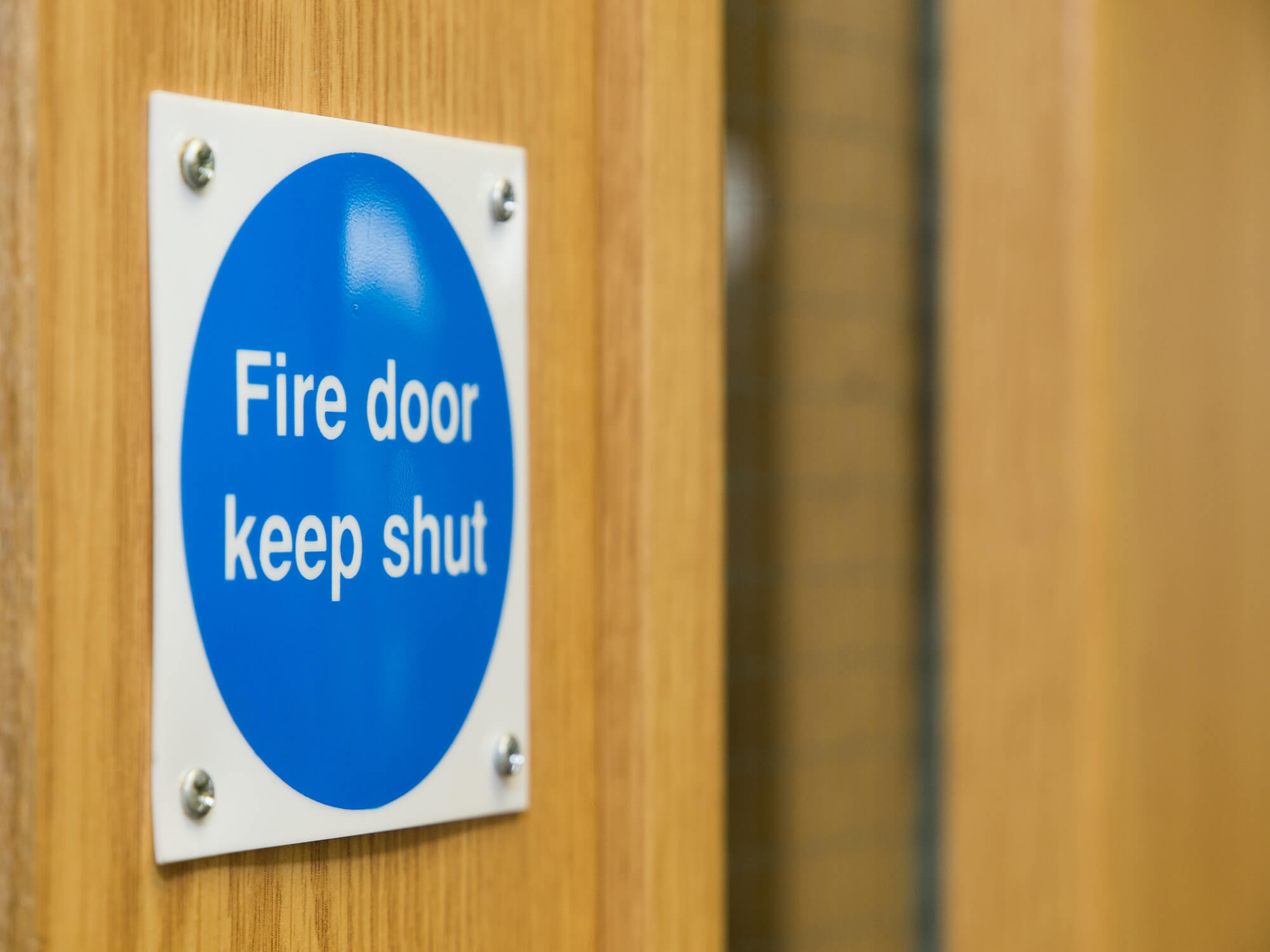
Fire door evidence is especially important in higher-risk residential buildings because doors protect escape routes, support compartmentation and help limit smoke and fire spread. In England, the Fire Safety (England) Regulations 2022 introduced specific fire door information and checking duties for certain multi-occupied residential buildings.
Useful fire door evidence may include:
- Fire door inspection reports.
- Records of common-part fire door checks.
- Records of flat entrance door checks where applicable.
- Repair and replacement evidence.
- Certification labels, specifications and installation evidence where available.
- Resident information about fire doors and self-closers.
Related guides: fire door inspection, Regulation 10 fire door checks, fire door compliance for blocks of flats and BS 8214 fire door installation.
Safety Case Report Evidence
For occupied high-rise residential buildings in England, the principal accountable person should prepare and update the building’s safety case report. GOV.UK guidance explains that the safety case report sets out the building safety risks of a high-rise residential building and how those risks are being managed.
Fire safety evidence that may support the safety case report includes:
- Basic building information and responsible parties.
- Construction methods, materials and refurbishment history.
- Fire safety measures and how they are maintained.
- Building safety risk assessments.
- Emergency plan information.
- Safety management systems.
- Evidence of reviews, updates and action close-out.
The safety case report is not just a folder of documents. It should explain the building safety risks and show, with evidence, how they are being managed. Missing information should be identified, and the report should explain what has been done to try to find it.
Golden Thread Fire Safety Information
The golden thread is the body of building safety information that should be kept complete, current and accessible. For higher-risk buildings, this information helps accountable persons, responsible persons, residents, contractors, regulators and fire safety professionals understand the building and make informed decisions.
Fire safety evidence that may form part of the golden thread includes fire strategies, plans, risk assessments, surveys, inspection reports, maintenance records, design information, handover information, resident information, remediation evidence and safety case records.
If evidence is missing, unclear or inconsistent, the issue should be recorded and investigated. A common practical problem in older buildings is that original specifications, fire strategy documents or installation evidence may be incomplete. In those cases, competent review and further inspection may be needed to build a more reliable evidence base.
Documents Fire and Rescue Services or Regulators May Ask About
Different bodies have different roles, but a higher-risk building should be able to produce core fire safety information when requested. Depending on the situation, this may include:
- The current fire risk assessment and review history.
- Fire risk assessment action plan and close-out evidence.
- FRAEW, external wall information or remediation records.
- Fire door inspection and checking records.
- Fire alarm, emergency lighting and smoke control maintenance records.
- Dry riser, firefighting lift or firefighting equipment records where relevant.
- Building plans, floor layouts and secure information box details.
- Resident information and evacuation strategy information.
- Safety case report and golden thread information where applicable.
Common Evidence Gaps in Higher-Risk Buildings
Many higher-risk buildings have fire safety records, but the records are fragmented, out of date or hard to connect. Common gaps include:
- Old fire risk assessments that do not reflect current legislation or building changes.
- Fire door inspections without evidence that repairs were completed.
- External wall reports that are not linked back to the main fire risk assessment.
- Missing plans, inaccurate drawings or incomplete flat entrance door records.
- Action plans with no owner, timescale or close-out evidence.
- Maintenance records held by contractors but not centrally by the building manager.
- Unclear responsibility between accountable persons, responsible persons, managing agents and contractors.
- Resident information that has not been reviewed after changes to the building or fire strategy.
How to Improve HRB Fire Safety Evidence
A practical evidence review should focus on what exists, what is missing and what matters most for risk. The following approach works well for many higher-risk buildings:
- Create a central evidence register for fire safety documents and records.
- Check whether the current fire risk assessment is suitable, sufficient and up to date.
- Review FRAEW, external wall and remediation evidence where relevant.
- Check fire door inspection records and repair close-out evidence.
- Confirm that alarm, emergency lighting, smoke control and firefighting equipment records are current.
- Identify gaps in plans, fire strategy information, evacuation arrangements and resident information.
- Assign responsibility for each missing record or action.
- Review the evidence after works, incidents, resident concerns, enforcement comments or significant building changes.
Need Help Reviewing Higher-Risk Building Fire Safety Records?
If you manage a higher-risk building, block of flats or complex residential building, we can help you arrange the fire safety services needed to support your evidence record.
Services can include fire risk assessments, fire door inspections, FRAEW support, compartmentation surveys, fire safety plans, emergency planning and related compliance reviews.
Related Building Types and Services
This topic is especially relevant to high-risk residential buildings, blocks of flats, high-rise buildings, housing associations, apartment buildings and mixed-use buildings.
Related guides: Building Safety Act fire safety duties, tower block fire safety, Fire Safety (England) Regulations 2022, Section 156 fire safety changes, premises information boxes and fire safety drawing plans.
External Sources and Further Reading
The following official guidance is useful when checking higher-risk building duties and fire safety evidence expectations:
- GOV.UK guidance on preparing a safety case report
- GOV.UK guidance for accountable persons in high-rise residential buildings
- GOV.UK guidance on registering high-rise residential buildings
- GOV.UK guidance on resident engagement strategies
Conclusion
Higher-risk building fire safety evidence should give a clear picture of the building, the risks present, the checks carried out and the actions being taken. The strongest evidence records are current, organised, building-specific and connected to the wider safety case, golden thread and fire safety management arrangements.
For accountable persons, responsible persons and managing agents, the priority is to avoid disconnected records and unclosed actions. Fire risk assessments, FRAEW, fire door inspections, compartmentation records, plans, resident information and maintenance evidence should work together to show how fire safety is being managed in practice.
Frequently Asked Questions
What is a higher-risk building?
In England, a higher-risk building under the occupied building safety regime is generally a high-rise residential building that is at least 18 metres high or has at least 7 storeys and contains at least 2 residential units.
What fire safety evidence should a higher-risk building keep?
Evidence may include fire risk assessments, action plans, fire door inspection records, FRAEW or external wall evidence, alarm and emergency lighting records, smoke control records, plans, resident information, evacuation strategy information and safety case records.
Does a higher-risk building need a safety case report?
For occupied high-rise residential buildings within the Building Safety Regulator regime, the principal accountable person should prepare and update a safety case report and provide it to the regulator when required.
How does FRAEW link to higher-risk building evidence?
A FRAEW helps assess external wall fire risk where relevant. Its findings should inform the wider fire risk assessment, action plan, resident information, safety case evidence and any remediation planning.
Are fire door records important for higher-risk buildings?
Yes. Fire door records are important because fire doors support compartmentation and protect escape routes. Evidence may include inspection reports, routine check records, repair evidence, certification information and resident information.
What is the golden thread in fire safety?
The golden thread is the organised body of building safety information kept throughout a building’s lifecycle. For fire safety, this can include risk assessments, plans, fire strategy information, inspection records, maintenance evidence and remediation records.
Can Fire Risk Assessment Network help with HRB fire safety evidence?
Yes. Fire Risk Assessment Network can help arrange fire risk assessments, fire door inspections, FRAEW support, fire safety plans, compartmentation surveys and related compliance services for higher-risk and complex residential buildings.
Last updated