Fire sprinkler systems are one of the most effective forms of active fire protection used in buildings across the UK. They are designed to control or extinguish fires automatically at an early stage, helping to protect life, limit structural damage and reduce business interruption.
In the UK, the requirement for fire sprinkler systems is determined by Building Regulations, British Standards and fire strategy design. Whether sprinklers are mandatory depends on the height, use and risk profile of a building.
This guide explains when fire sprinkler systems are legally required in the UK, which standards apply, and what responsibilities duty holders must understand.
Quick Answer
Fire sprinkler requirements in the UK depend on the building type, height, use, risk profile and whether the work involves a new building, conversion, extension or existing premises. Residential and domestic sprinkler systems are commonly designed to BS 9251, while commercial and industrial sprinkler systems are generally designed, installed and maintained to BS EN 12845. A fire risk assessment should consider whether existing fire protection measures are suitable for the premises and whether further specialist review is needed.
Who Needs to Understand Fire Sprinkler Requirements?
Fire sprinkler system requirements are particularly relevant to:
- property developers and design teams,
- housing associations and block managers,
- facilities managers overseeing commercial premises,
- responsible persons under the Fire Safety Order,
- accountable persons under the Building Safety Act (where applicable).
Early understanding of sprinkler obligations can prevent costly redesign, enforcement action or project delays.
Do I Need Sprinklers in My Building?
Whether a building needs sprinklers depends on the legal requirements, building regulations, fire strategy, building use, occupancy, escape arrangements, fire loading and the level of risk. Sprinklers may be relevant in new blocks of flats, care homes, student accommodation, warehouses, factories, high-risk storage buildings, large commercial premises and buildings where fire growth could create significant risk to life, property or business continuity.
For existing buildings, a fire risk assessment does not automatically require sprinklers to be installed. However, it may identify where existing fire safety measures are not suitable for the premises, where additional specialist review is needed, or where sprinklers could form part of a wider risk reduction strategy.
| Building Type | Sprinkler Relevance |
|---|---|
| Blocks of flats | Relevant to new residential buildings, height thresholds, fire strategy reviews and existing higher-risk residential buildings. |
| Care homes and supported living | Often relevant because occupants may need assistance to escape and evacuation can be more complex. |
| Warehouses and factories | Relevant where storage, fire loading, process risk, business continuity or insurer requirements make fire suppression important. |
| Hotels and student accommodation | May be relevant where there is sleeping risk, complex layouts, phased evacuation or high occupancy. |
| Schools and public buildings | May be considered as part of life safety, property protection, continuity planning and wider fire strategy. |
Need Fire Safety Advice for a Building With Sprinklers?
Fire Risk Assessment Network can help responsible persons arrange fire risk assessments, reviews and wider fire safety compliance support for residential, commercial and industrial premises.
What Is a Sprinkler System?
A fire sprinkler system is an active fire suppression system consisting of:
- a reliable water supply,
- a network of pipes,
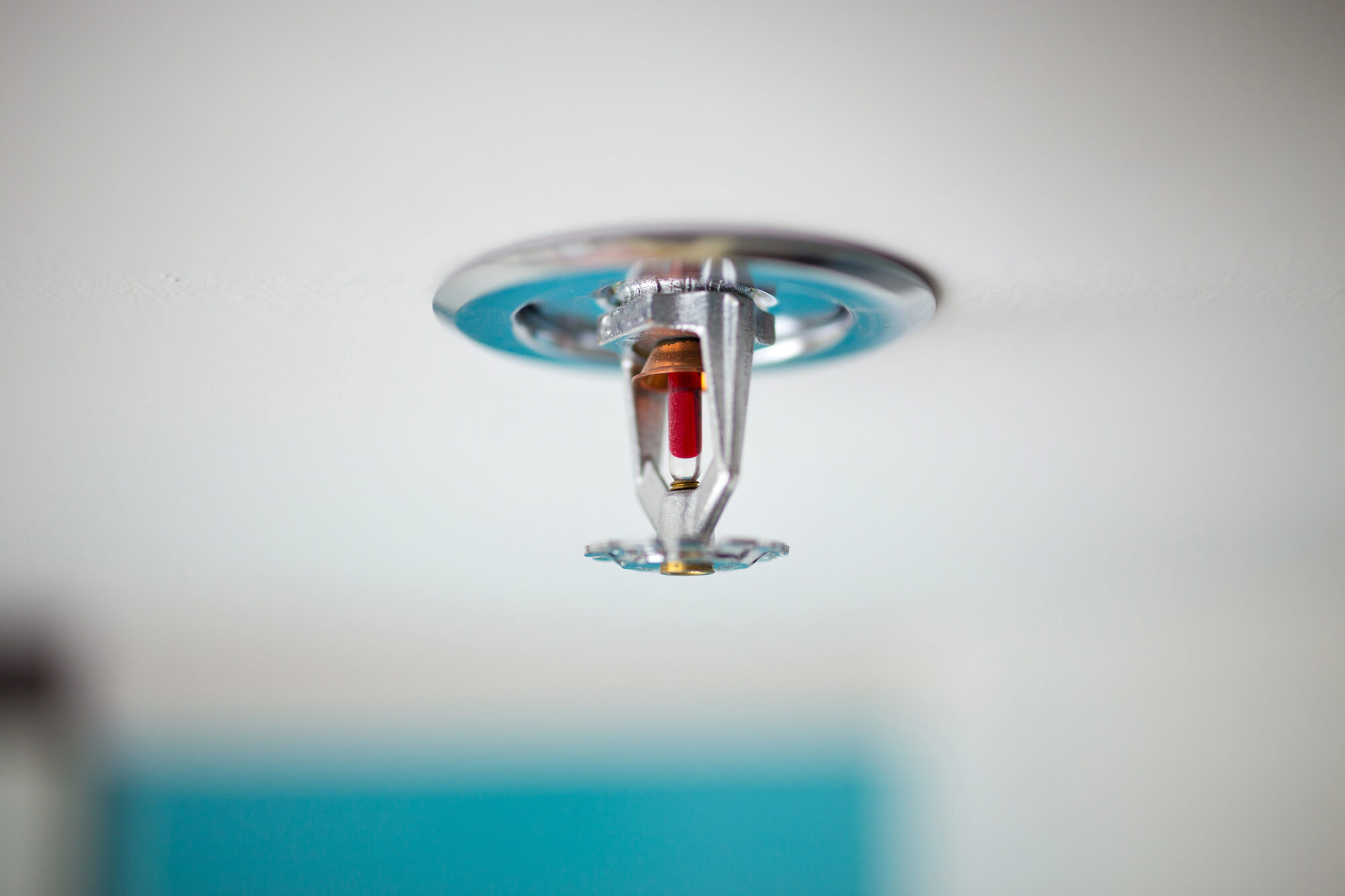
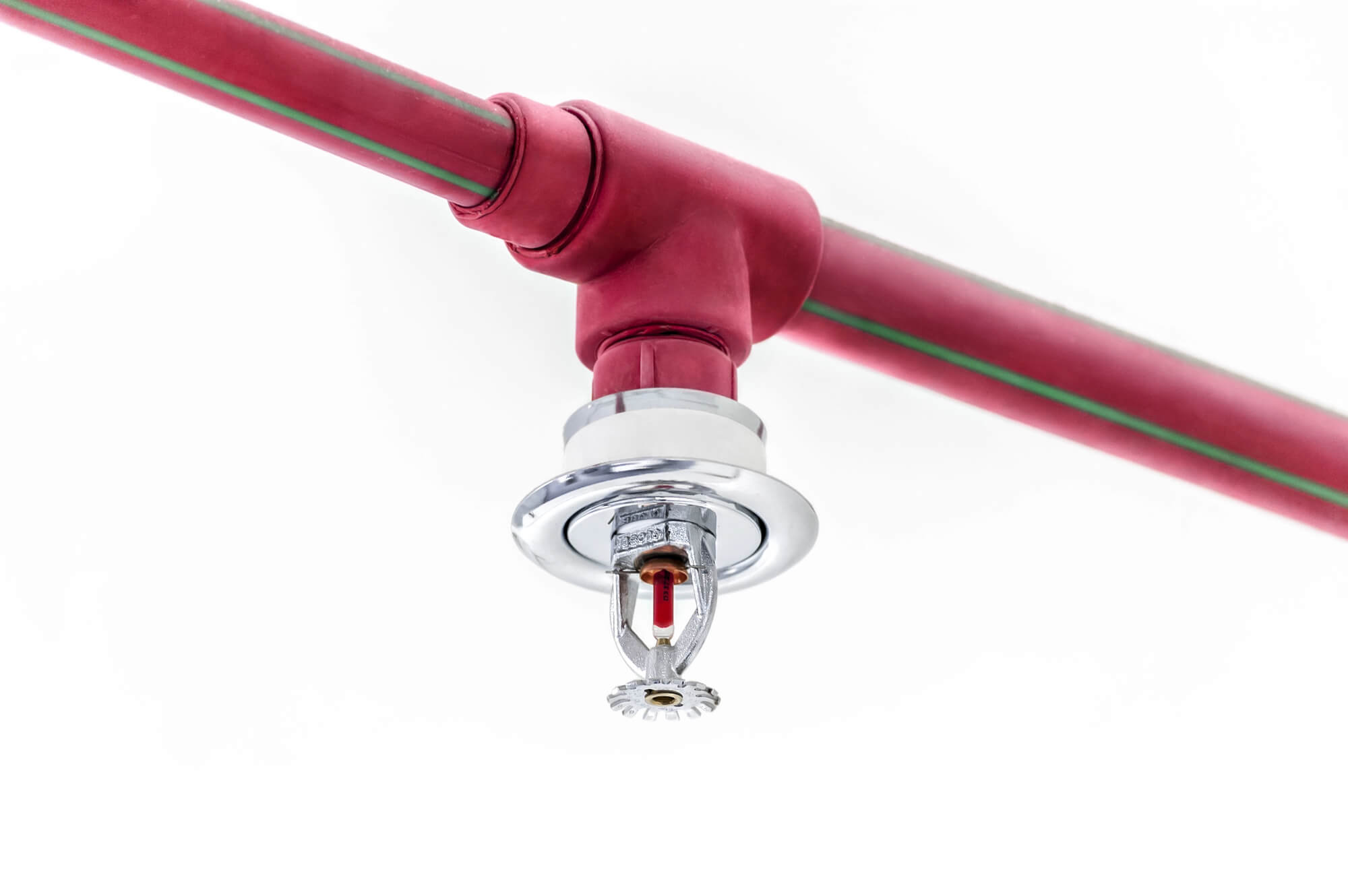
- and sprinkler heads that discharge water directly over a fire when activated by heat.
Contrary to common myths, sprinklers do not all activate at once — only the head(s) closest to the fire will operate when their heat-sensitive element reaches a threshold temperature.
Sprinklers are proven to operate reliably and effectively, often containing fires before the fire brigade arrives.
How Do Fire Sprinkler Systems Work?
When sufficient heat from a fire reaches a sprinkler head, a heat-sensitive glass bulb or fusible link breaks or melts, allowing water from the pressurised system to flow onto the fire.
The system connects to a dedicated water supply. In wet pipe systems, water is held within the pipework at all times, allowing immediate discharge when activated. Dry and pre-action systems operate differently but are designed to ensure rapid water delivery once triggered.
Types of Fire Sprinkler Systems
Fire sprinkler systems in the UK generally fall into the following categories:
Wet Pipe Systems
The most common type. Pipes are permanently filled with water and discharge immediately when a sprinkler head activates. Typically used in heated residential and commercial buildings.
Dry Pipe Systems
Used in environments where freezing is possible. Pipes contain compressed air, and water is released into the system when a head activates.
Pre-Action Systems
Used in higher-risk or sensitive environments (such as data centres). Activation requires detection confirmation before water is released.
Most residential buildings in the UK use wet pipe systems designed in accordance with BS 9251, while commercial systems under BS EN 12845 may incorporate more complex configurations depending on hazard classification.
Fire Sprinkler Standards and Guidance in the UK
BS 9251 – Residential and Domestic Sprinkler Systems
BS 9251 is the main British Standard for sprinkler systems in domestic and residential occupancies. It is relevant to houses, flats, blocks of flats, care homes, sheltered housing, supported housing, student accommodation and similar residential premises where sprinklers are used as part of the fire safety strategy.
BS EN 12845 – Commercial and Industrial Sprinkler Systems
BS EN 12845:2015+A2:2026 is the current standard for fixed firefighting sprinkler systems in many commercial, industrial and storage premises. It covers design, installation and maintenance, including hazard classification, water supplies, pumps, system layout, testing, inspection and ongoing maintenance.
The right standard depends on the premises type and system purpose. Domestic and residential systems are usually considered under BS 9251, while commercial and industrial systems are generally considered under BS EN 12845. Specialist sprinkler designers, installers and maintenance providers should confirm the correct standard for the building and risk profile.
Hazard Classifications Under BS EN 12845
Commercial fire sprinkler systems are designed according to hazard classification, which reflects the level of fire risk within the building. These typically include:
- Light Hazard – offices, schools and low fire load environments.
- Ordinary Hazard – commercial premises, workshops and manufacturing areas.
- High Hazard – warehouses or facilities storing combustible materials.
The hazard category determines pipe sizing, water discharge density and system configuration.
Approved Document B – Building Regulations
While British Standards are not law in themselves, compliance with them typically satisfies the relevant parts of the Building Regulations (Approved Document B – Fire Safety). In England, the most recent editions of Approved Document B include specific guidance on sprinklers, especially for certain building types.
When Are Fire Sprinklers Required in the UK?
Residential Buildings
In England, Building Regulations generally require fire sprinkler systems in new residential buildings over 11 metres in height (typically four storeys or more). This includes blocks of flats and other qualifying residential buildings. The requirement applies at design stage and must be demonstrated as part of Building Regulations compliance through building control approval under Approved Document B.
In Wales, the Domestic Fire Safety (Wales) Measure 2011 introduced mandatory sprinkler protection in new homes.
In Scotland, current building standards require sprinkler protection in certain high-rise domestic buildings, care homes and larger Houses in Multiple Occupation (HMOs), depending on building height and risk category.
Commercial and Industrial Buildings
There is no blanket UK law requiring sprinklers in all commercial premises. However:
- Approved Document B and building control will require sprinklers for certain large or high-risk commercial buildings (for example, industrial facilities, warehouses, large single storey buildings where compartment sizes exceed specific thresholds, or buildings with significant fire load).
- BS EN 12845 is used to demonstrate compliance for larger commercial systems, and fire risk profiles may trigger sprinkler requirements either through building control or insurers.
In many cases, fire risk assessment outcomes and insurer conditions will influence whether sprinklers are installed.
In commercial and industrial settings, insurers frequently influence sprinkler installation requirements. Large warehouses, logistics facilities and high-value stock environments may be required to install sprinkler protection as a condition of insurance cover.
Commercial Sprinklers for Warehouses, Factories and High-Risk Premises
Commercial sprinkler systems are often considered in warehouses, manufacturing sites, logistics buildings, factories, retail storage areas, large commercial premises and buildings with high fire loading. The reasons may include life safety, property protection, business continuity, insurer requirements, fire strategy design or control of fire spread.
Warehouse and industrial sprinkler requirements can be heavily influenced by storage height, racking, goods stored, packaging, processes, ignition sources, water supplies and the building’s hazard classification. These factors usually need specialist sprinkler design input rather than a generic recommendation.
A fire risk assessment can help identify whether the existing fire precautions remain suitable and whether further review is needed. It should also consider how sprinklers interact with fire alarms, compartmentation, smoke control, emergency plans, evacuation strategy and maintenance records.
Retrofitting Fire Sprinkler Systems in Existing Buildings
Fire sprinkler systems are not always legally required in existing buildings. However, they may be recommended where:
- a fire risk assessment identifies significant life risk,
- there are vulnerable occupants,
- escape routes are limited,
- or building design restricts other fire safety improvements.
In higher-risk residential buildings, retrofitting sprinklers may be considered as a proportionate compensatory measure within a fire strategy. Feasibility depends on water supply capacity, pipe routing options and structural constraints.
In some cases, enforcement authorities may recommend or require sprinkler installation as part of remedial works following fire safety audits or significant findings.
Residential Sprinklers, Flats and the 11 Metre Threshold
In England, Approved Document B guidance lowered the sprinkler threshold for new blocks of flats from 30 metres to 11 metres. This is particularly relevant to new residential buildings, major alterations and projects where building control approval is required.
For existing blocks of flats, the position is more nuanced. Sprinklers are not automatically required just because a building is already over 11 metres, but the fire risk assessment, fire strategy, external wall risk, compartmentation, evacuation arrangements and resident vulnerability may all influence whether further specialist advice is needed.
In Wales, building regulations require automatic fire suppression systems in new and converted houses and flats, as well as certain residential premises. This means sprinkler requirements can differ depending on whether the building is in England or Wales.
Where a residential building has complex fire safety issues, it may also be sensible to review related matters such as fire door inspections, fire risk assessments for flats, BS 9792 housing fire risk assessments and external wall fire risk appraisal.
Responsibilities Around Fire Sprinkler Systems
Design and Installation
Fire sprinkler systems must be designed and installed in accordance with the relevant British Standards and good practice guidance. In residential settings this means BS 9251 compliance; in commercial settings BS EN 12845 (or equivalent approved designs that satisfy Building Regulations).
Commissioning and Certification
Before handover, systems must be commissioned and verified to ensure correct installation and performance. This is typically done by professionals knowledgeable in British Standards and acceptable to building control.
Maintenance, Testing and Record Keeping
Under BS 9251, residential sprinkler systems typically require routine visual checks by the duty holder, periodic pump testing (where applicable), water supply verification and at least annual inspection by a competent specialist.
Systems designed under BS EN 12845 often require weekly, monthly, quarterly and annual inspection regimes depending on system complexity, including alarm valve checks, flow switch testing and water tank inspection.
Sprinkler Maintenance and Responsible Person Duties
Where sprinkler systems are installed, responsible persons should make sure they are maintained, tested and recorded in line with the relevant standard, the system design, manufacturer guidance, insurer requirements and competent contractor advice. A sprinkler system that is poorly maintained may give a false sense of security and may not perform as expected in a fire.
Maintenance records should be kept with other fire safety documentation so they can be reviewed during fire risk assessment updates, audits, insurer inspections and enforcement visits. Any defects, impairments, isolation, water supply issues or changes to the building layout should be acted on promptly.
Sprinklers should not be treated in isolation. They sit alongside fire alarms, emergency lighting, escape routes, fire doors, compartmentation, signage, staff training and management procedures.
How Fire Sprinklers Tie Into Fire Safety Regulation
Fire sprinkler systems are often considered as part of a building’s overall fire strategy. While a fire risk assessment (FRA) under the Fire Safety Order does not automatically require sprinklers, it can highlight situations where sprinkler installation is a proportionate control measure — particularly for buildings with vulnerable occupiers, limited escape routes or high fire load.
Meeting building control requirements via sprinkler installation can also provide “compensatory measures” allowing certain relaxations in fire resistance or evacuation strategy under Approved Document B.
Sprinklers and Fire Risk Assessments
A fire risk assessment should consider the fire safety measures present in the building and whether they remain suitable for the people at risk. Where sprinklers are installed, the assessment should take account of their role in the fire strategy, whether maintenance records are available, whether changes to the building could affect performance and whether any defects have been identified.
Where sprinklers are absent, the assessor may consider whether the existing precautions are adequate for the premises. In some higher-risk or complex buildings, this may lead to a recommendation for further specialist review rather than an immediate conclusion that sprinklers are required.
Fire Risk Assessment Network can help responsible persons arrange fire risk assessments and compliance reviews, and can identify where specialist sprinkler, fire strategy or building control input may be needed.
How Much Do Fire Sprinkler Systems Cost?
The cost of installing fire sprinkler systems in the UK varies depending on:
- building size and height,
- system type (BS 9251 vs BS EN 12845),
- water supply requirements,
- retrofit complexity,
- hazard classification.
For new residential developments, sprinkler installation may form part of the overall construction budget. Retrofitting in existing buildings is typically more complex and therefore more costly.
Detailed cost planning should always be undertaken at design stage, particularly where sprinklers are required to achieve Building Regulations compliance.
Common Myths About Fire Sprinkler Systems
Myth: “Sprinkler systems cause lots of water damage.”
Reality: A typical sprinkler head will only activate in the immediate vicinity of a fire, and much less water is used compared with fire brigade hose reels.
Myth: “Smoke will set off sprinklers.”
Reality: Sprinkler heads react to heat, not smoke, and require a temperature rise before activation.
Summary
Fire sprinkler systems are an important part of active fire protection in the UK. Whether they are required depends on:
- Building height and use
- Applicable standards (BS 9251 for residential, BS EN 12845 for commercial)
- Building Regulations (Approved Document B)
- Fire risk assessments and insurer requirements
They are designed to operate reliably and effectively to contain or extinguish fires, and when properly designed, installed and maintained they significantly enhance life safety and reduce fire spread.
Useful Sprinkler Guidance
- GOV.UK guidance on sprinklers and other measures in new high-rise blocks of flats
- BSI information on BS 9251 residential sprinkler systems
- BSI information on BS EN 12845 sprinkler systems
Conclusion
Fire sprinkler systems play an increasingly important role in UK building safety, particularly in higher-risk residential and commercial environments. While they are not required in every building, their installation is often driven by Building Regulations, risk profile, occupancy vulnerability, insurer expectations and fire strategy design.
For new developments, change-of-use projects and higher-rise residential buildings, sprinklers may be a mandatory requirement under Approved Document B. In other settings, they may form part of a proportionate risk control measure identified through a suitable and sufficient fire risk assessment.
Duty holders should understand that installing a sprinkler system does not remove wider fire safety obligations. Ongoing inspection, maintenance and record-keeping remain essential to ensure continued compliance and operational reliability.
Where there is uncertainty about whether a building requires sprinkler protection, or how it interacts with the overall fire strategy, professional fire safety advice should be sought to ensure compliance with current UK legislation and standards.
Frequently Asked Questions
Are fire sprinkler systems mandatory in the UK?
Fire sprinkler systems in the UK are mandatory in certain new buildings under Building Regulations, particularly residential buildings over 11 metres in height in England. Requirements differ across England, Wales and Scotland, and depend on building type and risk profile.
How often should fire sprinkler systems be inspected?
Inspection and maintenance frequencies depend on the applicable standard and system design. Residential systems under BS 9251 require routine visual checks and at least annual inspection, while commercial systems under BS EN 12845 may require weekly, monthly and annual inspection regimes depending on complexity.
Do all fire sprinkler heads activate at once?
No. Only fire sprinkler heads exposed to sufficient heat from a fire will activate individually. Smoke alone will not trigger fire sprinkler activation.
Do sprinklers replace a fire risk assessment?
No. Sprinklers can be an important fire protection measure, but they do not replace the legal duty to carry out and review a suitable and sufficient fire risk assessment. The assessment should consider the building, occupants, escape routes, fire precautions, management arrangements and maintenance records.
Are sprinklers required in blocks of flats over 11 metres?
In England, Approved Document B guidance recommends sprinklers in new blocks of flats with a top storey more than 11 metres above ground level. Existing blocks of flats are not automatically required to retrofit sprinklers solely because they exceed 11 metres, but the fire risk assessment and wider fire strategy should consider whether existing precautions remain suitable.
What standard applies to residential sprinkler systems?
Residential and domestic sprinkler systems are commonly designed to BS 9251. This can include houses, flats, blocks of flats, care homes, sheltered housing, supported housing and similar residential premises.
What standard applies to commercial sprinkler systems?
Commercial and industrial sprinkler systems are generally designed, installed and maintained to BS EN 12845. The current version is BS EN 12845:2015+A2:2026.
Who is responsible for sprinkler maintenance?
The responsible person, building owner, landlord, managing agent or duty holder with control of the premises should make sure sprinkler systems are suitably maintained, tested and recorded by competent people.
Last updated