Fire safety signs play a critical role in helping people understand what action to take in the event of a fire or other emergency. During an incident, confusion and panic can quickly take hold, and clear, visible signage helps occupants navigate escape routes, locate fire safety equipment, and act decisively.
Fire safety signage is designed to support safe evacuation, protect lives, and assist emergency response — particularly in buildings where occupants may be unfamiliar with the layout.
When people think of fire safety signs, they often picture fire exit signs or extinguisher symbols. However, fire safety signage covers a much wider range of sign types, each serving a specific purpose as part of a building’s overall fire safety strategy.
Quick Answer
Fire safety signs help people identify escape routes, fire exits, fire alarm call points, firefighting equipment, fire doors, assembly points and actions to take in an emergency. In UK workplaces and non-domestic premises, signs should be provided where needed by the fire risk assessment and should be clear, legible, suitable for the premises and consistent with recognised standards such as BS EN ISO 7010 and BS 5499.
What Are Fire Safety Signs?
Fire safety signs are visual safety signs used to instruct, warn, or provide information to occupants in relation to fire safety. They communicate essential information quickly and clearly, often using standardised symbols, colours, and pictograms.
Fire safety signs may include text, symbols, or a combination of both, and are commonly colour-coded in line with recognised standards: red, green, blue, and yellow.
Fire safety signs should be clear, visible and easy to understand. They should support the premises fire risk assessment, emergency plan, staff training and day-to-day fire safety management.
When installing fire safety signs in a building, consideration must be given to the layout of the premises, identified fire risks, escape routes, and the fire safety measures in place.
Fire Safety Sign Regulations and Standards
Fire safety signage in the UK is influenced by fire safety law, health and safety law and recognised British and international standards. The key references include:
- Regulatory Reform (Fire Safety) Order 2005 duties
- Health and Safety (Safety Signs and Signals) Regulations 1996 guidance
- BS EN ISO 7010 for standard safety symbols
- BS 5499-10:2014+A1:2023 for selection and use of safety signs and fire safety notices
- BS 5499-4 for escape route signing
The responsible person should provide suitable fire safety signs where they are necessary to make fire safety arrangements clear. HSE guidance explains that signs are required where a significant risk remains after other control measures have been put in place. Signs should be clear and legible, and too many signs should be avoided where this could cause confusion.
For practical placement and notice requirements, see our related guide to fire signs and notices.
Types of Fire Safety Signs
| Sign type | Colour | Purpose |
|---|---|---|
| Fire exit and escape route signs | Green | Show safe routes, final exits and direction of travel. |
| Fire equipment signs | Red | Identify extinguishers, call points, hose reels, blankets and firefighting equipment. |
| Mandatory fire safety signs | Blue | Tell people what they must do, such as keep fire doors shut or use stairs in a fire. |
| Warning signs | Yellow/amber | Warn of hazards such as flammable materials or high-risk areas. |
| Prohibition signs | Red circle/bar | Tell people what they must not do, such as no smoking or do not obstruct fire exits. |
| Fire action notices | Varies | Explain what occupants should do if they discover a fire or hear the alarm. |
Common Fire Safety Signs Explained
Fire Exit Signs
Fire exit signs are green safe-condition signs used to show escape routes, final exits and direction of travel. They should be positioned so people can follow the route safely, especially where the exit route is not obvious.
Fire Action Notices
Fire action notices tell occupants what to do if they discover a fire or hear the fire alarm. They are commonly placed near manual call points, final exits, reception areas and other prominent locations.
Fire Door Keep Shut Signs
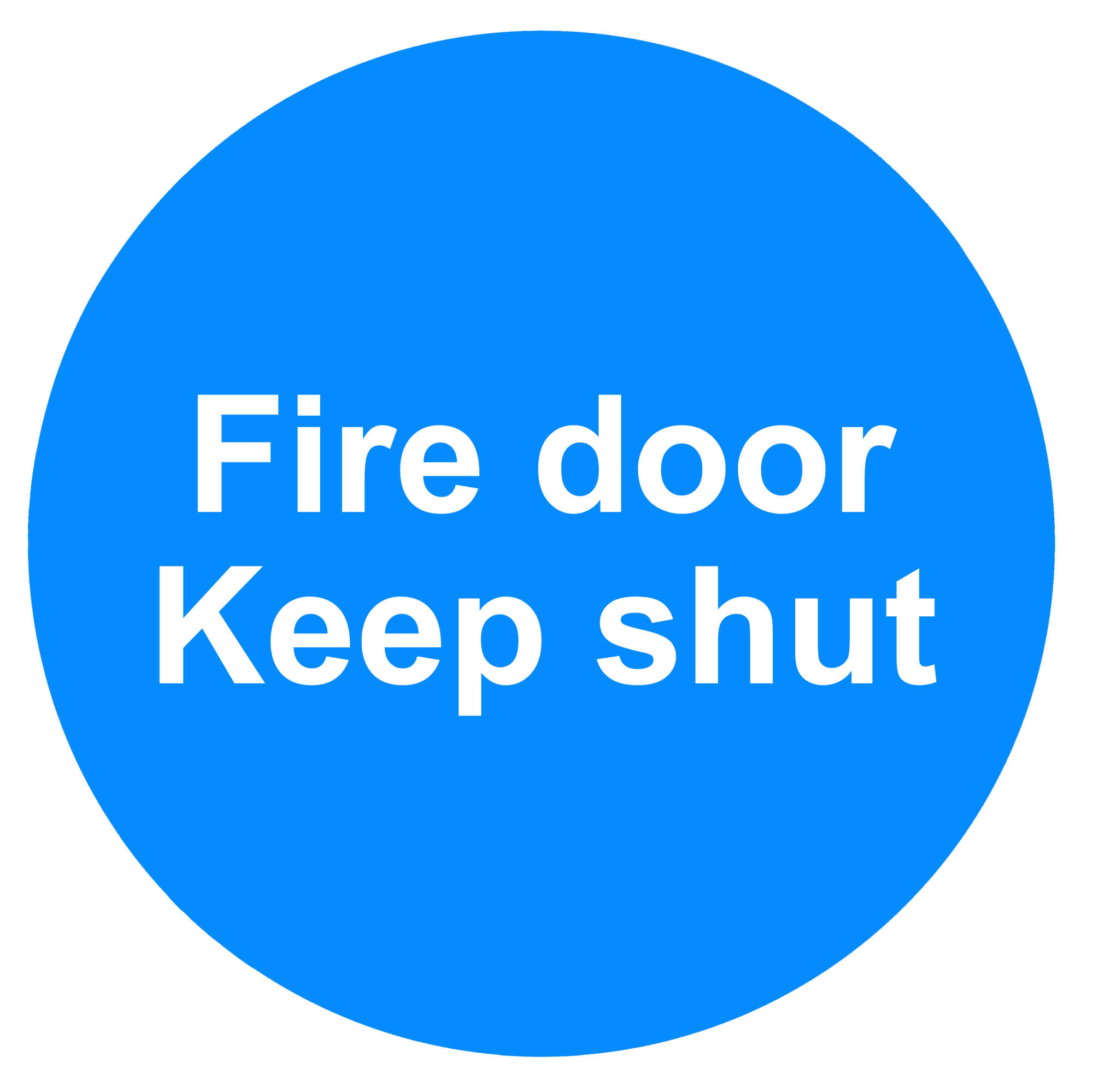
Fire door keep shut signs remind occupants that fire doors must remain closed to help maintain compartmentation and restrict the spread of smoke and fire. They are usually blue mandatory signs.
Fire Equipment Signs
Fire equipment signs identify extinguishers, fire blankets, hose reels, alarm call points and other firefighting equipment. They are usually red and should remain visible and unobstructed.
Assembly Point Signs
Assembly point signs show where occupants should gather after evacuation. The location should be suitable, safe and clear within the building’s emergency plan.
Warning and Prohibition Signs
Warning signs identify hazards such as flammable materials, while prohibition signs identify actions that are not allowed, such as smoking or blocking fire exits.

What Do Fire Safety Sign Colours Mean?
- Green: safe condition signs, including fire exits, escape routes and assembly points.
- Red: fire equipment signs and prohibition signs.
- Blue: mandatory action signs, such as keep shut or use stairs.
- Yellow or amber: warning signs for hazards.
When Should Fire Safety Signs Be Reviewed?
Fire safety signs should be reviewed when a fire risk assessment is completed or updated, when the layout changes, when escape routes change, when fire safety equipment is moved, or when signs become damaged, faded, missing or unclear.
They should also be checked as part of routine fire safety management, especially in shared buildings, workplaces, schools, care settings, hospitality premises, warehouses, HMOs and blocks of flats.
Need Fire Safety Signs Reviewed?
Fire Risk Assessment Network can help arrange fire risk assessments and fire safety compliance support where signage, escape routes, notices or fire safety management need review.
Frequently Asked Questions
Are fire safety signs a legal requirement?
Fire safety signs are required where they are necessary to make fire safety arrangements clear and manage remaining risks. The need for signs should be identified through the fire risk assessment.
What standard should fire safety signs follow?
Fire safety signs should generally use recognised symbols and colours, including BS EN ISO 7010. BS 5499 also gives guidance on fire safety signs, notices and escape route signing.
What do green fire safety signs mean?
Green signs usually indicate safe conditions, including fire exits, escape routes and assembly points.
What do red fire safety signs mean?
Red signs are used for fire equipment signs, such as extinguisher and fire alarm call point signs, and for prohibition signs such as no smoking.
What do blue fire safety signs mean?
Blue signs usually indicate a mandatory action, such as keep fire door shut or use stairs in the event of fire.
Who is responsible for fire safety signs?
The responsible person, such as an employer, landlord, managing agent, owner or occupier with control of the premises, is responsible for ensuring suitable fire safety measures are in place, including signs where required.
Last updated