How can I ensure my business complies with UK fire safety legislation?
Work out who is responsible for fire safety, arrange a suitable fire risk assessment and act on what it finds. Keep escape routes clear, plan how people will get out, train staff and maintain the fire safety measures your premises need. Keep records of the assessment, the actions you take and the checks you carry out. Review your arrangements regularly and when the premises or risks change.
If you took over a shop tomorrow, could you find the fire risk assessment, say who looks after the alarm and show a new starter how to get out? Those are good starting points for checking the fire safety arrangements at any workplace.
Use this checklist to walk through your own premises and identify anything that needs attention. It’s written for businesses such as offices, shops, cafés and warehouses. The precautions you need will depend on the building, the work you do and the people who use it.
Which fire safety laws apply to your business?
Start with where the premises are and what the business controls. A shop, office, café or warehouse will usually fall under the workplace fire safety regime for its part of the UK.
- England and Wales. The Regulatory Reform (Fire Safety) Order 2005 applies to most non-domestic premises. If you’re the responsible person, you must carry out and review the assessment and record it in full, along with your fire safety arrangements, even if you employ fewer than five people. This recording duty was extended by Section 156 of the Building Safety Act 2022. See the GOV.UK guidance on recording your assessment and Welsh Government guidance for businesses.
- Scotland. Part 3 of the Fire (Scotland) Act 2005 and the Fire Safety (Scotland) Regulations 2006 cover most non-domestic premises. Employers and others who control the premises can be dutyholders. See the Scottish Government guidance for non-residential premises.
- Northern Ireland. The Fire and Rescue Services (Northern Ireland) Order 2006 and the Fire Safety Regulations (Northern Ireland) 2010 set workplace duties. The guidance calls the employer or other person with relevant duties the appropriate person. Check what you need to record under the Northern Ireland guidance on workplace fire safety duties.
Business below flats? Agree with the building manager who looks after any shared escape routes and how you’ll flag changes that could affect residents. In England, the Fire Safety (England) Regulations 2022 can also apply to the residential part of a mixed-use building with two or more homes and shared escape routes. See the GOV.UK guidance for buildings with flats.
For more detail on who is covered, see our UK fire safety regulations guide.
1. Work out who looks after fire safety
If you employ people or control part of a workplace, you’re likely to have fire safety duties. In a shared building, speak to the landlord or managing agent and agree who deals with the common areas, the alarm, the escape routes and any repairs. A shop tenant, for example, might train their own staff while the managing agent arranges maintenance of the shared alarm. Both need to know what staff should do when it sounds.
Keep a record of who handles each task and who to contact when something needs fixing. If duties overlap, share relevant findings and coordinate your arrangements. See our guide to who is responsible for fire safety.
2. Check the fire risk assessment covers what happens today
Start with the latest assessment. Does it reflect how you use the premises, where you store stock and who might need help getting out? If you’ve inherited a report from the previous occupier, check it against your layout and work before relying on it. Arrange competent help if you lack the expertise to assess the premises yourself.
Keep a record of the assessment and an action list with an owner and target date for each outstanding item. Deal promptly with anything that could put people in immediate danger, such as a blocked escape route. Use the fire risk assessment requirements guide to check what your assessment should cover.
Need a fire risk assessment for your workplace?
Fire Risk Assessment Network can help you arrange a commercial fire risk assessment, whether you’ve just moved in or need to review an existing report.
3. Walk the escape routes and practise the plan
Walk the routes people would actually take during a shift. Check that stock or deliveries haven’t blocked them and that exits can be opened easily in an emergency. Make sure the evacuation plan covers visitors, contractors and anyone who may need assistance. Show new starters what the alarm sounds like, how to leave and where to assemble. Include other shifts when you plan training and drills.
Keep a record of the current evacuation plan, training and drills. Write down any problem that came up in a drill and what you did about it. See our guide to fire emergency plans.
4. Check that fire safety equipment is working and maintained
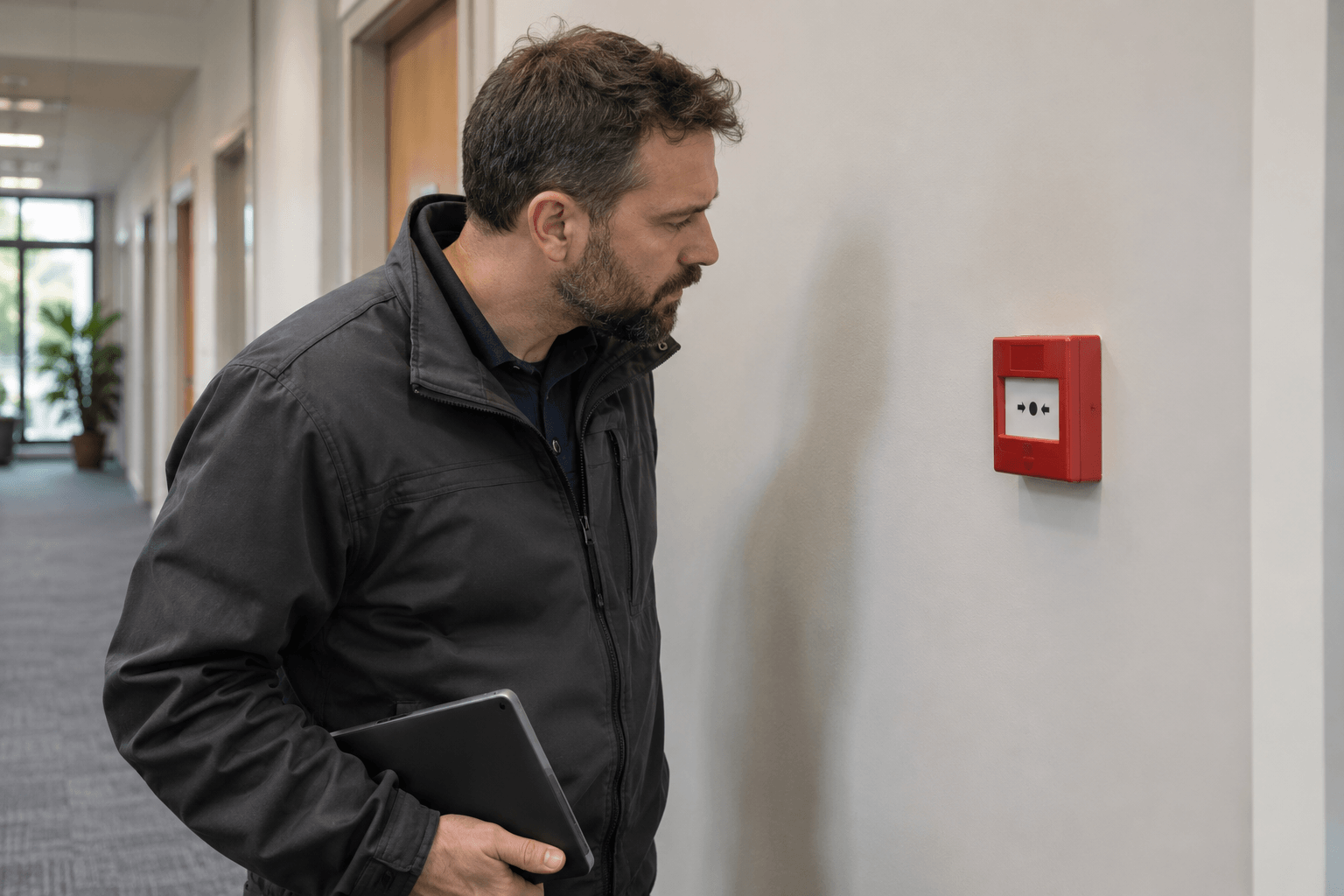
Use your assessment to identify what needs checking, who should do it and when. For example, look for fire doors that are wedged open or fail to close, an alarm fault that hasn’t been reported, or an emergency light that failed its last test. Arrange competent servicing where needed and make sure faults are followed through to repair.
Keep a record of routine checks, service reports, faults and repairs. If you share equipment with other businesses, confirm who holds the records and how you can get them. See our guides to fire alarms, emergency lighting and fire door inspections.
5. Close the actions and review what’s changed
A contractor may have been booked, but the risk is still there until the work is done. When you close an action, record the date and keep whatever shows the issue was fixed, such as a service report or a dated follow-up check. Use your next review to check that the fix is still working.
Review the assessment regularly and bring that review forward if a change could affect fire risk or escape. A new layout, longer opening hours or a change in what you store can all matter. Keep the current assessment, action list and supporting records together so the person on duty knows where to find them. A fire safety logbook is one way to do this.
Worked example: a blocked escape route after deliveries
A café’s fire risk assessment found that delivery crates were being left in a shared passage used as a fire escape. Here’s what an entry in the action log might look like.
- Fix it today. The shift manager moves the crates clear of the route straight away and tells the building manager, who manages the shared passage.
- Stop it happening again. The café manager agrees a delivery drop-off point away from the escape route with the building manager and briefs the team that takes deliveries.
- Check it during a real delivery. The shift manager checks the passage after the next delivery and logs the date and result. Keep the updated delivery instructions with that record. If crates are still appearing, keep the action open and follow up with the building manager.
A photo of an empty passage shows how it looked at the time. A check after the next delivery tells you whether the new arrangement works.

Need help with fire safety actions and records?
If you already have an assessment but are unsure which actions to tackle first or what evidence to keep, we can help arrange a compliance review.
Common questions about workplace fire safety
Can a small business use this checklist as its fire risk assessment?
Use the checklist to spot gaps and organise your next steps. Your premises still need a suitable fire risk assessment that considers the specific hazards, who could be harmed and what precautions are needed.
Does my landlord’s assessment cover my business?
Ask the landlord what their assessment covers. Where it deals with shared areas such as stairs and corridors, check how those arrangements fit with your own work, staff training and evacuation plan. Coordinate with the landlord on anything that affects both of you.
Do I need to review my assessment after a refit?
Review it if the refit could affect fire risk or how people get out. For example, a partition might change an escape route or where an alarm can be heard. Check your plans and tell staff about any changes that affect them.
Last updated