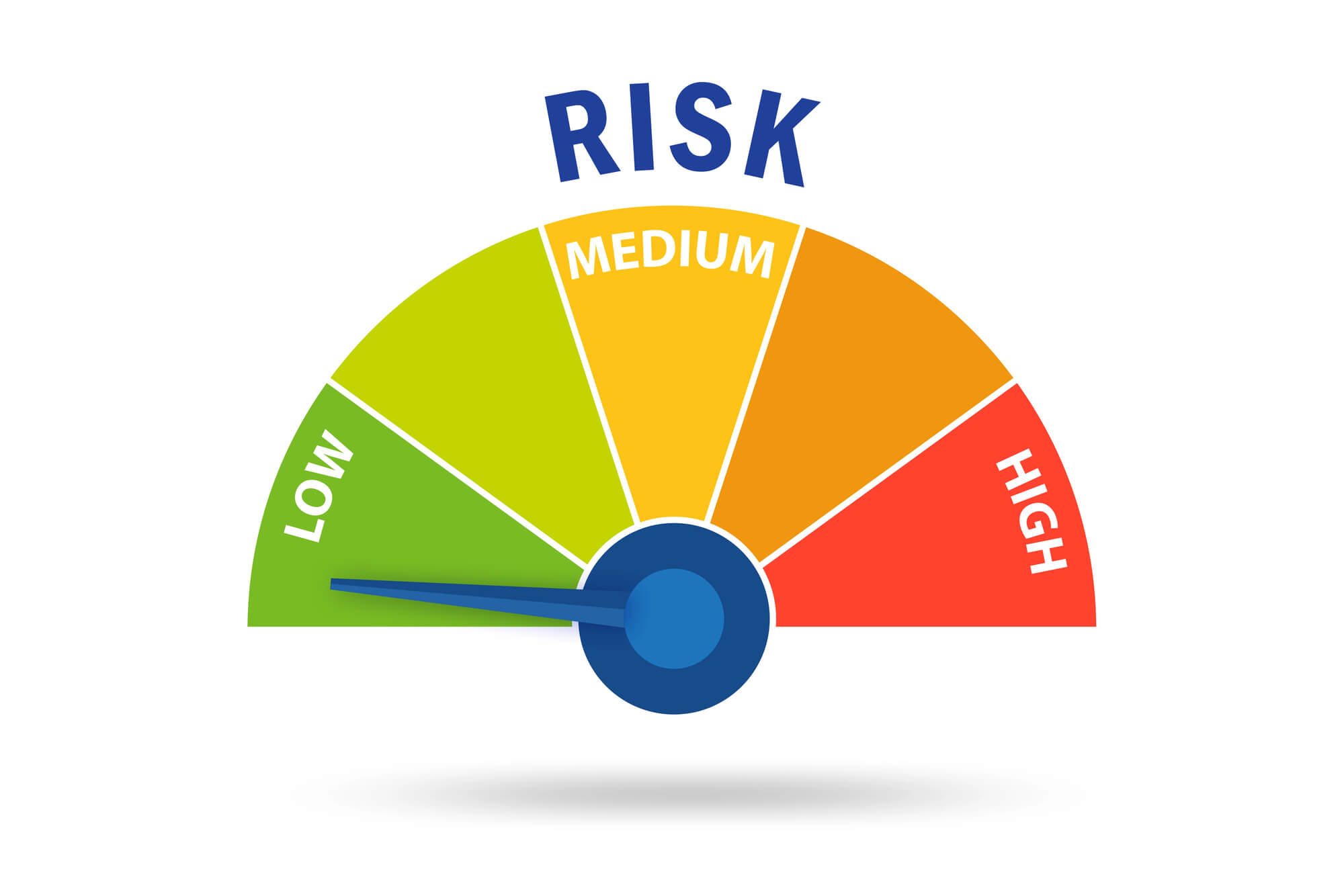
Risk rating systems are commonly used in fire risk assessments to help evaluate the level of fire risk within a building. They typically combine the likelihood of a fire occurring with the potential consequences to produce a rating such as low, medium, or high.
In simple terms, a fire risk assessment risk rating system combines the likelihood of a fire occurring with the potential severity of its consequences to determine the overall level of risk.
However, it is important to understand that UK fire safety legislation does not prescribe a specific risk rating system. A scoring matrix may assist analysis, but it does not replace professional judgement or the requirement for a suitable and sufficient assessment.
Contents
- 1 What Is a Risk Rating in a Fire Risk Assessment?
- 2 Are Risk Rating Systems Legally Required?
- 3 How Risk Rating Systems Typically Work
- 4 What Is a Risk Matrix?
- 5 Common Fire Risk Rating Systems
- 6 Limitations of Risk Matrices
- 7 Does a Risk Rating Make an Assessment Suitable and Sufficient?
- 8 Professional Judgement and Proportionate Risk Assessment
- 9 Conclusion
- 10 Frequently Asked Questions
What Is a Risk Rating in a Fire Risk Assessment?
A risk rating is a method used to express the overall level of fire risk by considering:
- The likelihood of a fire occurring
- The potential consequences if it does
This evaluation may be expressed as:
- Low / Medium / High
- A numerical score
- A matrix result (e.g., 1–25)
Risk ratings are intended to help prioritise action, not to replace analysis.
Are Risk Rating Systems Legally Required?
Under the Regulatory Reform (Fire Safety) Order 2005, the Responsible Person must carry out a suitable and sufficient fire risk assessment.
The legislation does not mandate the use of:
- A 3×3 matrix
- A 5×5 matrix
- A numerical scoring system
The legal requirement is for risks to be identified and reduced so far as is reasonably practicable. How this is expressed is a matter of professional methodology.
How Risk Rating Systems Typically Work
Most systems combine two factors:
1. Likelihood
How probable it is that a fire could occur.
2. Consequence
The potential impact on life safety if a fire occurs.
These are then combined using a matrix.
In many systems, risk is expressed as: Risk = Likelihood × Consequence
For example, if likelihood is rated 3 (possible) and consequence is rated 4 (major injury), the overall risk score would be 12. That score would then fall within a defined risk band, such as medium or high.
This approach reflects broader health and safety risk assessment principles commonly referenced in guidance issued by the Health and Safety Executive (HSE).
What Is a Risk Matrix?
A risk matrix is a grid that plots likelihood against consequence to produce a risk rating. The vertical axis typically represents likelihood, while the horizontal axis represents severity of outcome.
The point where the two intersect determines the overall risk category.
Common Fire Risk Rating Systems
Qualitative Ratings
Some assessments simply state:
- Low risk
- Medium risk
- High risk
This approach relies heavily on professional judgement.
3×3 Matrix
A basic system using:
- Low / Medium / High likelihood
- Low / Medium / High consequence
This produces nine possible outcomes.
5×5 Matrix
A more detailed approach using a scale of 1–5 for both likelihood and consequence, producing a possible score between 1 and 25.
While this appears more precise, the numbers remain subjective.
Limitations of Risk Matrices
Risk matrices can be useful tools, but they have limitations:
- They can oversimplify complex fire scenarios
- Numerical scores may create a false sense of accuracy
- Different assessors may score the same building differently
- Fire risk is dynamic and influenced by human behaviour
A matrix does not remove the need for professional reasoning.
Does a Risk Rating Make an Assessment Suitable and Sufficient?
No.
A fire risk assessment is judged on whether it:
- Identifies hazards
- Considers people at risk
- Evaluates control measures
- Records significant findings
- Provides clear actions
A numerical score alone does not demonstrate compliance.
During audits or investigations, enforcing authorities focus on whether risks have been properly identified and controlled — not simply on the final number assigned.
Enforcing authorities examine the quality of reasoning and the adequacy of control measures, not simply the final risk category.
Professional Judgement and Proportionate Risk Assessment
In practice, experienced fire risk assessors use risk rating systems as guidance tools rather than rigid scoring mechanisms.
Professional judgement considers:
- Building design including compliance with Approved Document B (Fire Safety)
- Occupancy profile
- Compartmentation integrity
- Fire detection reliability
- Evacuation strategy
Risk must be assessed proportionately and in context.
Conclusion
Fire risk assessment risk rating systems can help structure analysis and prioritise action, but they are not a substitute for competent assessment or legal compliance.
Whether using a simple low/medium/high scale or a 5×5 matrix, the critical factor is that the assessment is suitable and sufficient and that risks are reduced so far as is reasonably practicable.
At Fire Risk Assessment Network, we carry out structured fire risk assessments that use proportionate methodology, clear reasoning, and defensible conclusions — not simply numerical scoring.
If you require a compliant and professionally prepared fire risk assessment, contact us today for a free quotation.
Frequently Asked Questions
Is a 5×5 risk matrix required in a fire risk assessment?
No. UK fire safety legislation does not require a 5×5 risk matrix or any specific numerical scoring system. The legal requirement is for the fire risk assessment to be suitable and sufficient, not for it to follow a particular scoring format.
What does low, medium, or high risk mean in a fire risk assessment?
These terms describe the overall level of fire risk after considering the likelihood of fire and the potential consequences. They are used to help prioritise action but do not replace detailed analysis or professional judgement.
Who decides the risk rating in a fire risk assessment?
The risk rating is determined by the assessor carrying out the fire risk assessment. It should be based on professional judgement, building conditions, occupancy profile, and the effectiveness of existing fire safety measures.
Can two assessors give different risk ratings?
Yes. Fire risk assessment involves professional judgement, and different competent assessors may apply slightly different ratings depending on their interpretation of likelihood and consequence. What matters is that the reasoning is clear and defensible.
Does a low risk rating mean no action is required?
Not necessarily. A low overall risk rating does not remove the duty to address identified deficiencies. Significant findings and required actions must still be recorded and managed appropriately.