
Fire risk assessments are a legal requirement for most non-domestic premises and the common parts of residential buildings in the UK. However, many Responsible Persons are unsure what a fire risk assessment involves, how often it must be reviewed, what it covers, and whether it guarantees compliance.
Recent changes to fire safety legislation have strengthened these duties, placing greater emphasis on written fire risk assessments, documented fire safety arrangements, and ongoing accountability.
This page answers the most common fire risk assessment questions clearly and accurately, with references to current fire safety law and best practice.
Contents
- 1 What Is the Law on Fire Safety?
- 2 Why Is a Fire Risk Assessment Required?
- 3 What Is a Fire Risk Assessment?
- 4 What Are the Key Points a Fire Risk Assessment Covers?
- 5 Who Is Responsible for Fire Safety Compliance?
- 6 What Do I Have to Do as the Responsible Person?
- 7 How Long Does a Fire Risk Assessment Take?
- 8 Do I Need to Carry Out a Fire Risk Assessment Every Year?
- 9 Will a Fire Risk Assessment Make Me Fully Compliant?
- 10 Does a Fire Risk Assessment Require Fire Alarms, Fire Escapes, or Other Measures?
- 11 Will Fire and Rescue Services Visit My Premises?
- 12 What Happens If I Do Not Comply with Fire Safety Law?
- 13 How Much Does a Fire Risk Assessment Cost?
- 14 Conclusion
What Is the Law on Fire Safety?
In England and Wales, fire safety duties are primarily governed by the Regulatory Reform (Fire Safety) Order 2005. This legislation applies to:
- Non-domestic premises
- The common parts of residential buildings, including blocks of flats and HMOs
The Fire Safety Order places legal duties on the Responsible Person to take general fire precautions, carry out a suitable and sufficient fire risk assessment, and implement appropriate fire safety arrangements.
The Fire Safety Act 2021 clarified that, in multi-occupied residential buildings, fire risk assessments must explicitly consider the building structure, external walls (including cladding, balconies, and fixings), and flat entrance doors.
Section 156 of the Building Safety Act 2022 further amended the Fire Safety Order by removing previous thresholds and requiring fire risk assessments and fire safety arrangements to be recorded in writing for all relevant premises. Fire safety duties must now be demonstrable, auditable, and capable of inspection by enforcing authorities.
In Scotland, fire safety is governed by the Fire (Scotland) Act 2005 and supporting regulations, while Northern Ireland operates under separate fire safety legislation.
Why Is a Fire Risk Assessment Required?
A fire risk assessment is required to:
- Identify fire hazards and risks
- Protect life in the event of a fire
- Reduce the likelihood and impact of fire
- Ensure safe evacuation of occupants
- Demonstrate legal compliance
Fire risk assessments are a legal requirement, not optional. They form the foundation of all other fire safety duties and are a key focus of enforcement activity by fire and rescue authorities.
What Is a Fire Risk Assessment?
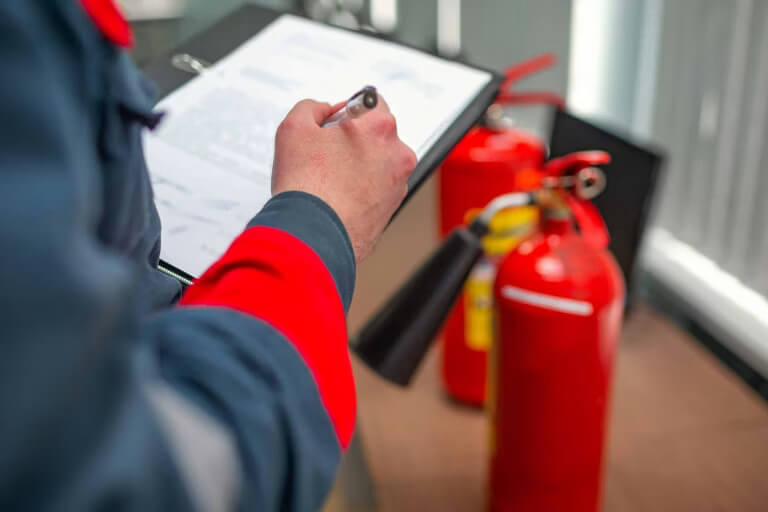
A fire risk assessment is a structured evaluation of a premises that:
- Identifies fire hazards
- Identifies people at risk
- Evaluates existing fire safety measures
- Recommends improvements where necessary
A competent fire risk assessment will result in a written report, including:
- An executive summary
- Significant findings
- A prioritised action plan
- Management and review recommendations
What Are the Key Points a Fire Risk Assessment Covers?
Fire risk assessments follow a recognised five-step approach:
- Identify fire hazards
- Identify people at risk
- Evaluate, remove, reduce, and protect from risk
- Record findings, plan, inform, instruct, and train
- Review regularly
This approach aligns with UK fire safety guidance and current enforcement expectations under post-2021 fire safety legislation.
Who Is Responsible for Fire Safety Compliance?
The Responsible Person is legally accountable for fire safety. This may be:
- An employer
- A building owner
- A landlord
- A managing agent
- Anyone with control of the premises
While tasks can be delegated, legal responsibility cannot.
What Do I Have to Do as the Responsible Person?
As the Responsible Person, you must:
- Carry out a suitable and sufficient fire risk assessment
- Implement appropriate fire safety measures
- Maintain fire safety systems and equipment
- Provide fire safety information and training
- Review and update the assessment when required
You must also ensure that fire safety arrangements are documented, kept up to date, and capable of being produced to enforcing authorities on request.
Fire risk assessment is one part of a wider fire safety management duty.
How Long Does a Fire Risk Assessment Take?
The time required depends on:
- Size and complexity of the premises
- Use and occupancy
- Fire safety systems present
- Risk profile
As a general guide, many assessments take 2–3 hours on site, though larger or higher-risk premises may take longer.
Do I Need to Carry Out a Fire Risk Assessment Every Year?
Fire safety legislation does not specify a fixed annual frequency.
Instead, fire risk assessments must be reviewed regularly and whenever there is reason to believe they are no longer valid, including:
- Changes to building layout or use
- Structural alterations
- Changes in occupancy
- New fire risks
- Following a fire or near miss
Many organisations choose annual reviews as good practice, but the frequency should always be proportionate to risk and complexity.
Will a Fire Risk Assessment Make Me Fully Compliant?
No.
A fire risk assessment identifies what needs to be done, but compliance depends on implementing the findings. Failure to act on identified risks, or failure to maintain records, may still result in enforcement action.
Does a Fire Risk Assessment Require Fire Alarms, Fire Escapes, or Other Measures?
Not every building requires the same fire safety measures.
A fire risk assessment determines:
- What measures are necessary
- What is proportionate to the risk
- How occupants can be safely protected
The aim is appropriate and effective fire safety, not unnecessary expense.
Will Fire and Rescue Services Visit My Premises?
Fire and rescue services act as the enforcing authority and may carry out risk-based inspections. Visits are not automatic, but enforcement action may be taken where serious deficiencies are identified.
Inadequate, outdated, or missing fire risk assessments are a common trigger for enforcement activity.
A competent fire risk assessor can assist with enforcement correspondence where required.
What Happens If I Do Not Comply with Fire Safety Law?
Failure to comply with fire safety law can result in:
- Enforcement notices
- Prohibition notices
- Unlimited fines
- Imprisonment for serious breaches
Under current legislation, failure to record a fire risk assessment or fire safety arrangements may itself constitute a breach, even where physical measures exist.
How Much Does a Fire Risk Assessment Cost?
The cost of a fire risk assessment depends on factors such as:
- Size and complexity of the premises
- Use and occupancy
- Number of floors
- Fire safety systems present
- Level of risk
A professional assessment should always be proportionate, transparent, and carried out by a competent provider.
Conclusion
Fire risk assessments are a legal requirement and a critical part of protecting life, property, and business continuity. Recent legislation — including the Fire Safety Act 2021, Section 156 of the Building Safety Act 2022, and the Fire Safety (England) Regulations 2022 — has strengthened expectations around written assessments, record-keeping, and ongoing fire safety management.
Understanding what is required — and what a fire risk assessment does and does not provide — helps Responsible Persons meet their duties confidently and effectively.
If you require a competent, standards-based fire risk assessment, Fire Risk Assessment Network can help.