A fire extinguisher survey checks whether your premises has the right type, number and location of portable fire extinguishers for the fire risks present. It is useful where you are setting up a new premises, reviewing existing provision, responding to a fire risk assessment action, or unsure whether your current extinguishers are suitable.
Fire Risk Assessment Network can help arrange fire extinguisher surveys for offices, shops, restaurants, warehouses, workshops, HMOs, blocks of flats, schools, care premises, public buildings and multi-site property portfolios across the UK.
Quick Answer: What Is a Fire Extinguisher Survey?
A fire extinguisher survey is a site assessment that reviews the building layout, fire risks, occupancy, escape routes, existing extinguishers, signage and equipment locations. The aim is to identify whether the premises has suitable extinguisher provision and what changes are needed.
The survey should consider the fire risk assessment and recognised guidance such as BS 5306-8:2023 for the selection and positioning of portable fire extinguishers.
When Do You Need a Fire Extinguisher Survey?
You may need a fire extinguisher survey when:
- you are opening or refurbishing a commercial premises;
- your fire risk assessment says extinguisher provision needs review;
- you are unsure how many extinguishers are required;
- the building layout, use or occupancy has changed;
- you have added a kitchen, workshop, plant room, store or new process;
- existing extinguishers are old, badly positioned, obstructed or missing signage;
- an insurer, landlord, managing agent or fire officer has raised concerns;
- you want a consistent approach across several sites.
What Does a Fire Extinguisher Survey Check?
The scope should reflect the premises, but a typical survey will consider:
- building size, floor area and layout;
- escape routes, exits and travel distances;
- fire risks and fire classes present;
- existing extinguisher types, ratings, condition and locations;
- whether specialist extinguishers are needed for kitchens, electrical risks, flammable liquids or external risks;
- whether extinguishers are visible, accessible and correctly mounted;
- signage, brackets, stands and fixing arrangements;
- whether current provision is insufficient, excessive or unsuitable;
- whether servicing, commissioning or replacement is required.
The survey should produce clear recommendations that the responsible person can act on, such as retain, relocate, replace, add, remove, service or commission specific units.
How Many Fire Extinguishers Do I Need?
There is no fixed number that applies to every building. The required number depends on the fire risk assessment, floor area, layout, hazards, use of the building and how people move through the premises.
BS 5306-8:2023 is the current British Standard code of practice for selection and positioning of portable fire extinguishers. It is commonly used to support decisions about extinguisher rating, travel distance, location and suitability.
A small low-risk office may need a simple arrangement, while a restaurant, workshop, warehouse, school, care premises or multi-storey building may need more detailed provision and specialist equipment.
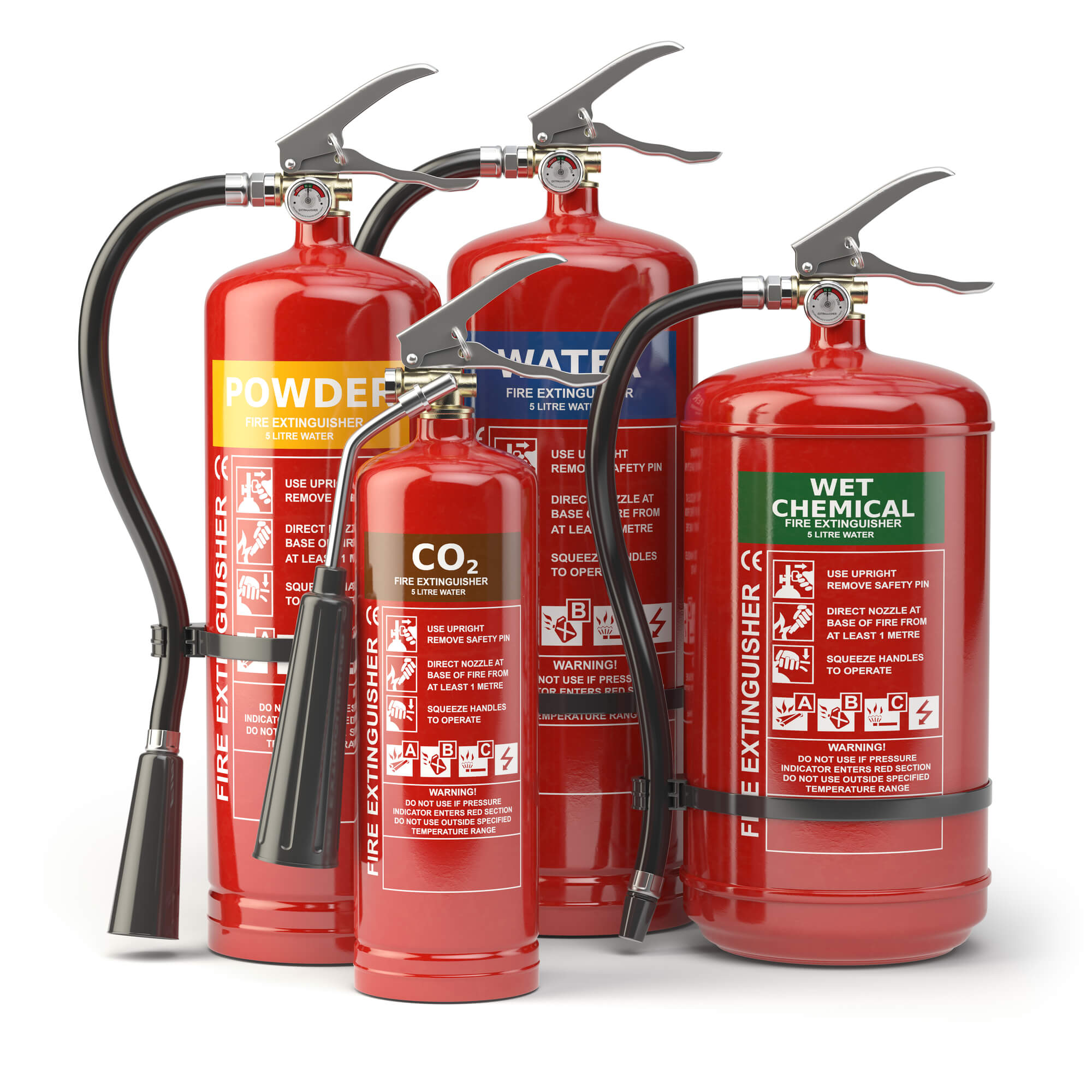
Which Fire Extinguisher Types Might Be Required?
| Risk or area | Possible extinguisher consideration |
|---|---|
| General office, retail or common areas | Class A provision such as water or foam, subject to risk assessment and electrical considerations. |
| Electrical equipment | CO2 extinguishers are commonly used near electrical risks. |
| Commercial kitchens and deep-fat frying | Wet chemical extinguishers and fire blankets may be needed where cooking oil risks are present. |
| Workshops, garages or plant areas | Provision depends on fuels, flammable liquids, hot works, machinery and electrical equipment. |
| External fuel, gas or specialist risks | Dry powder may be considered for some external or specialist applications, but it is often unsuitable for enclosed occupied spaces. |
Fire Extinguisher Survey vs Fire Risk Assessment
A fire risk assessment is a wider review of fire hazards, people at risk, escape routes, fire warning arrangements, emergency lighting, fire doors, management procedures and fire safety controls. A fire extinguisher survey focuses specifically on portable extinguisher provision, siting and suitability.
The two should work together. The fire risk assessment should identify the need for fire-fighting equipment, while the extinguisher survey can provide more detailed recommendations about types, ratings, locations and replacement or servicing actions.
Fire Extinguisher Survey vs Servicing
Servicing checks the condition and maintenance status of extinguishers that are already installed. A survey checks whether the premises has the right extinguishers in the first place.
| Service | Main purpose |
|---|---|
| Fire extinguisher survey | Reviews type, number, rating, positioning, signage and suitability of provision. |
| Fire extinguisher servicing | Checks and maintains installed extinguishers so they remain safe and ready for use. |
If you already have extinguishers and need them maintained, see our fire extinguisher servicing guide.
What Will the Survey Report Include?
Depending on the agreed scope, the survey output may include:
- a review of existing extinguishers and locations;
- recommendations for extinguisher type, size and rating;
- locations where units should be added, moved or removed;
- missing signs, brackets, stands or fixing issues;
- units needing service, commissioning, replacement or disposal;
- notes on specialist risks such as kitchens, workshops, electrical risks or flammable liquids;
- practical action list for the responsible person.
Common Problems Found During Extinguisher Surveys
Common issues include:
- not enough extinguishers for the layout or risk;
- too many extinguishers of the wrong type;
- missing wet chemical extinguishers in commercial kitchens;
- powder extinguishers installed in unsuitable indoor spaces;
- extinguishers hidden behind stock or furniture;
- poor signage or no identification signs;
- units not commissioned after purchase or relocation;
- overdue servicing or missing service records;
- extinguishers mounted incorrectly or without suitable brackets/stands.
How Much Does a Fire Extinguisher Survey Cost?
Survey costs depend on the size and complexity of the premises, number of buildings, number of floors, number of extinguishers, travel, reporting requirements and whether the survey is combined with servicing, supply or a fire risk assessment.
Some providers offer low-cost or free surveys where supply or servicing work is also being quoted, while independent surveys or multi-site reviews may be priced separately. The important point is to confirm what the survey includes and whether the output will be clear enough to support compliance decisions.
Need a Fire Extinguisher Survey?
If you are unsure whether your premises has the right extinguisher provision, we can help arrange a survey, servicing quote or fire risk assessment review.
How Surveys Link to Fire Extinguisher Regulations
Fire extinguisher surveys help the responsible person show that provision has been considered properly. The survey should be read alongside the wider legal duties explained in our fire extinguisher regulations UK guide.
Our Fire Extinguisher Survey Support
Fire Risk Assessment Network can help arrange fire extinguisher surveys for commercial and residential common-part premises across the UK. Surveys can be carried out as a standalone review or alongside fire risk assessment, extinguisher servicing, installation or replacement work.
We can support businesses, landlords, managing agents, schools, hospitality premises, offices, retail units, industrial premises, warehouses and property portfolios that need a clear view of whether their extinguishers are suitable, serviced and correctly positioned.
Frequently Asked Questions About Fire Extinguisher Surveys
What is a fire extinguisher survey?
A fire extinguisher survey is a site review that checks whether the type, number, rating, location and signage of portable fire extinguishers are suitable for the premises and the fire risks present.
Do I need a fire extinguisher survey?
You may need a survey if you are opening, refurbishing or changing a premises, if your fire risk assessment has raised concerns, or if you are unsure whether current extinguisher provision is suitable.
Is a fire extinguisher survey the same as servicing?
No. Servicing checks the condition and maintenance status of extinguishers. A survey checks whether the premises has the right extinguishers, in the right locations, for the risks present.
How many fire extinguishers do I need?
There is no fixed number for every building. The number depends on the fire risk assessment, floor area, layout, risks, occupancy and building use. BS 5306-8 is commonly used to support selection and positioning decisions.
Can a survey reduce the number of extinguishers?
Sometimes. A survey may find that provision is excessive, duplicated or unsuitable. The aim is not always to add more extinguishers, but to provide the right extinguishers for the actual risks.
What information is needed for a survey quote?
It helps to provide the premises address, building use, number of floors, approximate size, number of existing extinguishers, whether there are kitchens or specialist risks, and whether a fire risk assessment has already been completed.
Last updated