
Fire extinguisher servicing is the routine inspection and maintenance of portable fire extinguishers so they remain safe, accessible and ready to operate if a small fire occurs. For UK businesses, landlords and responsible persons, it is an important part of fire safety management and compliance evidence.
Fire Risk Assessment Network can help arrange fire extinguisher servicing, commissioning, installation, replacement and maintenance contracts for commercial premises, public buildings, HMOs, blocks of flats, offices, shops, restaurants, warehouses and managed property portfolios across the UK.
Servicing should be carried out by a competent person and should reflect the equipment installed, the risks present, the age and condition of each extinguisher, and the requirements of recognised British Standards guidance.
Quick Answer: How Often Should Fire Extinguishers Be Serviced?
Most portable fire extinguishers in UK non-domestic premises should receive a professional basic service at least once every 12 months. The responsible person should also arrange regular visual checks, commonly monthly, to confirm extinguishers are in place, accessible, undamaged and showing no obvious signs of discharge or pressure loss.
Extended servicing or replacement is normally considered at longer intervals, such as around 5 years for many water, foam and powder extinguishers and around 10 years for CO2 extinguishers, depending on extinguisher type, condition, manufacturer guidance and servicing outcomes.
Fire Extinguisher Servicing and UK Fire Safety Law
UK fire safety law does not set out a simple fixed servicing price or a one-size-fits-all extinguisher schedule. Instead, it places duties on the responsible person to provide appropriate fire-fighting equipment where required, keep fire safety measures maintained, and manage the risks identified by the fire risk assessment.
In England and Wales, the main duties come from the Regulatory Reform (Fire Safety) Order 2005. Where portable extinguishers are provided, they should be suitable for the premises, correctly positioned and maintained in efficient working order.
British Standard BS 5306-3:2017 is the current code of practice for commissioning and maintenance of portable fire extinguishers. It is commonly used by competent service technicians, fire risk assessors, insurers and enforcing authorities when considering whether extinguishers are being properly maintained.
What Is Included in Annual Fire Extinguisher Servicing?
An annual basic service checks whether each extinguisher remains in suitable condition and is likely to operate correctly if needed. The exact checks depend on the extinguisher type, but a competent technician will usually review the condition, location, accessibility, labelling and service history of each unit.
Annual servicing may include checks such as:
- external condition, corrosion, dents, leakage or damage;
- correct location, accessibility and visibility;
- extinguisher type, size and rating compared with the risk present;
- pressure gauge indication or weight check where applicable;
- safety pin, tamper seal and anti-tamper device;
- hose, horn, nozzle and operating mechanism condition;
- legibility of operating instructions and identification signage;
- service label, manufacture date and previous service information;
- whether remedial work, extended service or replacement is required.
After the visit, extinguishers should be labelled or tagged appropriately and the responsible person should receive service documentation for their fire safety records.
Monthly Visual Checks by the Responsible Person
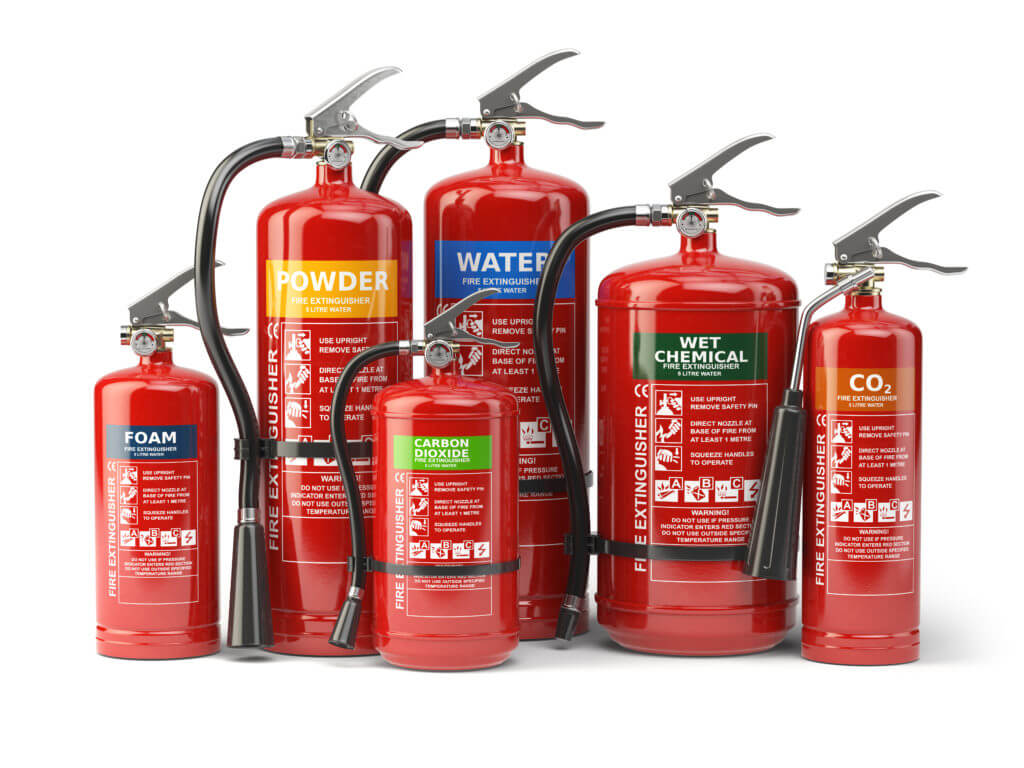
Professional annual servicing does not replace routine checks by the responsible person or nominated staff. Visual checks help identify obvious issues between service visits and are a simple way to keep extinguisher provision under control.
A monthly visual check usually confirms that extinguishers:
- are in their correct location;
- are visible, accessible and not obstructed;
- have not been discharged or tampered with;
- show no obvious damage, corrosion or leakage;
- have pressure gauges in the correct range where fitted;
- have intact pins, seals and identification labels;
- remain supported by suitable brackets, stands and signs.
Any missing, damaged, discharged or inaccessible extinguisher should be dealt with promptly rather than waiting until the next annual service.
Extended Fire Extinguisher Servicing and Replacement
Some extinguishers need more than an annual basic service. Extended service, overhaul, pressure testing, discharge testing, refilling or replacement may be required at defined intervals or when condition makes it necessary.
| Service type | Typical timing | What it means |
|---|---|---|
| Basic service | Usually annually | Competent technician checks condition, operation indicators, labels, accessibility and service status. |
| Extended service | Often around 5 years for many water, foam and powder extinguishers | More detailed examination, often involving discharge, internal inspection, refill or service exchange where appropriate. |
| CO2 overhaul / test or replacement | Often around 10 years | Specialist examination, pressure testing, overhaul or replacement depending on condition, cost and service arrangement. |
| Replacement | When failed, obsolete, damaged, corroded, discharged or uneconomic to service | A new suitable extinguisher is supplied, installed and commissioned. |
In many commercial settings, replacement or service exchange can be more practical than on-site discharge and refill, especially where environmental issues, disruption and cost need to be considered.
Fire Extinguisher Servicing Costs
Fire extinguisher servicing costs vary by location, number of extinguishers, site access, extinguisher type, service history, visit charges and whether extended servicing or replacement is due.
As a broad UK market guide, annual servicing is often priced at around £5 to £15 per extinguisher, plus a site visit or minimum charge. Many small commercial premises pay a minimum visit fee where only a few extinguishers are present. Extended servicing, replacement parts, refills, discharge testing, new units, signs, brackets or stands are usually charged separately.
| Item | Typical market guide |
|---|---|
| Annual basic service | Often around £5-£15 per extinguisher, subject to minimum visit charges. |
| Site visit / minimum charge | Often around £40-£120 depending on provider, area and contract type. |
| Extended service | Often charged separately when due; replacement may be more economical. |
| New extinguisher supply and commissioning | Depends on extinguisher type, size, rating, bracket, signage and installation requirements. |
The cheapest quote is not always the best option. Confirm whether the quote includes service labels, certification, minor parts, travel, minimum charges, disposal, replacement recommendations and follow-up support.
Need a Fire Extinguisher Servicing Quote?
Tell us your postcode, premises type, number of extinguishers and whether any units are due for extended service or replacement. We can help arrange a practical servicing quote for your premises.
Fire Extinguisher Commissioning
Commissioning is the competent check carried out when an extinguisher is newly supplied, installed or relocated. It confirms that the unit is assembled, pressurised or charged, correctly labelled, suitable for the intended location and ready to be placed into service.
New extinguishers bought online or moved from another site should not simply be placed on a wall and assumed to be compliant. They should be checked and commissioned by a competent person, with the correct label and documentation issued.
Fire Extinguisher Installation and Positioning
Fire extinguisher installation should reflect the findings of the fire risk assessment and the guidance in BS 5306-8:2023, which covers selection and positioning of portable fire extinguishers.
Installation normally considers:
- the fire classes and hazards present;
- floor area, layout and travel distances;
- escape routes, exits and final exits;
- specific risks such as commercial kitchens, electrical equipment, workshops or external fuel risks;
- mounting height, brackets, stands and signs;
- whether existing provision is excessive, insufficient or unsuitable.
If you are unsure how many extinguishers are needed or where they should be placed, see our fire extinguisher survey guide.
Records You Should Keep
Good records are important because fire extinguisher compliance is often checked through evidence. A fire officer, insurer, managing agent, auditor or fire risk assessor may ask to see proof that extinguishers are being managed properly.
Useful records include:
- annual service certificates;
- service labels on each extinguisher;
- asset list or extinguisher register;
- monthly visual check records;
- extended service, replacement or disposal records;
- commissioning records for new or relocated units;
- fire risk assessment findings relating to extinguisher provision.
Fire Extinguisher Maintenance Contracts
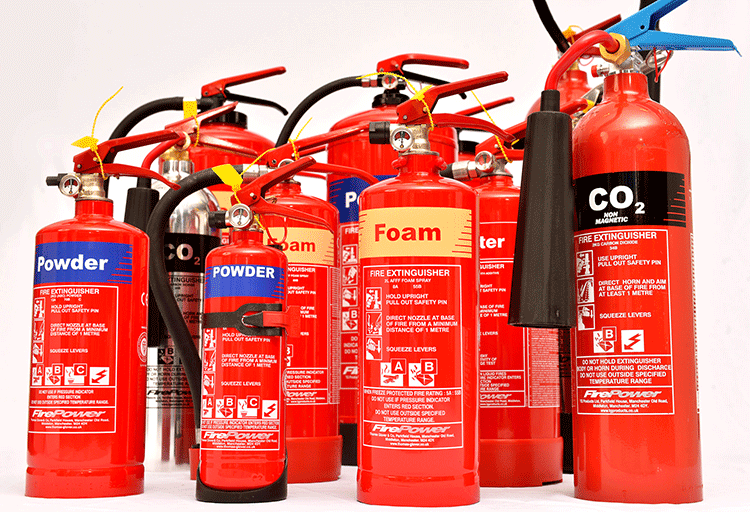
A maintenance contract can be useful for businesses, landlords, managing agents and multi-site operators who want servicing, reminders and documentation managed consistently.
A contract may include scheduled annual servicing, reminders, asset tracking, service labels, certification, extended service planning and recommendations for replacement or additional provision where required.
This is particularly useful for property portfolios, schools, offices, retail units, restaurants, warehouses, HMOs, blocks of flats and sites with several buildings or responsible persons involved.
How Servicing Links to Fire Extinguisher Regulations
Fire extinguisher servicing is one part of wider legal compliance. The responsible person must make sure extinguishers are suitable, correctly located, maintained and supported by appropriate instruction and records.
For the wider legal duties around provision, siting, maintenance and responsible person duties, see our fire extinguisher regulations UK guide.
Our Fire Extinguisher Servicing Support
Fire Risk Assessment Network can help arrange fire extinguisher servicing for a wide range of UK premises. Services can include annual servicing, commissioning, installation, replacement, site surveys and ongoing maintenance contracts.
We can support:
- offices, shops, warehouses and industrial units;
- restaurants, cafes, pubs and commercial kitchens;
- landlords, HMOs and blocks of flats;
- schools, nurseries, community buildings and public premises;
- multi-site businesses and property portfolios.
The aim is to keep the service practical: suitable extinguishers, clear records, competent servicing and straightforward recommendations where equipment needs repair, replacement or repositioning.
Frequently Asked Questions About Fire Extinguisher Servicing
Is fire extinguisher servicing a legal requirement in the UK?
UK fire safety law requires fire-fighting equipment to be maintained where it is provided as a fire safety measure. Annual servicing by a competent technician in line with BS 5306-3 is the recognised way to demonstrate that portable extinguishers are being properly maintained.
How often should fire extinguishers be serviced?
Most portable fire extinguishers should receive a professional basic service at least once every 12 months. The responsible person should also arrange routine visual checks, commonly monthly, to confirm extinguishers remain present, accessible and undamaged.
How much does fire extinguisher servicing cost?
Annual servicing is often priced at around £5 to £15 per extinguisher, plus a site visit or minimum charge. Costs increase where extinguishers need extended service, refilling, replacement parts, disposal, recommissioning or new units.
What is checked during a fire extinguisher service?
A service usually checks external condition, pressure or weight, safety pin, tamper seal, hose, horn, nozzle, operating instructions, location, signage, service label and whether repair, extended service or replacement is required.
What is an extended fire extinguisher service?
An extended service is a more detailed check carried out at longer intervals for certain extinguisher types. It may involve discharge, internal examination, refill, pressure-related checks or service exchange, depending on extinguisher type and condition.
Who can service fire extinguishers?
Fire extinguishers should be serviced by a competent person with suitable training, knowledge and equipment. The person should understand BS 5306-3 maintenance procedures, extinguisher types, defects, labelling and when replacement is required.
Do new fire extinguishers need commissioning?
Yes. New or relocated extinguishers should be commissioned by a competent person before they are relied on for compliance. Commissioning confirms the extinguisher is assembled, charged, suitable, correctly labelled and ready for use.
What records should I keep after servicing?
You should keep annual service certificates, service labels, an extinguisher register, monthly visual check records, commissioning records and any extended service, replacement or disposal records.
Last updated