
Fire extinguisher servicing is a core part of fire safety management for non-domestic premises in the UK. While fire extinguishers themselves are not prescribed by name in legislation, where they are provided, they must be suitable, maintained, and kept in efficient working order.
We provide competent, standards-based fire extinguisher servicing for commercial premises, public buildings, HMOs, and managed residential buildings, in line with current UK fire safety law and British Standards guidance.
Contents
- 1 Fire Extinguisher Servicing and UK Fire Safety Law
- 2 Annual Fire Extinguisher Servicing (BS 5306-3)
- 3 Routine Visual Inspections by the Responsible Person
- 4 Extended Fire Extinguisher Servicing
- 5 Fire Extinguisher Commissioning
- 6 Fire Extinguisher Installation
- 7 Fire Extinguisher Site Surveys
- 8 Fire Extinguisher Supply
- 9 Fire Extinguisher Maintenance Contracts
- 10 Conclusion
- 11 Fire Extinguisher Servicing FAQ
Fire Extinguisher Servicing and UK Fire Safety Law
Under the Regulatory Reform (Fire Safety) Order 2005, the Responsible Person must ensure that:
- Fire-fighting equipment is appropriate to the risk
- Equipment is maintained in an efficient state
- Measures are in place to protect relevant persons
The Fire Safety Act 2021 and Fire Safety (England) Regulations 2022 reinforce the expectation that fire safety measures are properly selected, maintained, and documented as part of a suitable and sufficient fire risk assessment.
While legislation does not specify service intervals, British Standard BS 5306-3 sets out the accepted benchmark for inspection, servicing, and maintenance of portable fire extinguishers in the UK. This is the standard typically referenced by enforcing authorities and fire risk assessors.
Enforcing authorities and fire risk assessors commonly reference BS 5306 when assessing whether fire extinguisher inspection and maintenance arrangements are appropriate.
Annual Fire Extinguisher Servicing (BS 5306-3)
Annual servicing is recommended for most portable fire extinguishers to confirm they remain safe, operable, and appropriate for the risks present.
Our competent service engineers carry out annual servicing in accordance with BS 5306-3, including checks such as:
- External condition and signs of damage or corrosion
- Correct type, rating, and location
- Tamper seals and safety pins
- Pressure or weight (as applicable)
- Hoses, horns, and operating mechanisms
- Legibility of instructions and identification signage
Following the visit, extinguishers are labelled accordingly and service documentation is issued for compliance records.
Routine Visual Inspections by the Responsible Person
In addition to annual servicing by a competent engineer, routine visual inspections should be carried out by the Responsible Person or a nominated member of staff.
British Standards guidance recommends that extinguishers are visually checked at regular intervals, typically monthly, to confirm that they:
- Are in their designated location
- Have not been obstructed or removed
- Show no obvious signs of damage or discharge
- Remain correctly labelled and accessible
These checks are not a substitute for professional servicing, but form part of good fire safety management and help identify issues between annual service visits.
Extended Fire Extinguisher Servicing
In addition to annual servicing, certain extinguishers require extended servicing at defined intervals:
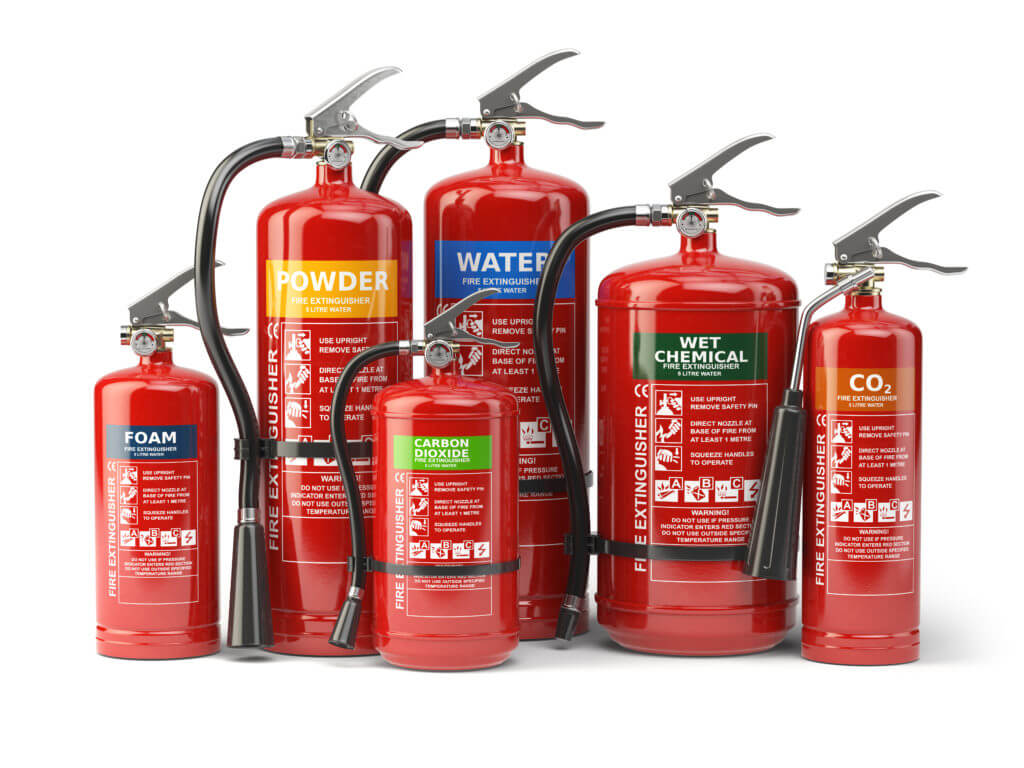
- Water, foam, and powder extinguishers – extended service every 5 years
- CO₂ extinguishers – extended service every 10 years
An extended service involves additional internal examination and testing beyond the annual checks. Where extended servicing is no longer economical or appropriate, we will advise on replacement in line with current standards.
Fire Extinguisher Commissioning
Fire extinguisher commissioning is the process of confirming that newly supplied or relocated extinguishers are:
- Correctly selected for the risks present
- Installed in suitable locations
- Fully operational and safe for use
Commissioning is required before extinguishers are considered compliant for use and should be carried out by a competent person.
Our commissioning service includes checks on assembly, pressure or weight, hoses and horns, mounting height, and signage, with certification provided on completion.
Fire Extinguisher Installation
We install portable fire extinguishers in line with BS 5306-8, ensuring:
- Correct extinguisher types and ratings
- Appropriate siting near escape routes and risk areas
- Compliance with mounting height and visibility guidance
- Clear identification signage
Installation is always based on the findings of a fire risk assessment and the specific hazards present within the premises.
Fire Extinguisher Site Surveys
If you are unsure which extinguishers are required, or whether your existing provision remains appropriate, we can carry out a fire extinguisher site survey.
This includes:
- Review of fire risks and occupancy type
- Assessment of existing extinguisher provision
- Recommendations aligned with current guidance and best practice
Surveys can be undertaken as a standalone service or alongside a fire risk assessment.
Fire Extinguisher Supply
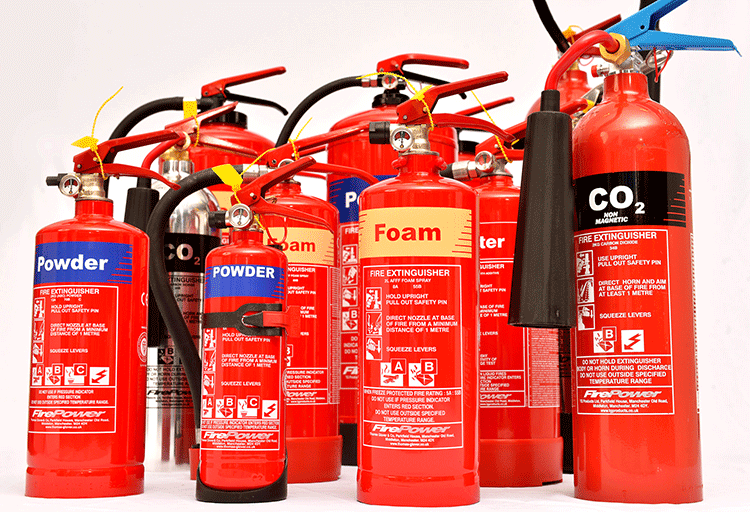
We supply a full range of compliant portable fire extinguishers and fire blankets, selected to match the risks identified within your premises.
All supplied equipment is suitable for use in UK non-domestic buildings and can be commissioned and installed as part of the service.
Fire Extinguisher Maintenance Contracts
Our maintenance contracts provide a simple, compliant way to manage ongoing extinguisher servicing.
Contracts typically include:
- Scheduled annual servicing
- Tracking of extended service dates
- Service labels and certification
- Reminders and record-keeping support
This approach helps ensure continued compliance without the need for manual tracking.
All servicing is carried out by competent engineers working to recognised industry standards. Our approach aligns with accepted competency expectations for fire extinguisher maintenance and the requirements of BS 5306, ensuring servicing is suitable for audit, inspection, and enforcement scrutiny.
Conclusion
Fire extinguisher servicing is not about ticking boxes — it is about ensuring that fire-fighting equipment provided within your premises remains appropriate, maintained, and reliable.
By managing fire extinguishers in line with the Regulatory Reform (Fire Safety) Order 2005 and recognised British Standards guidance, Responsible Persons can demonstrate that reasonable and proportionate fire safety measures are in place.
Our fire extinguisher servicing, commissioning, installation, and maintenance services are delivered by competent professionals and aligned with current UK fire safety expectations. Whether you require a one-off service, an initial survey, or an ongoing maintenance contract, we can support compliance across a wide range of non-domestic premises.
Fire Extinguisher Servicing FAQ
Is Fire Extinguisher Servicing a Legal Requirement in the UK?
UK fire safety law requires that fire-fighting equipment provided within non-domestic premises is maintained in an efficient state. While servicing intervals are not set out in legislation, annual servicing in line with BS 5306-3 is widely accepted as the appropriate standard.
Failure to maintain equipment may result in enforcement action where it forms part of a breach of the Fire Safety Order.
How Often Should Fire Extinguishers Be Serviced?
Most portable fire extinguishers should be serviced at least once every 12 months by a competent person, with extended servicing carried out at 5- or 10-year intervals depending on extinguisher type.
How Many Fire Extinguishers Are Required?
There is no fixed number prescribed in law. The quantity and type of extinguishers should be determined through a fire risk assessment, taking account of:
- Floor area and layout
- Fire risks present
- Occupancy and use
British Standards guidance is commonly used to support these decisions.
Where Should Fire Extinguishers Be Located?
Fire extinguishers are typically located:
- Along escape routes
- Near exits
- Close to specific fire hazards where appropriate
Guidance recommends that occupants should not normally have to travel more than 30 metres to reach a suitable extinguisher.
What Records Should I Keep?
You should retain evidence that extinguishers are properly managed, including:
- In-date service labels on each extinguisher
- Annual service certificates
- Records of extended servicing or replacements
- Documentation supporting selection and siting decisions
These records may be requested during audits, inspections, or enforcement activity.
When Should Fire Extinguishers Be Replaced?
Fire extinguishers should be replaced where:
- They fail inspection or extended servicing
- They are damaged, corroded, or discharged
- Replacement is recommended as part of compliance with current standards
Replacement cycles are determined by condition and servicing outcomes rather than a blanket legal timeframe.