Fire extinguisher regulations in the United Kingdom are primarily governed by the Regulatory Reform (Fire Safety) Order 2005 (RRO). Rather than prescribing exact extinguisher types or quantities, the legislation places responsibility on the Responsible Person to ensure that appropriate fire-fighting equipment is provided based on risk.
Virtually all non-domestic premises fall under these regulations. Because the law is deliberately risk-based rather than prescriptive, understanding how extinguishers should be selected, installed, maintained, and reviewed is essential for compliance.
When correctly assessed and managed, fire extinguisher provision plays a vital role in controlling small fires, supporting safe evacuation, and limiting damage to property.
Contents
- 1 Current Fire Extinguisher Legislation in the UK
- 2 Fire Risk Assessment and Extinguisher Provision
- 3 Selecting Appropriate Fire Extinguisher Types
- 4 Location and Installation Requirements
- 5 Fire Extinguisher Installation and Fixing
- 6 Fire Extinguisher Commissioning
- 7 Fire Extinguisher Maintenance and Servicing
- 8 Maintenance Records and Evidence of Compliance
- 9 Refilling and Replacement of Fire Extinguishers
- 10 Sourcing Fire Extinguishers
- 11 Conclusion
- 12 FAQ About Fire Extinguisher Regulations (UK)
- 12.1 Are fire extinguishers a legal requirement in the UK?
- 12.2 How many fire extinguishers are required in a commercial building?
- 12.3 Which types of fire extinguishers do I need?
- 12.4 Where should fire extinguishers be located?
- 12.5 Do fire extinguishers need to be serviced?
- 12.6 How often do fire extinguishers need to be replaced?
- 12.7 Who is responsible for fire extinguisher compliance?
Current Fire Extinguisher Legislation in the UK
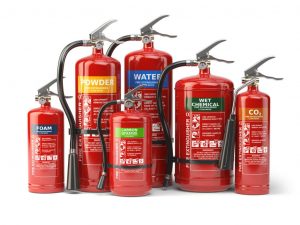
Fire extinguisher requirements for non-domestic premises in England and Wales are set out under the Regulatory Reform (Fire Safety) Order 2005. The Order requires that “appropriate fire-fighting equipment” is provided where there is a risk of fire.
The legislation does not specify exact extinguisher numbers, sizes, or types. Instead, these decisions must be determined by a suitable and sufficient fire risk assessment.
The Responsible Person (such as a business owner, employer, landlord, or managing agent) must:
- Carry out and regularly review a fire risk assessment
- Provide appropriate fire-fighting equipment
- Ensure staff know the location of extinguishers and receive suitable instruction
- Maintain extinguishers in efficient working order
Supporting guidance for extinguisher provision, installation, and maintenance is contained within British Standard BS 5306 (Parts 3 and 8).
Failure to provide suitable equipment or training may result in enforcement action by fire and rescue authorities and may also invalidate insurance cover.
Fire Risk Assessment and Extinguisher Provision
UK legislation does not mandate a fixed number of fire extinguishers. Instead, extinguisher provision must be based on the findings of the fire risk assessment, taking into account:
- The size and layout of the premises
- The level and type of fire risk
- The activities carried out
- The vulnerability of occupants
As a general guide only (not a legal requirement), BS 5306-8 suggests that one 13A-rated extinguisher may cover approximately 200 m² of floor space, with a minimum of two extinguishers per floor in most commercial premises.
Water or foam extinguishers are commonly used for Class A risks, while CO₂ extinguishers are typically provided where electrical equipment is present.
Automatic suppression systems or sprinklers may, subject to risk assessment, reduce the number or positioning of extinguishers required, but they do not usually remove the requirement altogether.
Fire extinguishers are intended for use on small, incipient fires where it is safe to do so and should not be relied upon as a primary fire-fighting measure.
Selecting Appropriate Fire Extinguisher Types
The type of extinguishers required depends on the specific fire risks identified within the premises.
Common additional extinguisher types include:
- CO₂ extinguishers – for electrical fire risks
- Wet chemical extinguishers – for commercial kitchens and cooking oils
- Dry powder extinguishers – typically for external or specialist gas risks
Dry powder extinguishers are generally not recommended for enclosed occupied spaces due to visibility and inhalation risks.
Location and Installation Requirements
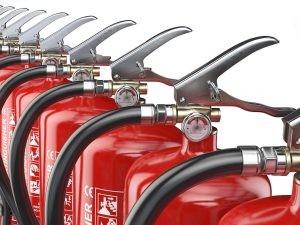 Fire extinguishers should be:
- Clearly visible and easily accessible
- Located on escape routes and near exits
- Positioned close to specific fire hazards where appropriate
BS 5306 guidance recommends that occupants should not have to travel more than 30 metres to reach a suitable extinguisher on any floor.
Specialist extinguishers, such as wet chemical units, should be positioned close to the hazard they are intended to protect — for example, near deep-fat fryers in commercial kitchens.
Fire Extinguisher Installation and Fixing
Fire extinguishers should be:
- Mounted on wall brackets or placed on suitable stands
- Positioned so the carrying handle is typically around 1 metre from floor level
- Accompanied by clear identification signage
Proper fixing helps prevent extinguishers from being moved, obscured, or obstructed and ensures they can be quickly located in an emergency.
Fire Extinguisher Commissioning
Fire extinguisher commissioning confirms that extinguishers are correctly installed, safe to use, and compliant with relevant standards.
Commissioning checks typically include:
- Correct assembly
- Secure fittings
- Correct pressure or weight
- Undamaged components
- Clear labelling and identification
Extinguishers are not considered compliant until they have been commissioned by a competent person.
Fire Extinguisher Maintenance and Servicing
Under the RRO, fire extinguishers must be adequately maintained. In practice, this means:
- Annual servicing by a competent fire extinguisher technician
- Periodic extended servicing or replacement in line with BS 5306 recommendations
Annual servicing includes checks on condition, pressure, weight, seals, tamper indicators, and instructions.
Maintenance Records and Evidence of Compliance
To demonstrate compliance, the Responsible Person should retain:
- In-date service labels on all extinguishers
- A service certificate from a competent provider
- Maintenance records kept on site
- Intact tamper seals or pin indicators
These records may be requested during fire authority inspections, insurance audits, or enforcement visits
Refilling and Replacement of Fire Extinguishers
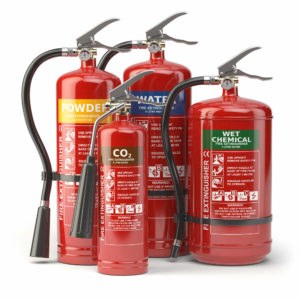
Fire extinguisher refilling, testing, and replacement are governed by British Standard BS 5306 and depend on the extinguisher type, age, condition, and servicing history.
Replacement and Lifecycle Requirements
BS 5306 provides the following guidance on extended servicing and replacement intervals:
- Water, foam, and powder extinguishers: extended service or replacement at 5 years
- CO₂ extinguishers: test or replacement at 10 years
At these extended service intervals, extinguishers may be discharge tested, refilled, or replaced, depending on condition and manufacturer guidance.
Refilling vs Replacement
In practice, many organisations now choose replacement rather than discharge testing or refilling, particularly at extended service points. This is often due to:
- Environmental considerations
- Cost-effectiveness
- Reduced disruption to building operations
- Availability of modern, compliant units
Refilling, discharge testing, replacement, and disposal must always be carried out by a competent person and in accordance with BS 5306 and relevant environmental guidance.
The most appropriate option should be determined during routine servicing or extended maintenance, rather than assumed in advance.
Sourcing Fire Extinguishers
Fire extinguishers should be sourced from reputable fire protection providers supplying equipment compliant with current British Standards.
- Extinguishers should be supplied with:
- Appropriate identification signage
- Correct fixings
- Commissioning and servicing by a competent person
Purchasing extinguishers without professional advice can result in incorrect extinguisher selection, inadequate coverage, or non-compliant installation. For this reason, extinguisher provision is often assessed and specified as part of a wider fire risk assessment.
Conclusion
Fire extinguisher regulations in the UK are risk-based, not prescriptive. Compliance depends on:
- Selecting suitable extinguishers
- Positioning them correctly
- Maintaining them properly
- Reviewing arrangements through regular fire risk assessments
If you are unsure whether your current provision is compliant, a professional fire risk assessment and extinguisher survey will ensure your premises meets legal requirements and best-practice guidance.
FAQ About Fire Extinguisher Regulations (UK)
Are fire extinguishers a legal requirement in the UK?
Fire extinguishers are not explicitly required by law in all premises. However, under the Regulatory Reform (Fire Safety) Order 2005, the Responsible Person must provide appropriate fire-fighting equipment where there is a risk of fire. In practice, this usually means providing suitable fire extinguishers based on the findings of a fire risk assessment.
How many fire extinguishers are required in a commercial building?
There is no fixed legal number. The quantity and type of extinguishers required must be determined by a suitable and sufficient fire risk assessment. As guidance only, British Standard BS 5306-8 suggests one 13A-rated extinguisher per 200 m² of floor space, with a minimum of two per floor in most commercial premises.
Which types of fire extinguishers do I need?
The extinguisher types required depend on the fire risks present. Common examples include:
- Water or foam extinguishers for Class A risks
- CO₂ extinguishers where electrical equipment is present
- Wet chemical extinguishers in commercial kitchens
- Dry powder extinguishers for specialist or external risks
Selection should always be based on risk assessment rather than assumption.
Where should fire extinguishers be located?
Fire extinguishers should be clearly visible, easily accessible, and typically positioned on escape routes or near exits. BS 5306 guidance recommends that occupants should not have to travel more than 30 metres to reach a suitable extinguisher. Specialist extinguishers should be located close to the specific hazard they are intended to protect.
Do fire extinguishers need to be serviced?
Yes. Fire extinguishers must be adequately maintained. In practice, this means annual servicing by a competent technician, with extended servicing or replacement carried out in line with BS 5306 recommendations.
How often do fire extinguishers need to be replaced?
British Standard BS 5306 recommends:
- Water, foam, and powder extinguishers: extended service or replacement at 5 years
- CO₂ extinguishers: test or replacement at 10 years
Many organisations now opt for replacement rather than discharge testing for environmental and cost reasons.
Who is responsible for fire extinguisher compliance?
The Responsible Person (such as an employer, building owner, landlord, or managing agent) is legally responsible for ensuring that appropriate extinguishers are provided, correctly installed, maintained, and that staff receive suitable instruction on their use.