Fire doors are a critical life-safety feature in many buildings, forming part of the fire precautions required to protect escape routes, support compartmentation, and limit the spread of fire and smoke.
To perform as intended, fire doors must be correctly specified, competently installed, and regularly maintained. Poor installation, incompatible components, or lack of inspection can cause a fire door to fail within minutes during a fire, significantly increasing risk to occupants and property.
Under UK fire safety legislation, the Responsible Person must ensure that fire doors are suitable, kept in efficient working order, and aligned with the findings of a suitable and sufficient fire risk assessment.
At Fire Risk Assessment Network, we support organisations with professional fire door installation, inspection, and maintenance services that help meet legal duties and maintain ongoing compliance.
Fire Door Installation and Maintenance Services
Fire door installation and maintenance is a specialist area that requires knowledge of fire door certification, compatible components, installation tolerances, and inspection standards.
We provide fire door services for a wide range of premises, including commercial buildings, mixed-use developments, and multi-occupied residential buildings. Our approach focuses on ensuring that fire doors:
- Are correctly specified for their location and function
- Are installed in line with manufacturer certification and guidance
- Remain effective through regular inspection and maintenance
- Support compliance with current UK fire safety legislation
Fire doors should never be treated as a one-off installation. Ongoing inspection and maintenance are essential to ensure continued performance throughout the life of the building.
What Is a Fire Door?
A fire door is a purpose-designed doorset that has been tested and certified to resist the passage of fire and smoke for a defined period, commonly 30 or 60 minutes.
Fire doors are typically used to:
- Protect escape routes such as corridors and stairways
- Support compartmentation within a building
- Separate higher-risk areas from the rest of the premises
A fire door’s performance depends on all components working together, including the door leaf, frame, seals, glazing, ironmongery, and self-closing device. Alterations or poor installation can invalidate certification and significantly reduce effectiveness.
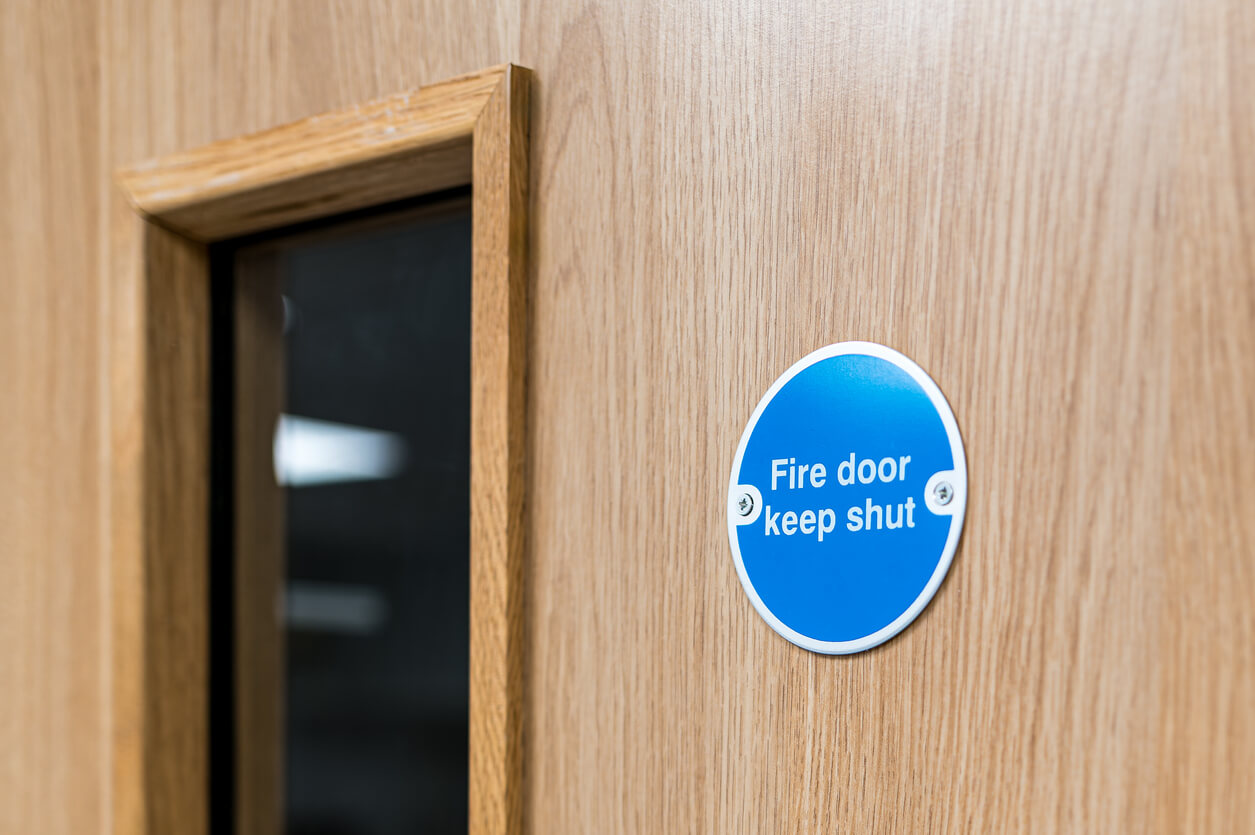
Fire Door Installation Requirements
Fire doors must be installed by a competent person using compatible, certified components and manufacturer-approved methods.
Key installation considerations include:
- Correct door/frame compatibility
- Controlled gaps (typically 3–4mm at sides and top)
- Installation of intumescent and smoke seals
- Suitable hinges and ironmongery
- Effective self-closing devices
- Secure fixing and alignment
Fire safety legislation does not mandate a specific qualification for installers, but it does require that fire safety measures are implemented competently. Inadequate installation can cause a fire door to fail well before its rated performance time.
For the technical installation standard, see our guide to BS 8214:2026 fire door installation requirements.
Fire Doors and UK Fire Safety Legislation
Fire door installation and maintenance are governed by a combination of legislation and guidance, including:
- The Regulatory Reform (Fire Safety) Order 2005, which requires fire precautions to be provided and maintained based on fire risk assessment
- The Fire Safety Act 2021, which clarified that flat entrance doors in multi-occupied residential buildings must be included within the scope of the fire risk assessment
- The Fire Safety (England) Regulations 2022, including Regulation 10, which introduced specific fire door inspection duties in certain residential buildings
- Approved Document B (Fire Safety), which provides Building Regulations guidance for fire doors in new builds and material alterations
Together, these set expectations for how fire doors should be provided, installed, inspected, and maintained.
Fire Door Maintenance and Inspection
Fire doors must be kept in efficient working order and good repair throughout their service life.
Maintenance and inspection typically focus on:
- Door operation and self-closing
- Condition of seals and glazing
- Gaps and alignment
- Damage or unauthorised alterations
- Performance of ironmongery
Inspection frequency should be risk-based and informed by the fire risk assessment. Doors in high-use or high-risk locations may require more frequent checks.
Where formal checks are required, including in certain residential buildings, our fire door inspection service supports Responsible Persons in meeting ongoing maintenance and compliance duties.
Fire Door Checks in Residential Buildings (England)
In England, Regulation 10 of the Fire Safety (England) Regulations 2022 introduced specific duties relating to fire door checks in buildings that contain two or more sets of domestic premises and have common parts.
In buildings above 11 metres, the Responsible Person must use best endeavours to:
- Carry out quarterly checks of fire doors in common parts
- Carry out annual checks of flat entrance doors opening onto common parts
- Keep records of the steps taken
In addition to inspection duties, Regulation 10 also requires Responsible Persons to provide residents with fire safety information relating to fire doors, including the importance of keeping doors closed and reporting defects.
Where Regulation 10 does not apply—for example in non-residential buildings or residential buildings below 11 metres—fire doors must still be inspected and maintained as part of the general duties under the Regulatory Reform (Fire Safety) Order 2005. In practice, inspection frequency should be risk-based, and many organisations adopt at least six-monthly checks, with more frequent inspection in high-use or higher-risk environments.
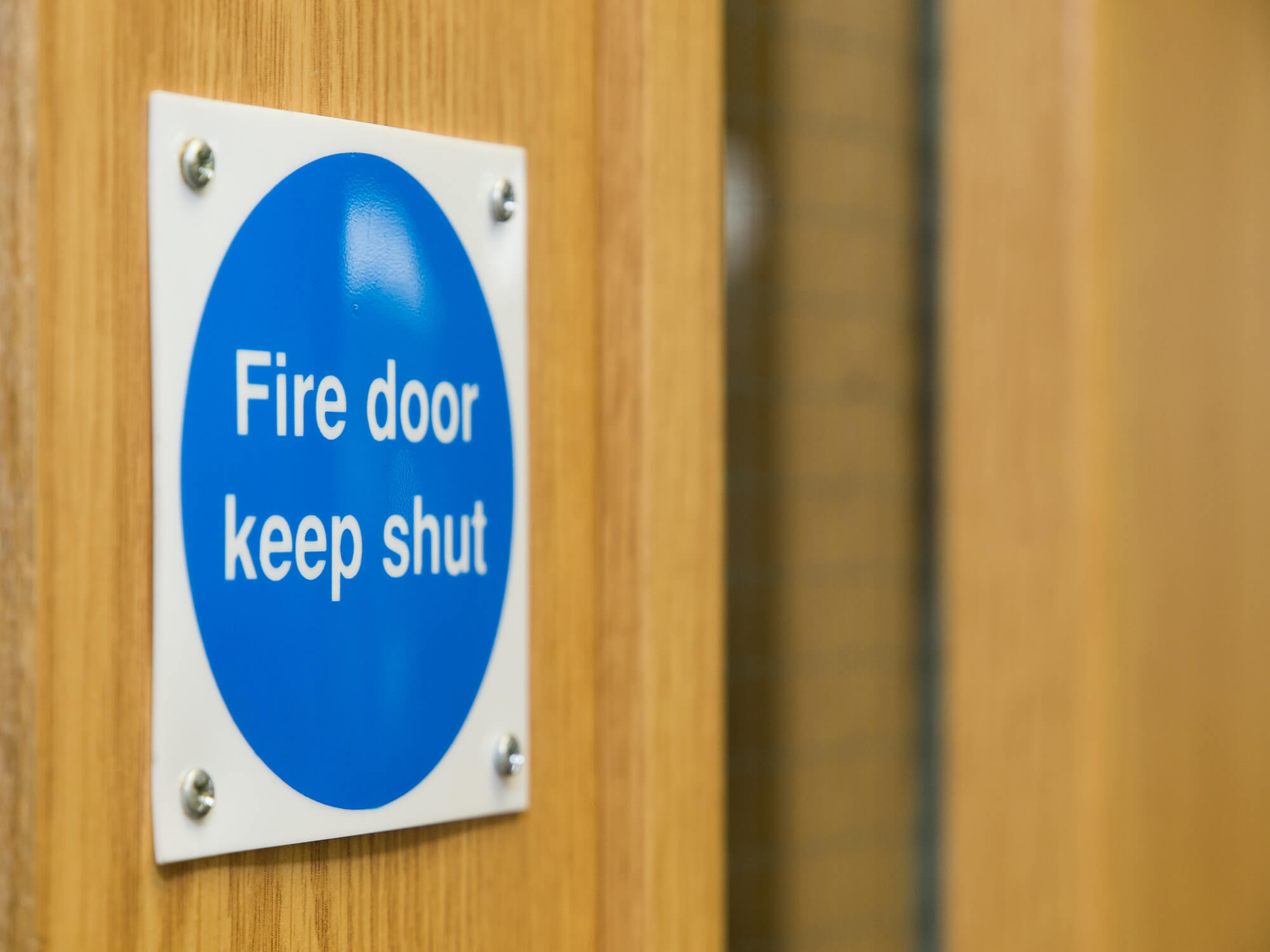
Fire Door Ratings and Application
Fire doors are rated according to the length of time they can resist fire, commonly expressed as FD30, FD60, FD90, or FD120.
In residential buildings, flat entrance doors opening onto common parts are commonly required to provide at least FD30S (30 minutes fire resistance with smoke control), unless a higher standard is justified by the building’s fire strategy or fire risk assessment.
The appropriate rating should always be determined by risk assessment and fire strategy rather than assumption.
Competence Requirements for Fire Door Installation and Maintenance
Fire door installation and maintenance should only be carried out by persons who are competent to do so. Improper installation, adjustment, or repair can significantly reduce a fire door’s ability to resist fire and smoke, potentially leading to non-compliance and increased risk.
Our Experience With Fire Door Installation and Maintenance
At Fire Risk Assessment Network, we regularly assess, install, inspect, and maintain fire doors across a wide range of premises.
In practice, we often encounter fire doors that:
- Have been poorly installed or altered
- No longer reflect current building use
- Have damaged or missing components
- Have not been inspected in line with legal or risk️ expectations
Our approach focuses on practical compliance, clear reporting, and proportionate recommendations that support Responsible Persons in meeting their legal duties.
Conclusion
Correct fire door installation and ongoing maintenance are essential to fire safety compliance and occupant protection.
Recent legislative changes have reinforced the importance of fire doors, particularly in residential buildings with shared areas. Ensuring that fire doors are competently installed, regularly inspected, and properly maintained helps protect lives, supports safe evacuation, and reduces exposure to enforcement action.
If you require support with fire door installation, inspection, or maintenance, contact us today.
Frequently Asked Questions About Fire Door Installation and Maintenance
Who is responsible for fire door installation and maintenance?
The Responsible Person, as defined under the Regulatory Reform (Fire Safety) Order 2005, is responsible for ensuring that fire doors are suitable, correctly installed, and kept in efficient working order. This may include employers, building owners, landlords, managing agents, or others with control of the premises.
Do fire doors have to be installed by a certified installer?
Fire safety legislation does not require a specific certification, but it does require that fire doors are installed by a competent person. Competence is demonstrated through appropriate training, knowledge, experience, and the ability to follow manufacturer certification and guidance. Incorrect installation can cause a fire door to fail significantly earlier than its rated performance.
How often should fire doors be inspected and maintained?
Inspection and maintenance frequency should be risk-based and informed by the fire risk assessment. In England, Regulation 10 of the Fire Safety (England) Regulations 2022 sets minimum legal checks in certain residential buildings, including quarterly checks of fire doors in common parts and annual checks of flat entrance doors in buildings above 11 metres.
Does Regulation 10 apply to all buildings?
No. Regulation 10 applies to residential buildings in England that contain two or more sets of domestic premises and have common parts. Commercial and other non-domestic buildings remain subject to the Fire Safety Order, with inspection and maintenance determined by risk assessment rather than fixed inspection intervals.
What standards should fire door installation follow?
Fire doors should be installed in accordance with manufacturer certification and relevant guidance, including Approved Document B (Fire Safety) under the Building Regulations for new builds and material alterations. Timber fire door assemblies are commonly referenced against BS 8214:2026 for good practice in specification, installation, and maintenance.
What are the most common fire door defects found during maintenance?
Common defects include missing or damaged self-closing devices, damaged or missing intumescent or smoke seals, excessive gaps around the door, incompatible ironmongery, damaged glazing, and unauthorised alterations. Any of these issues can significantly reduce a fire door’s effectiveness during a fire.
Do flat entrance doors need to be fire-rated?
In most blocks of flats, flat entrance doors opening onto common parts are commonly required to provide at least FD30S (30 minutes fire resistance with smoke control), unless a higher standard is justified by the building’s fire strategy or fire risk assessment. The Fire Safety Act 2021 clarified that these doors fall within the scope of the fire risk assessment.
What happens if fire doors are not properly installed or maintained?
Poor installation or lack of maintenance can result in fire doors failing to contain fire and smoke, increasing risk to occupants and potentially leading to enforcement action. Non-compliance may result in enforcement notices, prosecution, or issues with insurers following a fire incident.
Last updated