Fire doors are a critical part of a building’s passive fire protection system, but they only work properly when the full door assembly is suitable, undamaged, correctly fitted and able to close as intended.
This fire door inspection checklist explains the main items normally checked during routine fire door checks, professional fire door inspections and fire door surveys. It is useful for responsible persons, landlords, managing agents, facilities teams and business owners who need a clearer understanding of what should be recorded.
A checklist can support routine monitoring and compliance records, but it does not replace a suitable fire risk assessment or a professional fire door inspection where the condition, suitability or certification of doors is uncertain.
Quick answer
What Should Be Checked During a Fire Door Inspection?
A fire door inspection should check the whole door assembly, not just the door leaf. This normally includes the door leaf, frame, gaps, seals, hinges, closer, latch, glazing, signage, visible damage, certification evidence and whether the door closes correctly. Findings should be recorded so defects can be prioritised and repaired.
- Routine checks: useful for simple visual monitoring and Regulation 10 records.
- Professional inspections: usually include door-by-door findings, photographs where agreed, priority ratings and remedial recommendations.
- Key evidence: door reference, location, condition, defects, actions, person responsible and review date.
Why Use a Fire Door Inspection Checklist?
A fire door inspection checklist helps make sure every door is assessed consistently. Without a checklist, defects can be missed, records can be incomplete and it may be harder to show that fire doors are being managed properly.
Under fire safety law, fire safety measures must be maintained in efficient working order and good repair. Fire doors are commonly relied upon to protect escape routes, contain fire and smoke, and support compartmentation.
Using a checklist can help with:
- consistent door-by-door checks;
- clear records for responsible persons and managing agents;
- early identification of damaged or poorly maintained doors;
- prioritising repairs and replacement works;
- supporting fire risk assessment action plans;
- planning professional fire door inspections or surveys.
For a full inspection service overview, see our fire door inspection and survey guide.
Fire Door Inspection Checklist
The checklist below gives a practical structure for checking fire doors. The exact scope should reflect the building, door type, fire risk assessment findings and whether the check is a simple routine visual check or a professional fire door survey.
| Checklist item | What to check | Why it matters | Record |
|---|---|---|---|
| Door location and reference | Record floor, room, flat, door number or asset reference. | Clear references make defects easier to find and repair. | Door ID, location, date and inspector name. |
| Door leaf condition | Check for cracks, holes, splits, warping, delamination, excessive trimming or unauthorised alterations. | Damage can reduce fire resistance and smoke control. | Pass/fail, defect notes and photos where needed. |
| Frame and surrounding wall | Check the frame is secure, undamaged, aligned and not separated from the surrounding wall. | The door leaf and frame work together as a doorset. | Frame condition and any visible gaps or movement. |
| Gaps and clearances | Check gaps at the top, sides and threshold. Typical side/head gaps are often around 2-4mm, but the door specification should be followed. | Excessive gaps can allow smoke and fire to spread earlier than expected. | Measured gaps or visual concerns. |
| Intumescent and smoke seals | Check seals are present where required, continuous, undamaged, correctly fitted and not painted over. | Seals help restrict fire and smoke spread when activated or during smoke movement. | Missing, damaged or unsuitable seals. |
| Hinges | Check hinges are secure, suitable, not excessively worn and have no missing screws. | Loose or unsuitable hinges can affect alignment and door performance. | Hinge quantity, condition and defects. |
| Self-closing device | Check the door closes fully into the frame and latches from an open position without manual assistance. | A fire door that does not close cannot protect the opening properly. | Closer operation, speed, latch and any failure to close. |
| Latch, locks and ironmongery | Check handles, latches, locks, panic hardware and other ironmongery are secure, suitable and operating correctly. | Incorrect or damaged hardware can compromise the doorset or escape route use. | Loose, missing, damaged or unsuitable ironmongery. |
| Glazing and vision panels | Check glass is intact, beading is secure, and any glazing seals or systems appear suitable and undamaged. | Non-fire-rated or damaged glazing can fail early in a fire. | Cracks, loose beads, missing seals or uncertain glazing. |
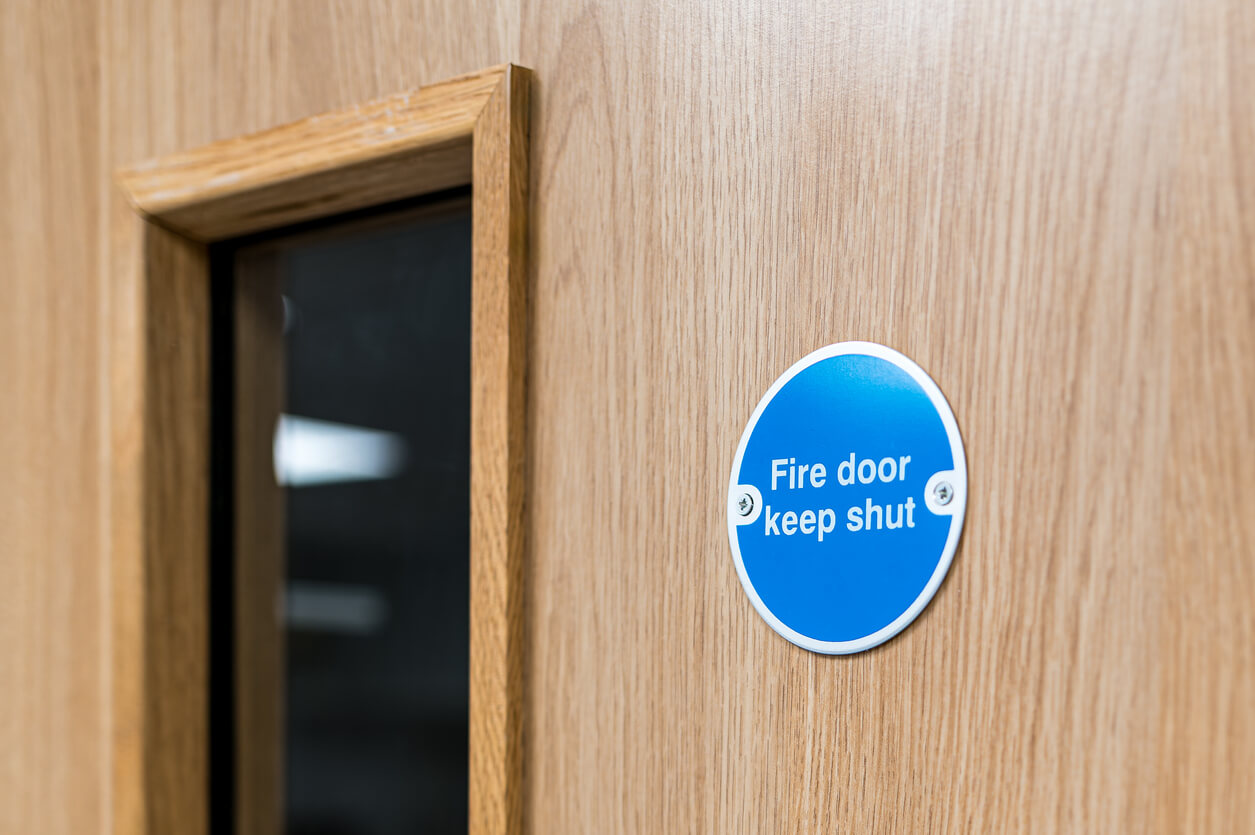
| Signage | Check appropriate fire door signs are fitted and legible, such as keep shut or keep locked signs where required. | Signage helps occupants and staff use fire doors correctly. | Missing, damaged or incorrect signs. |
| Misuse or obstruction | Check doors are not wedged open, blocked, altered, damaged by decoration or prevented from closing. | Management issues can defeat an otherwise suitable fire door. | Wedges, obstructions, tampering or behavioural issues. |
| Certification or evidence | Check for labels, plugs, markings, O&M records or installation evidence where available. | Evidence can help confirm rating, suitability and installation assumptions. | Visible labels, missing evidence or further investigation needed. |
Where significant defects are found, the responsible person should take proportionate action. This may include repair, adjustment, replacement, further investigation or a professional fire door survey.
Routine Fire Door Checks vs Professional Fire Door Inspections
A routine checklist can be used by trained facilities teams, caretakers, housing officers or managing agents for simple visual checks. This is particularly relevant for Regulation 10 checks in residential buildings in England.
A professional fire door inspection or survey is usually more detailed. It may include a door schedule, measured observations, photographs, priority ratings, defect categories and recommended remedial actions.
| Check type | Typical purpose | Typical output |
|---|---|---|
| Routine visual check | Regular monitoring, simple Regulation 10 checks, identifying obvious defects. | Checklist record, date, findings and action notes. |
| Professional inspection | Assessing condition, operation and defects door by door. | Door schedule, findings, defect priorities and recommendations. |
| Fire door survey | Wider building or portfolio review with structured reporting. | Detailed report, photos where included, remedial schedule and management summary. |
If you need a professional assessment, see our fire door inspection and survey UK guide.
How Often Should a Fire Door Checklist Be Used?
Inspection frequency should be risk-based and informed by the building use, occupancy, fire risk assessment and how much wear the doors receive.
In England, Regulation 10 of the Fire Safety (England) Regulations 2022 requires specific checks in residential buildings where the top storey is above 11 metres. Responsible persons must use best endeavours to check flat entrance fire doors at least every 12 months and check communal fire doors at least every 3 months.
For other commercial and non-domestic premises, the inspection frequency should be proportionate. High-use doors, escape route doors, care settings, schools, hotels, HMOs and higher-risk premises may require more frequent checks than low-use doors in simple premises.
For legal duties, see our fire door regulations UK guide.
What Should Be Recorded on a Fire Door Checklist?
A useful checklist should create a record that can be understood later by the responsible person, assessor, contractor or enforcing authority. It should not simply say that a door was checked; it should record what was found and what action is needed.
Include:
- building name and address;
- floor, location and door reference;
- door type or use, such as flat entrance, stair door, riser door or plant room door;
- date of inspection;
- person completing the check;
- defects found;
- photographs where useful;
- risk or priority rating;
- recommended action;
- target timescale and person responsible;
- record of doors not accessed.
Common Fire Door Checklist Failures
Many fire door defects are simple to spot during routine checks. Common failures include:
- door does not self-close or latch;
- fire door is wedged or propped open;
- damaged, missing or painted-over seals;
- excessive gaps around the door leaf;
- missing screws or worn hinges;
- damaged glazing or loose beading;
- holes, cracks or unauthorised alterations;
- missing fire door signage;
- uncertain certification or missing door records;
- access could not be obtained to inspect flat entrance doors.
Some defects can be resolved through maintenance or adjustment. Others may require competent repair, replacement or further technical review.
What Happens After Completing the Checklist?
After completing a fire door checklist, defects should be reviewed, prioritised and acted on. A checklist only has value if the findings are followed through.
The responsible person should:
- review all failed or uncertain items;
- prioritise urgent defects affecting escape routes or self-closing action;
- arrange competent repair or replacement where needed;
- update the fire risk assessment action plan where relevant;
- keep evidence of completed remedial works;
- schedule re-checks or professional inspection where defects are significant.
For installation and replacement issues, see our BS 8214 fire door installation guide.
Can You Use This Checklist as a Printable Template?
Yes, the checklist can be used as the basis for a printable or digital inspection record. For best results, use one record per door and include enough information to identify the location, findings, action required and follow-up responsibility.
For larger buildings or portfolios, a professional inspection report is usually more practical than a simple checklist because it can provide a door schedule, consistent defect ratings and a clearer remedial action plan.
For pricing guidance, see our fire door inspection cost guide.
Our Experience With Fire Door Inspections and Checklists
Fire Risk Assessment Network helps responsible persons, landlords, managing agents and business owners arrange fire door inspections and fire door surveys across the UK.
Our network includes fire safety professionals with experience assessing fire doors in residential, commercial and mixed-use buildings, including blocks of flats, HMOs, care homes, hotels, schools, offices, warehouses and property portfolios.
A well-structured checklist is useful for routine management, but when defects are widespread, records are poor or legal duties are unclear, a professional fire door inspection can provide a more robust picture of condition and priorities.
Conclusion
A fire door inspection checklist helps responsible persons check and record the condition of fire doors consistently. It should cover the door leaf, frame, gaps, seals, hinges, closer, latch, glazing, signage, misuse, certification evidence and any follow-up action required.
The checklist should support ongoing fire safety management, not become a tick-box exercise. Where defects are significant or the suitability of doors is uncertain, professional fire door inspection or survey support may be needed.
Frequently Asked Questions About Fire Door Inspection Checklists
What is a fire door inspection checklist?
A fire door inspection checklist is a structured record used to check the visible condition and operation of a fire door assembly. It usually covers the door leaf, frame, gaps, seals, hinges, closer, latch, glazing, signage, defects and follow-up actions.
Is a fire door checklist legally required?
The law does not usually prescribe one fixed checklist format, but fire doors must be maintained where they are provided as fire safety measures. A checklist can help responsible persons keep evidence of checks, defects and actions taken.
Who should complete a fire door inspection checklist?
Simple routine checks may be completed by trained facilities teams, caretakers, housing officers or managing agents. More detailed inspections and surveys should be carried out by competent fire door inspectors or suitably experienced fire safety professionals.
How often should fire doors be checked?
Frequency should be risk-based. In England, buildings over 11 metres that fall under Regulation 10 require communal fire door checks at least every 3 months and best-endeavours flat entrance fire door checks at least every 12 months.
What should be recorded on a fire door checklist?
Records should include the door location, door reference, date, person completing the check, defects found, photographs where useful, priority or risk rating, recommended action, target timescale and any doors that could not be accessed.
Can facilities teams use a checklist?
Yes. Facilities teams can use a checklist for routine visual monitoring where they have been given suitable instruction. However, significant defects, uncertain door suitability or compliance concerns may require a professional fire door inspection or survey.
Is a checklist the same as a fire door survey?
No. A checklist is a tool for recording checks. A fire door survey is usually a more detailed professional assessment across a building or portfolio, often including a door schedule, photographs, priority ratings and remedial recommendations.
What should I do if a fire door fails the checklist?
The defect should be recorded, prioritised and actioned. Depending on the issue, this may involve repair, adjustment, replacement, further investigation or review by a competent fire door inspector or contractor.
Last updated