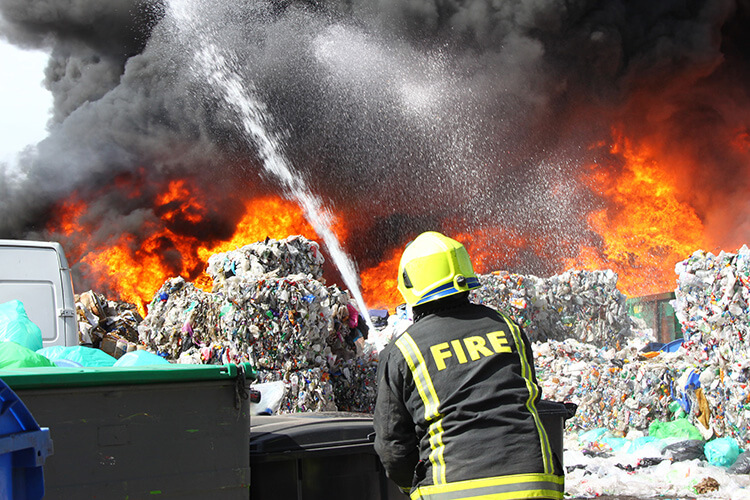
Fire and rescue services play a central role in protecting life, enforcing fire safety law, and responding to fire-related emergencies across the UK. While most people associate them with emergency response, their legal responsibilities extend far beyond attending fires.
For businesses, landlords, managing agents, and other Responsible Persons, understanding the role of fire and rescue services is essential. They are the primary enforcing authorities for fire safety legislation and have significant powers to inspect premises, require improvements, and take enforcement action where fire risks are not properly managed.
This guide explains the role of UK fire and rescue services, how they enforce fire safety law, when they may inspect premises, and what Responsible Persons need to know to remain compliant.
What Are Fire and Rescue Services Responsible For?
Fire and rescue services are public authorities responsible for fire prevention, protection, and response within their geographical areas.
Their responsibilities generally include:
- Responding to fires and other emergencies
- Fire prevention and community safety initiatives
- Enforcing fire safety legislation in non-domestic premises and common parts of residential buildings
- Auditing and inspecting premises for compliance
- Issuing enforcement, prohibition, or alteration notices where necessary
In England and Wales, fire and rescue services are the enforcing authority for most fire safety matters under the Regulatory Reform (Fire Safety) Order 2005.
Fire Safety Enforcement and Legal Powers
Under the Regulatory Reform (Fire Safety) Order 2005 (FSO), fire and rescue services have statutory powers to ensure fire risks are properly controlled.
These powers include the ability to:
- Enter premises for inspection
- Review fire risk assessments
- Examine fire safety measures such as alarms, emergency lighting, fire doors, and escape routes
- Require information or documents
- Issue enforcement notices where deficiencies are identified
If serious risks are present, fire and rescue services may issue:
- Enforcement Notices – requiring specific improvements within a set timescale
- Prohibition Notices – restricting or prohibiting use of all or part of a building where risk is severe
- Alterations Notices – requiring notification before changes are made to higher-risk premises
Failure to comply can lead to prosecution, unlimited fines, and, in serious cases, imprisonment.
Who Do Fire and Rescue Services Enforce Against?
Fire safety enforcement is directed at the Responsible Person.
This may include:
- Employers
- Building owners or freeholders
- Landlords
- Managing agents
- Facilities managers
- Residents’ management companies
Responsibility is determined by control, not job title. Fire and rescue services will assess who has control over the premises and fire safety arrangements when taking enforcement action.
This makes it essential to clearly understand who is responsible for completing and maintaining a fire risk assessment, as responsibility cannot be delegated away.
The Role of Fire Risk Assessments in Enforcement
Fire and rescue services do not simply check whether a fire risk assessment exists — they assess whether it is:
- Suitable and sufficient
- Proportionate to the premises
- Based on competent assessment
- Kept under review
- Acted upon in practice
A completed checklist or generic document is not enough if it fails to identify real risks or is not implemented.
Enforcement action often arises where:
- Assessments are out of date
- Key risks (e.g. fire doors, emergency lighting, compartmentation) are not addressed
- Actions are not prioritised or completed
- Competence of the assessor cannot be demonstrated
This is why using a competent fire risk assessor and maintaining clear records is critical for legal defensibility.
Inspections, Audits, and When They Happen
Fire and rescue services may inspect premises:
- As part of a risk-based audit programme
- Following a complaint or concern
- After a fire or near miss
- Where building use or risk profile has changed
- In response to intelligence or sector-wide issues
Inspections may focus on:
- Fire risk assessments
- Emergency escape routes and lighting
- Fire detection and alarm systems
- Fire doors and compartmentation
- Fire safety management arrangements
- Staff training and procedures
Premises such as blocks of flats, care homes, HMOs, places of assembly, and higher-risk buildings are more likely to be inspected.
For a practical checklist of what may be reviewed during an inspection, see our guide to how the Fire and Rescue Service audits your fire risk assessment. If a formal notice has been served, see our guide to fire safety enforcement notices.
National Oversight and Guidance
While enforcement is carried out locally, national coordination and professional guidance is provided by bodies such as the National Fire Chiefs Council, which represents fire and rescue services across the UK.
Fire and rescue services also follow guidance issued by central government, including Home Office and GOV.UK publications, when interpreting and enforcing fire safety legislation.
Responsible Persons should ensure their fire safety arrangements align with current guidance and recognised standards to reduce enforcement risk.
Fire and Rescue Services vs Other Building Safety Regimes
It is important to understand that fire and rescue services enforce fire safety law, not all aspects of building safety.
For example:
- Structural safety and building control fall under separate regimes
- The Building Safety Act 2022 introduced additional duties for higher-risk residential buildings, but fire safety enforcement under the FSO remains with fire and rescue services
- Fire risk assessments continue to be a core legal requirement alongside newer building safety obligations
Understanding where responsibilities sit helps avoid gaps or duplication in compliance.
How Responsible Persons Should Engage With Fire and Rescue Services
Responsible Persons should approach fire safety enforcement proactively rather than reactively.
Good practice includes:
- Maintaining a suitable and sufficient fire risk assessment
- Keeping records of reviews, actions, and remedial works
- Ensuring fire safety systems are tested and maintained
- Training staff and communicating procedures
- Responding promptly and transparently to inspections or correspondence
Demonstrating competence, cooperation, and effective management can significantly influence enforcement outcomes.
How Fire Risk Assessment Network Can Help
At Fire Risk Assessment Network, we support Responsible Persons by helping them meet their legal duties and prepare for scrutiny by enforcing authorities.
Our services include:
- Competent fire risk assessments
- Reviews of existing assessments and documentation
- Support with enforcement notices and action plans
- Advice on proportionate compliance across different premises types
We focus on producing assessments and guidance that are clear, practical, and defensible — designed to stand up to inspection and enforcement.
If you are unsure whether your fire safety arrangements would satisfy an inspection by fire and rescue services, we can help.
Conclusion
Fire and rescue services play a critical role not only in emergency response, but in enforcing fire safety law and protecting people through prevention and regulation.
For Responsible Persons, understanding how fire and rescue services operate, what they enforce, and how they assess compliance is essential for managing risk and meeting legal obligations.
By maintaining a suitable and sufficient fire risk assessment, acting on findings, and engaging proactively with fire safety requirements, organisations can reduce enforcement risk and improve safety for everyone who uses their buildings.
If you need professional support with fire safety compliance, fire risk assessments, or enforcement-related concerns, Fire Risk Assessment Network is here to help.
Frequently Asked Questions
What is the role of UK fire and rescue services?
UK fire and rescue services are responsible for emergency response, fire prevention, and enforcing fire safety legislation in non-domestic premises and the common parts of residential buildings. They inspect premises, assess fire risk management, and take enforcement action where necessary.
Do fire and rescue services enforce fire safety law?
Yes. Fire and rescue services are the enforcing authority for the Regulatory Reform (Fire Safety) Order 2005 in England and Wales. They have legal powers to inspect premises, review fire risk assessments, and issue enforcement, prohibition, or alteration notices where fire safety risks are not adequately controlled.
Who do fire and rescue services enforce against?
Fire safety enforcement is directed at the Responsible Person. This may be an employer, building owner, landlord, managing agent, or organisation with control of the premises. Responsibility is based on control, not job title, and cannot be delegated away.
Can fire and rescue services inspect my premises?
Yes. Fire and rescue services can inspect premises as part of risk-based audit programmes, following complaints, after incidents, or where intelligence suggests increased risk. They have powers to enter premises and examine fire safety arrangements.
What do fire and rescue services look for during inspections?
Inspections typically focus on the suitability of the fire risk assessment, condition of escape routes, emergency lighting, fire alarms, fire doors, compartmentation, fire safety management, and whether identified risks are being effectively managed and reviewed.
What happens if fire safety deficiencies are found?
If deficiencies are identified, fire and rescue services may issue enforcement notices requiring improvements, prohibition notices restricting use of part or all of a building where risk is serious, or alteration notices for higher-risk premises. Failure to comply can result in prosecution, fines, or imprisonment.
Is having a fire risk assessment enough to avoid enforcement?
No. Fire and rescue services assess whether a fire risk assessment is suitable and sufficient, kept under review, carried out by a competent person, and acted upon. A generic or outdated assessment that is not implemented may still lead to enforcement action.
Do fire and rescue services enforce residential buildings?
Fire and rescue services enforce fire safety law in the common parts of residential buildings, including blocks of flats, HMOs, and mixed-use buildings. Individual flats are generally outside scope, but building structure, external walls, and flat entrance doors may fall within the assessment.
How can Responsible Persons reduce enforcement risk?
Responsible Persons can reduce enforcement risk by maintaining a suitable and sufficient fire risk assessment, acting on findings, keeping records, ensuring systems are tested and maintained, and using competent professionals where required.
Can Fire Risk Assessment Network help with enforcement concerns?
Yes. Fire Risk Assessment Network provides competent fire risk assessments, reviews, and compliance support designed to stand up to inspection and enforcement by fire and rescue services.
Last updated