External wall fire safety has become a critical issue for multi-occupied residential buildings following changes in lender requirements and government guidance. External wall systems, including cladding, balconies, insulation, and fixings, can significantly influence a building’s fire risk profile.
An EWS1 (External Wall System) Fire Review Survey provides a structured assessment of external wall fire risk and is commonly requested by lenders, valuers, buyers, and managing agents to support mortgage lending, remortgage, and valuation decisions.
Our fire engineers provide competent, independent EWS1 external wall fire review surveys across the UK, supporting property owners, managing agents, developers, and housing providers with clear, evidence-based assessments.
Whether you are seeking an EWS1 assessment for lending, sale, remediation planning, or reassurance, our engineers have extensive experience completing EWS1 surveys in line with current industry guidance.
EWS1 surveys are not required for all buildings. Current guidance confirms they should only be requested where external wall systems could present a material fire risk. Many buildings do not require an EWS1 assessment.
What Is an EWS1 External Wall Fire Review Survey?
An EWS1 external wall fire review survey is a structured assessment of a building’s external wall system to determine the level of fire risk posed by materials used in its construction.
The review is carried out by a suitably qualified fire engineer and recorded using the standard EWS1 form, which was introduced by the Royal Institution of Chartered Surveyors (RICS), UK Finance, and the Building Societies Association.
The EWS1 process follows industry guidance issued by RICS and UK Finance, which emphasises proportionate use and confirms that EWS1 forms should only be requested where external wall systems present a material fire risk.
The purpose of the EWS1 process is not to certify compliance with legislation, but to provide consistent information to lenders and valuers when assessing fire risk associated with external wall systems.
The assessment considers factors such as:
- Cladding materials and fixings
- Insulation and cavity barriers
- Balconies, attachments, and architectural features
- Fire spread potential via the external wall system
- Relevant fire safety design considerations
When Is an EWS1 Survey Required?
An EWS1 survey is not a legal requirement, but it is commonly requested where:
- A building contains external wall systems
- Lenders require reassurance on fire risk
- A property sale, remortgage, or valuation is taking place
- Fire risk assessments have identified concerns relating to external walls
Current guidance makes clear that EWS1 forms should be requested proportionately and only where external wall systems could present a material fire risk.
Only one EWS1 assessment is required per building, not per flat.
Once completed and signed, an EWS1 form is generally valid for five years, unless material changes are made to the external wall system or new risks are identified.
This approach reflects current UK Finance guidance, which makes clear that EWS1 forms should be requested proportionately and only where external wall systems could present a material fire risk.
What Does the EWS1 External Wall Fire Review Involve?
During an EWS1 external wall fire review, the fire engineer will:
- Inspect the building and external wall systems
- Review construction details and available documentation
- Assess combustibility and fire spread risk
- Determine whether further investigation is required
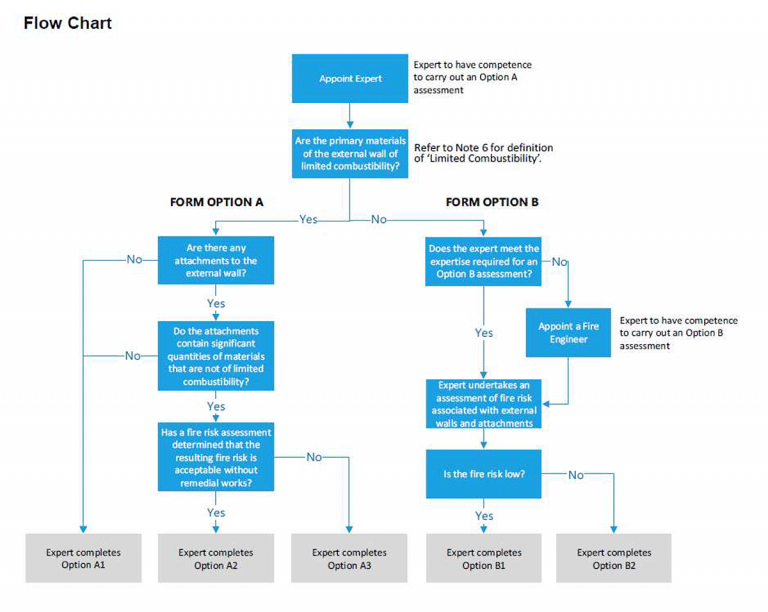
- Complete and sign the EWS1 form (Option A or Option B)
Where necessary, intrusive inspections may be recommended, but these are not always required and will depend on available information and observed risk.
Balconies, shading systems, decorative features, and attachments are also considered, as these can contribute to external fire spread.
EWS1 Form Outcomes Explained
The EWS1 form records one of the following outcomes:
- Option A – External wall materials are unlikely to support fire spread
- Option B – Combustible materials are present and require further assessment or remediation
An Option B outcome does not automatically mean a building is unsafe or unmortgageable, but it may indicate that risk mitigation measures are required.
EWS1 External Wall Fire Review Process Flow Chart
Relationship Between EWS1 and Fire Risk Assessments
EWS1 surveys do not replace fire risk assessments.
Fire risk assessments are a legal requirement under fire safety legislation, whereas EWS1 assessments are a valuation and lending tool focused specifically on external wall systems.
However, findings from EWS1 assessments may inform or complement fire risk assessments, particularly where external wall risks are identified.
Legal fire risk assessment duties are set out under legislation such as the Fire Safety Act 2021, whereas EWS1 assessments exist solely to support lending and valuation decisions.
Where concerns relating to external wall fire spread are identified, a more detailed Fire Risk Appraisal of External Walls (FRAEW) may be required to support risk management decisions and inform remediation or mitigation strategies.
For a fuller explanation of the technical appraisal route, see our guide to Fire Risk Appraisal of External Walls. If the question is mortgage or valuation related, our EWS1 portal guide may also be useful.
Who Can Complete an EWS1 Survey?
EWS1 surveys must be completed by a competent, suitably qualified professional, typically:
- A chartered fire engineer
- A professional with appropriate fire safety expertise and professional indemnity cover
Only authorised professionals can sign the EWS1 form.
Why Choose Fire Risk Assessment Network?
- Competent, experienced fire engineers
- EWS1 surveys completed in line with current guidance
- Clear, lender-focused reporting
- Independent, evidence-based assessments
- Support alongside wider fire safety and risk assessment services
Our aim is to provide clear, proportionate external wall fire risk assessments that support informed decision-making and compliance.
Conclusion
EWS1 external wall fire review surveys play an important role in assessing fire risk associated with external wall systems and supporting lending and valuation decisions.
While not a legal requirement, an EWS1 survey may be essential where external wall construction could present a material fire risk.
At Fire Risk Assessment Network, we provide competent, professional EWS1 assessments to help property owners, managing agents, and stakeholders understand and manage external wall fire risk effectively.
Frequently Asked Questions
What Is an EWS1 External Wall Fire Review Survey?
An EWS1 External Wall Fire Review Survey is an assessment of a building’s external wall system carried out by a suitably qualified professional. It evaluates whether materials used in the external wall could contribute to the spread of fire and records the findings on the standard EWS1 form used by lenders and valuers.
Is an EWS1 Survey a Legal Requirement?
No. An EWS1 survey is not a legal requirement. It is a lender and valuation tool used to support mortgage and valuation decisions where external wall systems may present a material fire risk.
When Is an EWS1 Survey Required?
An EWS1 survey may be requested where a building has external wall systems such as cladding, balconies, or combustible insulation, and a lender or valuer requires reassurance about fire risk. It should be requested proportionately and is not required for all buildings.
Who Can Carry Out an EWS1 Survey?
An EWS1 survey must be carried out and signed by a competent, suitably qualified professional, typically a chartered fire engineer or equivalent specialist with appropriate experience and professional indemnity insurance.
How Long Is an EWS1 Form Valid For?
An EWS1 form is generally valid for five years, provided no material changes are made to the external wall system and no new fire safety concerns arise during that period.
Does Each Flat Need Its Own EWS1 Survey?
No. Only one EWS1 survey is required per building, not per individual flat. The completed EWS1 form applies to all dwellings within the building.
What Is the Difference Between Option A and Option B on the EWS1 Form?
- Option A indicates that external wall materials are unlikely to contribute to fire spread.
- Option B indicates that combustible materials are present and further assessment or risk mitigation may be required.
An Option B outcome does not automatically mean a building is unsafe or unmortgageable.
Does an EWS1 Survey Replace a Fire Risk Assessment?
No. An EWS1 survey does not replace a fire risk assessment. Fire risk assessments are a legal requirement under fire safety legislation, while EWS1 surveys focus specifically on external wall systems for lending and valuation purposes.
Will an EWS1 Survey Involve Intrusive Inspections?
Not always. Many EWS1 assessments are completed using existing information and visual inspection. Intrusive investigations are only recommended where necessary to determine the level of fire risk.
What Happens If My Building Does Not Achieve a Favourable EWS1 Outcome?
If an EWS1 survey identifies elevated fire risk, the report may recommend further investigation, interim risk mitigation, or remediation. These outcomes should be considered alongside the fire risk assessment and fire strategy for the building.
Last updated