A dry powder fire extinguisher is an extremely versatile extinguisher choice since it can be used on a wide range of fire types. That being said, it is not recommended to use a dry powder fire extinguisher in an enclosed space.
These fire extinguishers fall into one of the following types:
- Standard dry powder fire extinguishers
- Specialist dry powder fire extinguishers
Where Can Dry Powder Fire Extinguishers Be Used?
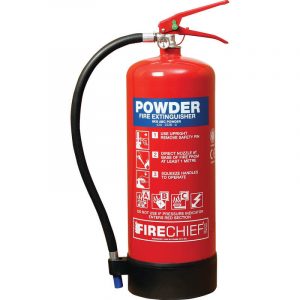 A dry powder fire extinguisher can be used in a large variety of situations, these are as follows:
Use of a standard dry powder fire extinguisher:
- Class A fires; fires that involve flammable solids like textiles, paper, and wood
- Class B fires; fires that involve flammable liquids, for example, paint, diesel, and petrol
- Class C fires; fires that involve flammable gases, for instance, butane or methane
- Electrical fires involving equipment up to 1000V, where the extinguisher is specifically rated for electrical use.
Use of a specialist dry powder fire extinguisher:
- L2 powder extinguishers (and only this type) can be used for fires that involve lithium
- M28 powder extinguishers (and only this type) can be used for fires involving all remaining flammable metals
Where Can Dry Powder Fire Extinguishers Not Be Used?
A dry powder fire extinguisher is not to be used in any of the following situations:
- Class F fires; cooking fires, such as chip pan fires
- Fires that are in enclosed spaces. This is due to the risk of inhalation, reduced visibility, and loss of situational awareness caused by the powder discharge.
- Fires that involve electrical equipment which is over 1000v
- Fires that involve flammable metals (with the exception of specialist dry powder fire extinguishers)
How Do You Identify a Dry Powder Fire Extinguisher?
A dry powder fire extinguisher can be identified by using the following:
- There will be a BLUE-coloured label which will read – POWDER
- It should have an ID sign nearby which will read – POWDER EXTINGUISHER
What Are Dry Powder Fire Extinguishers Also Known As?
A dry powder fire extinguisher can also be known by one of the following names:
- Dry chemical fire extinguisher
- ABC fire extinguisher
- Multi-purpose fire extinguisher
How Do Dry Powder Fire Extinguishers Work?
A dry powder fire extinguisher forms a barrier that separates the oxygen source and the fire. Hence the fire is smothered.
Since dry powder extinguishers do not provide sustained cooling, there is a risk of re-ignition once the powder cloud disperses.
What Are the Pros and Cons?
Pros
There are several pros to using this type of fire extinguisher, as follows:
- It will work on most fire types
- It can suppress a fire within a rapid timeframe
- Specialist dry powder fire extinguishers are the only extinguisher type that is to be used on flammable metals
Cons
The cons that exist with this fire extinguisher type are as follows:
- A residue can be left since the powder spreads over a large area
- There is a small risk of the fire re-igniting
- Vision can be obscured
- Inhalation can occur in enclosed areas
- Extensive clean-up may be required after use, particularly in sensitive environments or around machinery.
Who Needs Dry Powder Fire Extinguishers?
For outdoor environments where various fire type risks are present, such as fuel, vehicle, and chemical, a dry powder fire extinguisher is a very good choice. Such environments include the following:
- Large workshops
- Big commercial boiler rooms
- Garage forecourts
- Fuel tankers
- Flammable liquid storage facilities
How Do You Use a Dry Powder Fire Extinguisher?
Safety Note: Dry powder fire extinguishers should not be used in enclosed or poorly ventilated spaces due to inhalation and visibility risks.
To safely use a dry powder fire extinguisher, use the following steps:
- Remove the safety pin and position yourself at a safe distance
- Point towards the base of the fire and then use rapid backward and forward movements with the jet
- In the case of an electrical fire, check if it is safe to switch the power off and do so if possible, then direct the jet of powder so that it is aimed right at the fire itself
Dry Powder Fire Extinguishers and UK Fire Safety Law
UK fire safety legislation does not prescribe specific extinguisher types. Under the Regulatory Reform (Fire Safety) Order 2005, the Responsible Person must provide appropriate fire-fighting equipment based on the findings of a suitable and sufficient fire risk assessment.
Dry powder fire extinguishers are commonly selected for outdoor, high-risk, or mixed-fuel environments where versatility is required. Their use should be justified within the fire risk assessment, particularly where enclosed spaces or sensitive equipment are present.
British Standard BS 5306-8 provides guidance on the selection, positioning, and maintenance of dry powder fire extinguishers.
Our Services
If you need servicing of your fire extinguishers, our accredited consultants will attend your sites at a time convenient to you. Contact us today to arrange a visit and decide on the future course of action.
Last updated