Most business owners, landlords, and building managers in the UK ask the same question: Can I do my own fire risk assessment? The short answer is yes — but only if you have the necessary competence, understanding, and resources to do it properly.
Under UK fire safety law — specifically the Regulatory Reform (Fire Safety) Order 2005 — the Responsible Person must ensure a suitable and sufficient fire risk assessment is carried out for their premises. This legal duty remains whether you do it yourself or appoint someone else to do it.
Quick Answer: Yes, you can carry out your own fire risk assessment in the UK, but only if you are competent to do so and the assessment is suitable and sufficient under the Regulatory Reform (Fire Safety) Order 2005. If your premises are complex, high-risk or you lack experience, you should appoint a competent fire risk assessor.
Contents
- 1 What UK Law Says About Doing Your Own Fire Risk Assessment
- 2 When You Can Do Your Own Fire Risk Assessment
- 3 What Competence Really Means (and Why It Matters)
- 4 Pros of Doing It Yourself
- 5 Cons and Risks of DIY Fire Risk Assessment
- 6 When You Should Hire a Professional
- 7 How to Use Government Guidance to Help You
- 8 What Will the Fire and Rescue Authority Expect?
- 9 Final Thoughts
- 10 Frequently Asked Questions
- 10.1 Is it legal to carry out my own fire risk assessment?
- 10.2 Do I need formal qualifications to complete my own fire risk assessment?
- 10.3 Who is legally responsible if the assessment is incorrect?
- 10.4 Can I use a fire risk assessment template?
- 10.5 Do I need to record significant findings?
- 10.6 How often must I review my fire risk assessment?
- 10.7 When should I appoint a professional fire risk assessor?
What UK Law Says About Doing Your Own Fire Risk Assessment
UK fire safety legislation requires that a fire risk assessment be done for most non-domestic premises — and that it must be suitable and sufficient. The law does not explicitly say it must be done by a professional third-party assessor.
However, the person preparing the assessment must have the knowledge and competence to complete it in a way that truly identifies hazards, evaluates risks, and recommends realistic controls.
Your local fire and rescue service may provide guidance, but they cannot carry out the assessment for you. If you lack confidence in your own ability, you should appoint a competent professional.
When You Can Do Your Own Fire Risk Assessment
Yes — you can do your own fire risk assessment if:
- You are the Responsible Person (e.g., owner, employer, landlord, managing agent)
- You have sufficient knowledge of fire safety principles
- Your premises are simple and low risk
- You understand the five steps required to complete the assessment
- You can document significant findings and needed actions appropriately
Government guidance outlines a commonly used five-step process to help you complete an assessment, including identifying hazards, identifying people at risk, evaluating and reducing risk, recording findings, and reviewing the assessment regularly.
This approach is particularly suited to smaller premises such as:
- Small offices
- Independent stores
- Simple workshops
- Small warehouses
- Premises with limited occupancy and simple layout
In these situations, you may reasonably be able to complete the assessment yourself using a template and official published guidance.
What Competence Really Means (and Why It Matters)
“Competence” is not just ticking boxes on a checklist. It means having enough fire safety understanding to:
- Identify all significant fire hazards
- Understand how fire can spread in your building
- Determine who might be harmed and how
- Evaluate whether existing control measures are adequate
- Recommend appropriate and proportionate improvements
- Record and communicate findings correctly
UK fire safety authorities emphasise that, while you can do your own assessment, you must be confident you can fulfil these requirements. If you are unsure, appoint a competent fire risk assessor with appropriate experience for your type of premises.
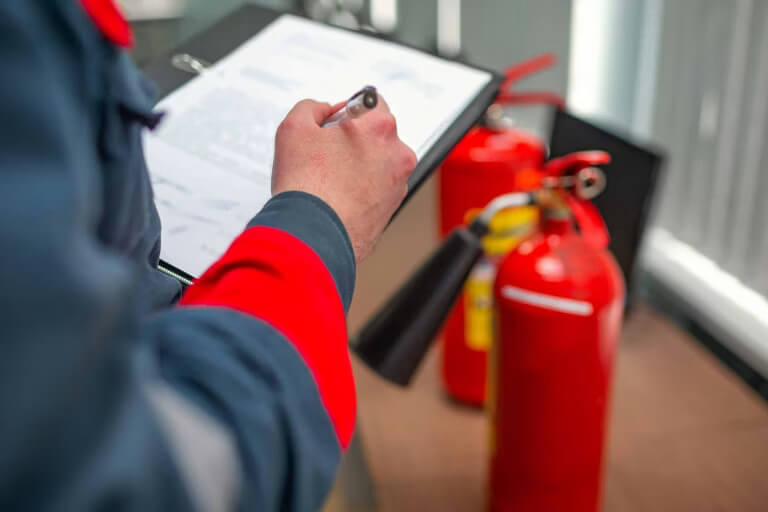
Pros of Doing It Yourself
There are some benefits to carrying out your own assessment:
- Cost savings, particularly for small, simple premises
- Familiarity with your building and operations
- Ability to update and review quickly as changes occur
You can also use official templates and government guidance documents to help structure your assessment.
Cons and Risks of DIY Fire Risk Assessment
Doing your own assessment isn’t always wise:
Lack of Expertise
Fire safety involves more than spotting obvious risks. Competent practice also requires understanding building structures, fire spread mechanisms, escape dynamics and legal compliance.
Legal & Enforcement Risk
If your assessment is found to be inadequate during an audit or inspection by the Fire and Rescue Authority, you could face enforcement notices, fines, or even prosecution.
Insurance Implications
If a fire occurs and your assessment is deemed insufficient, insurers may challenge claims — which could seriously affect compensation.
Missed Improvements
A professional assessor has specialist training and may spot risks and practical solutions you might overlook.
In serious cases, failure to properly assess and manage fire risk can expose the Responsible Person to criminal liability under fire safety legislation
When You Should Hire a Professional
You should strongly consider appointing a competent fire risk assessor when:
- Your building is large or complex
- There are multiple occupancies or fire compartments
- You operate high-risk processes (e.g., industrial or storage premises)
- Your premises host vulnerable occupants (e.g., care homes, hospitals)
- There has been significant change to layout or use
- You lack confidence in your own compliance knowledge
Professionals can provide defensible, documented assessments and ensure compliance with best practice, including the Government’s five-step guidance.
How to Use Government Guidance to Help You
If you choose to do the assessment yourself, take advantage of official government resources such as:
- The Fire safety risk assessment: 5-step checklist
- Premises-specific guides (offices, factories, sleeping accommodation, etc.)
- Downloadable templates to assist in completing a structured assessment
These materials help you systematically walk through the process and document findings correctly.
What Will the Fire and Rescue Authority Expect?
If your premises are inspected, enforcing officers will not ask who completed the assessment. They will assess whether it is suitable, sufficient and reflective of the actual risks in your building.
An assessment that is generic, incomplete or poorly reasoned may lead to enforcement action, regardless of who prepared it.
Final Thoughts
So, can you do your own fire risk assessment? Yes — but only if you are confident you can do it competently and in compliance with the law.
For small, simple premises with low fire risk, using official guidance and templates may be sufficient.
For more complex premises, or where you are unsure about your competence, hiring a professional fire risk assessor provides peace of mind, legal defensibility and better protection for occupants.
At Fire Risk Assessment Network, we carry out structured, legally compliant fire risk assessments across the UK — whether you need professional support or a review of your own assessment. Contact us today for a free quotation.
Frequently Asked Questions
Is it legal to carry out my own fire risk assessment?
Yes. UK fire safety law does not require you to appoint a third-party assessor. However, the Responsible Person must ensure the assessment is suitable and sufficient. If you carry it out yourself, you must be competent to do so.
Do I need formal qualifications to complete my own fire risk assessment?
Formal qualifications are not legally required, but you must have sufficient knowledge, training and understanding of fire safety principles. If you lack confidence in identifying hazards, assessing risks and documenting findings correctly, you should appoint a competent fire risk assessor.
Who is legally responsible if the assessment is incorrect?
The Responsible Person remains legally responsible under the Regulatory Reform (Fire Safety) Order 2005, even if the assessment is carried out by someone else. If a DIY assessment is inadequate, enforcement action may still be taken against the Responsible Person.
Can I use a fire risk assessment template?
Yes, templates and government checklists can help structure your assessment, particularly for simple, low-risk premises. However, a template must be tailored to your specific building and use. Generic or tick-box assessments that do not reflect the actual risks may not meet the “suitable and sufficient” standard.
Do I need to record significant findings?
Yes. Where required by law — such as where five or more people are employed, a licence is in force, or the premises form part of a residential building — significant findings must be recorded in writing. Clear documentation is essential to demonstrate compliance.
How often must I review my fire risk assessment?
A fire risk assessment must be reviewed regularly and updated whenever there are significant changes to the building, occupancy, or fire safety arrangements. It should also be reviewed if there is a fire incident or changes in relevant legislation.
When should I appoint a professional fire risk assessor?
You should strongly consider appointing a professional if your premises are large, complex, high-risk, contain sleeping accommodation, or house vulnerable occupants. Professional assessments provide reassurance, defensible documentation, and specialist insight that may reduce enforcement and liability risks.