Fire doors are a key part of a building’s passive fire protection, escape route protection and compartmentation strategy. UK fire door regulations require responsible persons to make sure that fire doors are suitable, properly maintained and effective where they are provided as fire safety measures.
This guide explains the main fire door legal duties for responsible persons, landlords, managing agents, employers and building owners. It covers the Regulatory Reform (Fire Safety) Order 2005, the Fire Safety Act 2021, the Fire Safety (England) Regulations 2022, Regulation 10, inspection duties, records and when a professional fire door inspection may be needed.
Quick answer
What Are the Main Fire Door Regulations in the UK?
Fire doors are mainly controlled through fire safety legislation, building regulations and the findings of the fire risk assessment. In England and Wales, the Regulatory Reform (Fire Safety) Order 2005 places duties on the responsible person to provide and maintain appropriate fire safety measures. The Fire Safety Act 2021 clarified that flat entrance doors in multi-occupied residential buildings are within scope. In England, Regulation 10 of the Fire Safety (England) Regulations 2022 adds specific fire door information and checking duties for many blocks of flats.
- Responsible person: employer, landlord, building owner, managing agent, occupier or person with control of the premises.
- Residential duties: resident fire door information applies to blocks with common parts; routine checks apply in buildings over 11 metres.
- Practical requirement: fire doors must be kept in efficient working order and good repair.
Who Is Responsible for Fire Door Compliance?
The responsible person is the person or organisation with legal control of fire safety in the premises. Depending on the building, this may be an employer, landlord, freeholder, managing agent, building owner, occupier, facilities manager or another person with control of the premises.
Where more than one person has fire safety responsibilities, they must cooperate and coordinate so that fire safety duties are properly managed. For example, a landlord, managing agent and commercial tenant may each have responsibilities for different parts of a mixed-use building.
Where the property is an HMO, fire door duties should be considered as part of wider HMO fire safety requirements, including escape routes, alarm provision, licensing standards and management records.
Fire door compliance is not only about whether a door was originally installed correctly. The responsible person must also make sure fire doors remain suitable and are maintained as part of ongoing fire safety management.
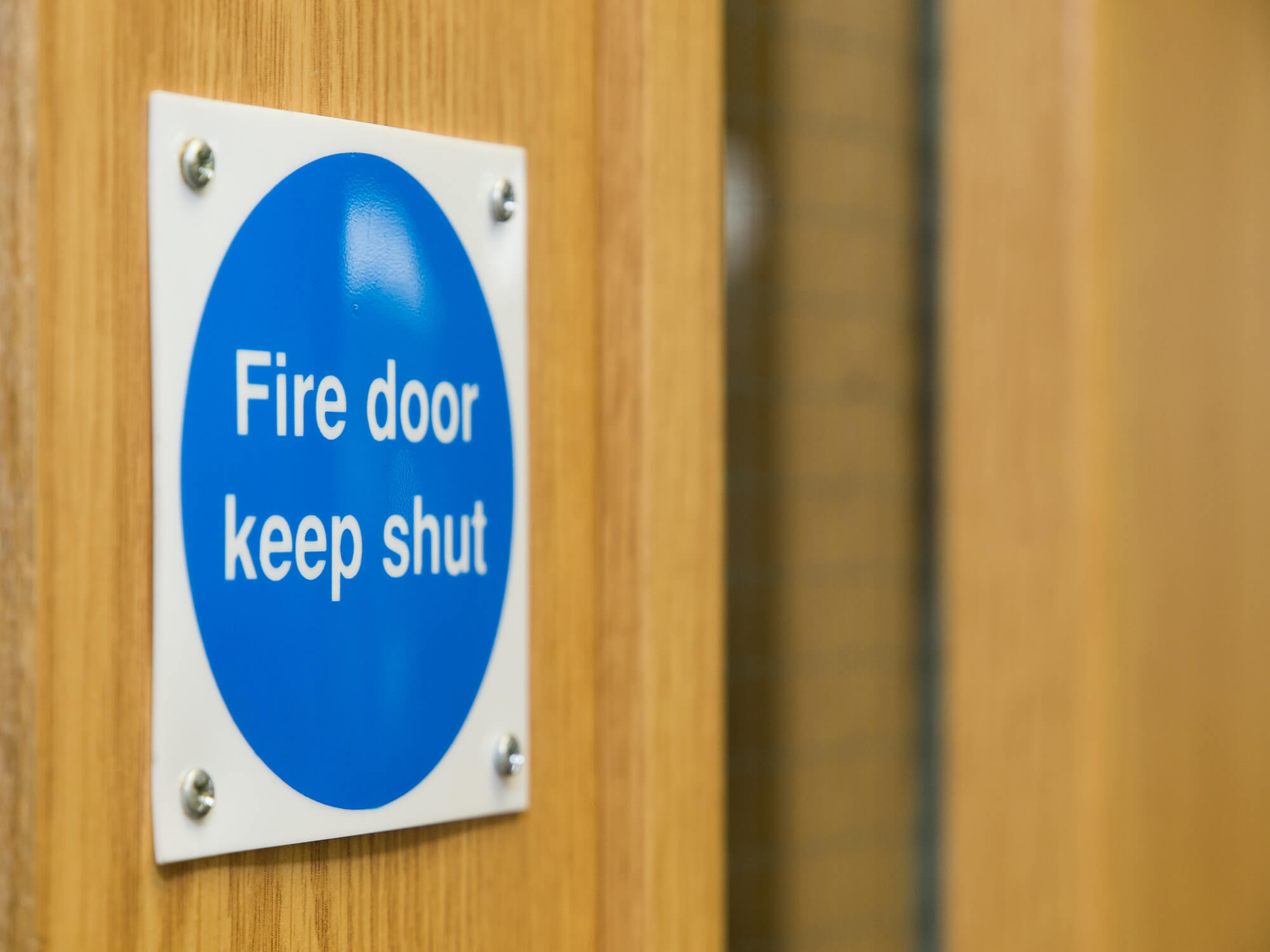
Fire Doors and the Regulatory Reform (Fire Safety) Order 2005
In England and Wales, the Regulatory Reform (Fire Safety) Order 2005 is the main legislation covering fire safety in non-domestic premises and common parts of multi-occupied residential buildings. It requires the responsible person to carry out a suitable and sufficient fire risk assessment and put in place appropriate general fire precautions.
Fire doors are commonly provided to protect escape routes, resist the spread of fire and smoke, separate higher-risk areas, protect stairways and support compartmentation. Where fire doors are provided as fire safety measures, they need to be maintained in efficient working order and good repair.
A fire risk assessment should consider whether fire doors are suitable for the building, whether they are likely to perform as intended, and whether inspection, maintenance or remedial works are needed.
If you need a practical door-by-door assessment of condition, defects and priorities, see our fire door inspection and survey guide.
Fire Safety Act 2021 and Flat Entrance Doors
The Fire Safety Act 2021 clarified that the Fire Safety Order applies to the structure, external walls and flat entrance doors between domestic premises and the common parts of multi-occupied residential buildings.
This matters because flat entrance doors protect common escape routes from fire and smoke spreading out of individual flats. The condition, self-closing action and suitability of these doors should therefore be considered as part of fire risk assessment and ongoing fire safety management.
The Act did not mean that every older flat entrance door automatically has to be replaced with a modern certificated door. The key question is whether the door is adequate for the risk, in good condition and capable of providing suitable protection in the context of the building and fire risk assessment.
Regulation 10 of the Fire Safety (England) Regulations 2022
Regulation 10 introduced specific fire door duties for residential buildings in England that contain two or more domestic premises and common parts through which residents would need to evacuate in a fire.
For all buildings within scope, responsible persons must provide residents with fire door information. This includes information explaining that fire doors should be kept shut when not in use, self-closing devices should not be tampered with, and faults or damage should be reported to the responsible person.
For buildings where the top storey is above 11 metres in height, responsible persons must also:
- use best endeavours to check all flat entrance fire doors at least every 12 months;
- carry out checks of fire doors in communal areas at least every 3 months;
- keep records of the steps taken, including where access to flats could not be obtained.
These Regulation 10 checks are intended to be simple visual checks. They do not replace the wider fire risk assessment duty under the Fire Safety Order, and they do not remove the need for competent repair or replacement where defects are identified.
What Fire Door Information Must Be Given to Residents?
Where Regulation 10 applies, responsible persons must give residents information about the importance of fire doors. This information should be given to new residents as soon as reasonably practicable after they move in and reminded to all residents at intervals not exceeding 12 months.
The information should explain that residents should:
- keep fire doors shut when not in use;
- not tamper with self-closing devices;
- report faults, damage or problems with fire doors immediately;
- seek agreement before replacing or altering a flat entrance door.
This is a practical management duty. It helps residents understand why flat entrance doors and communal fire doors are important for the safety of the whole building.
How Often Should Fire Doors Be Checked?
The required frequency depends on the type of building, the doors involved and the fire risk profile.
| Building or door type | Typical legal or management expectation | Notes |
|---|---|---|
| Multi-occupied residential buildings in England with common parts | Resident fire door information must be provided. | This applies regardless of height where the building contains two or more domestic premises and common parts. |
| Flat entrance doors in buildings over 11 metres in England | Best endeavours checks at least every 12 months. | Access may need to be arranged with residents and records should be kept. |
| Communal fire doors in buildings over 11 metres in England | Checks at least every 3 months. | Includes common parts doors and self-closing devices. |
| Commercial and non-domestic premises | Risk-based inspection and maintenance. | Frequency should be informed by fire risk assessment, building use, occupancy and wear. |
High-use doors, doors protecting escape routes and doors in higher-risk premises may need more frequent checks than low-use doors in simple buildings.
Do Fire Door Regulations Apply to Commercial Buildings?
Yes. Fire door regulations and duties apply to many commercial and non-domestic premises through the Fire Safety Order. This includes offices, shops, restaurants, hotels, warehouses, factories, healthcare premises, schools, universities, places of assembly and mixed-use buildings.
Commercial fire doors are normally required where they form part of the escape route, protect stairways, separate higher-risk areas, protect plant rooms or support compartmentation. The specific requirement depends on the building design, fire strategy and fire risk assessment findings.
In commercial premises, the responsible person should make sure fire doors are not wedged open, damaged, poorly fitted, missing seals, affected by excessive gaps or prevented from closing correctly.
Fire Door Installation and Competence
Fire door compliance depends heavily on correct installation. A certified door leaf can fail to perform if it is fitted with incompatible hardware, poor gaps, damaged seals, unsuitable glazing or an incorrect frame.
Fire safety law does not usually name one single qualification that every fire door installer must hold, but fire safety measures must be implemented by competent people. Where fire doors need replacement or significant repair, the responsible person should use competent contractors and keep appropriate records, certification and handover information.
For installation-specific guidance, see our BS 8214 fire door installation guide.
Fire Doors and Approved Document B
Approved Document B provides statutory guidance supporting the Building Regulations in England. It is commonly used by designers, contractors and building control bodies when considering fire resistance, compartmentation, escape routes and fire doors in new buildings and material alterations.
Approved Document B is not a substitute for a fire risk assessment in an occupied building. However, it may be used as a useful benchmark when reviewing fire door provision after refurbishment, change of use, building works or concerns about historic installation.
Fire Doors and Building Regulations Regulation 38
Regulation 38 of the Building Regulations requires fire safety information to be provided to the responsible person when building work is completed or when a building is first occupied. This information should help the responsible person operate and maintain the building safely.
For fire doors, relevant handover information may include door locations, fire resistance ratings, certification evidence, maintenance requirements, installation details and any assumptions made in the fire strategy.
If this information is missing, the responsible person may need further review or inspection to understand the condition and suitability of the doors.
What Happens if Fire Doors Are Non-Compliant?
Non-compliant fire doors can undermine escape route protection and allow fire or smoke to spread sooner than expected. This can increase risk to residents, staff, visitors and firefighters.
Common fire door compliance issues include:
- doors that do not close fully into the frame;
- missing, damaged or painted-over seals;
- excessive gaps around the door leaf;
- damaged frames, hinges, glazing or ironmongery;
- wedged-open fire doors;
- unauthorised alterations such as unsuitable locks, letterboxes or cat flaps;
- missing records, certification or maintenance evidence.
Where significant defects are found, the responsible person should take proportionate action. This may involve repair, adjustment, further inspection, replacement or review within the fire risk assessment action plan.
When Should You Arrange a Fire Door Inspection?
You should consider arranging a professional fire door inspection or survey when you need clearer evidence about the condition, suitability or priority of fire door defects. This is especially useful where the building contains sleeping accommodation, vulnerable occupants, high occupancy, multiple floors, complex escape routes or a large number of fire doors.
A fire door inspection can help identify visible defects, produce a door schedule, support remedial planning and provide clearer records for responsible persons, landlords, managing agents and business owners.
For practical inspection detail, see our fire door inspection and survey guide. For inspection pricing, see our fire door inspection cost guide. For a practical door-by-door list, see our fire door inspection checklist.
Our Experience With Fire Door Regulations and Compliance
Fire Risk Assessment Network helps responsible persons, landlords, managing agents and business owners arrange fire risk assessments, fire door inspections and fire door surveys across the UK.
Our network includes fire safety professionals with experience reviewing fire door arrangements in residential, commercial and mixed-use buildings, including blocks of flats, HMOs, care homes, schools, hotels, offices, warehouses and multi-site portfolios.
A useful fire door compliance review should not simply repeat legal wording. It should help you understand what duties apply, what evidence should be kept, which doors may need closer attention and whether inspection, maintenance or remedial works are required.
Where fire door concerns are identified, the findings can support your fire risk assessment action plan, help prioritise repairs and provide clearer information for contractors, residents, tenants or building managers.
Conclusion
Fire door regulations place clear duties on responsible persons to assess, manage and maintain fire doors where they form part of a building’s fire safety measures. In residential buildings in England, Regulation 10 has also introduced specific resident information and routine checking duties for many blocks of flats.
The practical aim is simple: fire doors should be suitable for the building, kept in good working order and managed so that they can protect escape routes and limit the spread of fire and smoke if a fire occurs.
If you are unsure whether your fire doors are compliant, damaged, poorly maintained or properly recorded, a professional fire door inspection or fire door survey can provide a clearer way forward.
Frequently Asked Questions About Fire Door Regulations
What legislation covers fire doors in England and Wales?
Fire doors are primarily covered by the Regulatory Reform (Fire Safety) Order 2005, supported by the Fire Safety Act 2021 for multi-occupied residential buildings. In England, the Fire Safety (England) Regulations 2022 add specific fire door information and checking duties for many blocks of flats.
What is Regulation 10 of the Fire Safety (England) Regulations 2022?
Regulation 10 sets duties for fire doors in residential buildings in England that contain two or more domestic premises and common parts. It requires resident fire door information, and in buildings where the top storey is above 11 metres, annual best-endeavours checks of flat entrance doors and 3-monthly checks of communal fire doors.
Who is responsible for fire door compliance?
The responsible person is responsible for fire door compliance. This may be an employer, landlord, building owner, freeholder, managing agent, occupier, facilities manager or another person with control of the premises.
Do fire door regulations apply to existing buildings?
Yes. Existing buildings are covered by fire safety duties where the Fire Safety Order applies. Fire doors should be considered as part of the fire risk assessment and kept in efficient working order and good repair.
Do all fire doors need to be replaced with modern certificated doors?
No. Existing fire doors do not automatically need replacing simply because they are older or lack modern certification. The key issue is whether the door is adequate for the risk, in suitable condition and able to perform its intended role. Where doors are damaged, unsuitable or inadequate, competent repair or replacement may be required.
How often should fire doors be inspected?
Inspection frequency should be risk-based. In England, Regulation 10 requires best-endeavours annual flat entrance door checks and 3-monthly communal fire door checks in buildings over 11 metres. Other commercial and non-domestic premises should set a suitable inspection and maintenance frequency based on the fire risk assessment.
Are fire door checks the same as a professional fire door inspection?
No. Regulation 10 checks are intended to be simple visual checks. A professional fire door inspection or survey is usually more detailed and may include a door schedule, defect notes, photographs, priority ratings and remedial recommendations.
What happens if fire doors are non-compliant?
Non-compliant fire doors can increase risk to occupants and may lead to enforcement action where fire safety duties are not met. The responsible person should take proportionate action, which may include repair, adjustment, replacement, further inspection or review through the fire risk assessment action plan.
Do commercial buildings need fire door inspections?
Many commercial buildings need fire doors to be checked and maintained as part of fire safety management. The inspection frequency and level of detail should reflect the building use, occupancy, door locations, escape strategy and fire risk assessment findings.
Where can I get help with fire door compliance?
You can arrange a professional fire door inspection or survey where you need clearer evidence about the condition, suitability or priority of fire door defects. Fire Risk Assessment Network can help arrange fire door inspections and fire door surveys across the UK.
Last updated