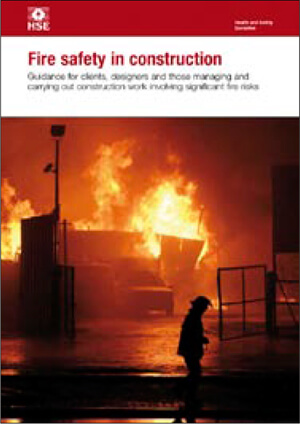
HSG168, Fire safety in construction, is Health and Safety Executive guidance for managing fire risks during construction work. The current third edition was published in July 2022 and is relevant to those who procure, design, develop and manage construction projects.
Construction fire safety needs to be considered from the earliest design and planning stages, not only once work begins on site. Fire risks can change quickly during demolition, refurbishment, fit-out, temporary works and phased occupation.
Quick Answer
HSG168 is HSE guidance on fire safety in construction. It supports duty holders in managing construction fire risks, including hot works, temporary fire precautions, escape routes, emergency arrangements, housekeeping, combustible materials and fire risk management during changing site conditions.
What Is HSG168 Fire Safety in Construction?
HSG168 is the HSE publication Fire safety in construction. It provides guidance on how fire risks should be managed during construction work, including planning, design, site controls, emergency arrangements and ongoing review as the project changes.
It is not just relevant to large projects. Fire risks can arise on small construction and refurbishment jobs too, especially where hot works, temporary electrics, combustible materials, incomplete compartmentation or occupied buildings are involved.
What Is the Purpose of HSG168?
The purpose of HSG168 is to help duty holders comply with health and safety law and manage fire risks during construction. The third edition places particular emphasis on eliminating or reducing fire risks at the pre-construction stage where practicable, in line with CDM 2015 principles.
How Fire Safety Consultants Apply HSG168
Fire safety consultants and fire engineers can help apply HSG168 proportionately to the size, complexity and risk profile of the project. Support may include reviewing temporary fire precautions, escape routes, hot works controls, alarm arrangements, site fire points, emergency plans and construction-phase fire risk assessments.
For occupied buildings undergoing refurbishment, construction fire safety should also be coordinated with the existing fire risk assessment and any temporary changes to fire doors, alarms, compartmentation, escape routes or resident/occupant communication.
Common Construction Fire Risks Covered by HSG168
- Hot works such as welding, grinding, cutting and torch-applied roofing
- Temporary electrics, lighting and site power
- Heaters, drying equipment and ignition sources
- Flammable liquids, gases and LPG storage
- Waste, packaging and combustible storage
- Timber frame construction and combustible materials
- Incomplete compartmentation during works
- Changing escape routes and temporary fire precautions
- Fire risk in occupied buildings undergoing works
Who Should Consider HSG168?
HSG168 is relevant to clients, designers, principal designers, principal contractors, contractors, site managers and those responsible for managing construction or refurbishment fire risk.
How Construction Fire Safety Support Can Help
Competent fire safety support can help duty holders identify practical controls, check that temporary precautions remain suitable, and coordinate construction-phase fire risk with the wider fire strategy or building fire risk assessment.
Need Construction Fire Safety Support?
Fire Risk Assessment Network can help arrange fire safety consultancy support for construction, refurbishment and occupied-building works where fire risk needs competent review.

Conclusion
HSG168 remains an important reference for managing fire safety during construction work. It is especially useful where fire risk changes during phased works, refurbishment, hot works, temporary services or occupied-building projects.
For higher-risk or complex projects, competent construction fire safety advice can help ensure that fire risks are identified early, controlled properly and reviewed as work progresses.
Frequently Asked Questions
What is HSG168?
HSG168 is HSE guidance called Fire safety in construction. It explains how construction project duty holders can manage fire risks and comply with relevant legal duties.
Is HSG168 still current?
Yes. The current third edition of HSG168 was published by HSE in July 2022.
Who should use HSG168?
HSG168 is aimed at those who procure, design, develop and manage construction sites, including clients, designers, contractors and site managers.
Does HSG168 apply to refurbishment work?
Yes. HSG168 is relevant to construction work, including refurbishment, where fire risks can change as work progresses and temporary precautions may be needed.
Can Fire Risk Assessment Network help with construction fire safety?
Yes. Fire Risk Assessment Network can help arrange fire safety consultancy support for construction and refurbishment projects where fire risk controls need review.
Last updated