Cladding inspection services play a critical role in identifying and managing fire risk in buildings with external wall systems, particularly where cladding, insulation, and façade construction may influence fire spread or regulatory compliance. External cladding, insulation, fixings, and cavity barriers can significantly affect how fire spreads in multi-storey and multi-occupied buildings.
At Fire Risk Assessment Network, we provide professional cladding inspection services across the UK, supporting building owners, landlords, managing agents, and duty holders with clear, evidence-based assessments of external wall systems.
Our inspections help identify potential fire safety concerns, support compliance with fire safety legislation, and provide robust inspection reports that can be used to inform risk management, remedial works, and wider fire safety decision-making.
What Is a Cladding Inspection?
A cladding inspection is a structured assessment of a building’s external wall system to evaluate fire safety risk and construction integrity. The inspection considers how materials and components may contribute to the spread of fire, smoke, or heat across the external façade.
Unlike desktop reviews, a cladding inspection involves a physical site visit by a competent professional who examines accessible areas of the external wall system and associated components.
A cladding inspection may consider:
- External cladding materials and finishes
- Insulation systems and backing boards
- Fixings, rails, and support systems
- Cavity barriers and fire-stopping measures
- Balconies, attachments, and architectural features
- Installation quality and visible defects
The outcome is a documented inspection report that identifies risks, limitations, and recommended next steps.
When Is a Cladding Inspection Required?
A cladding inspection may be appropriate where:
- A building contains external wall systems or cladding
- Fire risk assessments identify concerns relating to external fire spread
- A managing agent or landlord requires reassurance on fire performance
- Remedial works or refurbishment are being planned
- Evidence of external wall condition is required for compliance or governance
Cladding inspections are not limited to high-rise buildings. Fire risk may exist in a wide range of building types depending on materials, configuration, and occupancy.
In practice, cladding inspections are often commissioned to support governance decisions, satisfy internal compliance requirements, or provide assurance alongside fire risk assessments.
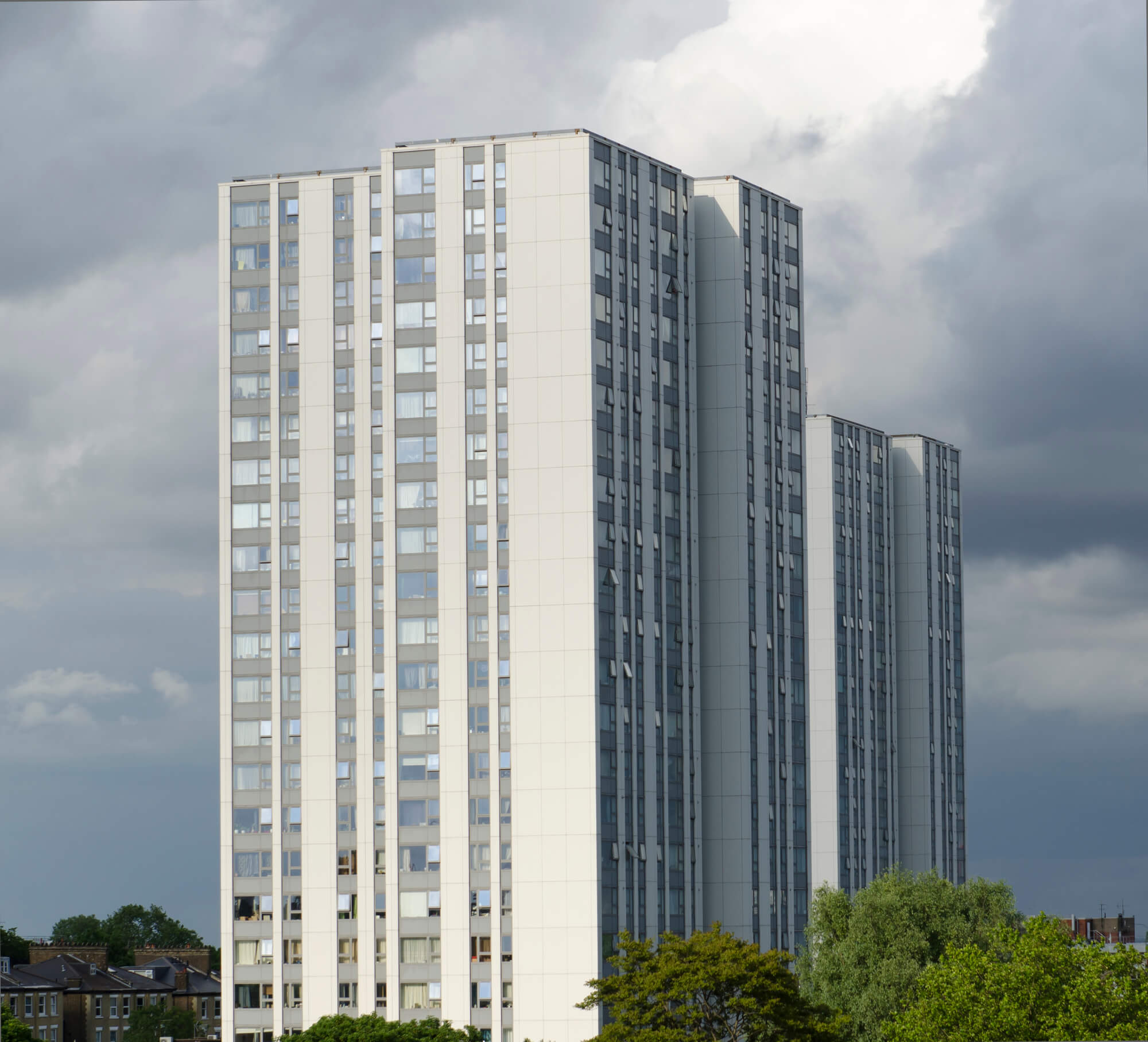
What a Cladding Inspection Involves
A typical cladding inspection includes the following stages.
1. Pre-Inspection Review
Available information is reviewed prior to site attendance, which may include:
- Building drawings or specifications
- Fire strategy documentation (where available)
- Previous inspection reports
- Records of refurbishment or façade alterations
This helps define the inspection scope and limitations.
2. On-Site Inspection
The inspector attends site and visually examines accessible areas of the external wall system, assessing:
- Cladding type and configuration
- Insulation presence and continuity
- Cavity barrier provision (where visible)
- Balconies, shading systems, and attachments
- Signs of damage, deterioration, or poor installation
Where access is limited, this is clearly recorded in the report.
3. Risk Identification
The inspection identifies features that may increase fire spread risk, including:
- Combustible materials
- Missing or compromised cavity barriers
- Unsealed penetrations
- Poor workmanship or alterations
The inspection does not assume non-compliance but records observed conditions objectively.
4. Cladding Inspection Report
A clear written report is provided, typically including:
- Scope and limitations of the inspection
- Description of observed systems
- Photographic evidence
- Identified concerns and potential risks
- Recommendations for further assessment or action
Reports are suitable for use by duty holders, fire risk assessors, and professional advisors.
Cladding Inspections and Fire Safety Law
Regulatory Reform (Fire Safety) Order 2005
In England and Wales, the Regulatory Reform (Fire Safety) Order 2005 places legal duties on the Responsible Person to take general fire precautions and manage fire risk.
This includes ensuring that building features do not present an unacceptable fire spread risk. Where external wall systems are present, cladding inspections help demonstrate that risks have been identified and managed appropriately.
Fire Safety Act 2021
The Fire Safety Act 2021 clarified that fire risk assessments must consider the structure and external walls of multi-occupied residential buildings, including cladding, insulation, balconies, and fixings.
Cladding inspections support this requirement by providing detailed, building-specific information on external wall construction and condition.
Fire Safety (England) Regulations 2022
The Fire Safety (England) Regulations 2022 introduced additional duties for certain higher-risk residential buildings, including enhanced information and record-keeping requirements.
Inspection reports relating to cladding and external walls can form part of the evidence base supporting compliance.
Cladding Inspection vs EWS1 and FRAEW
It is important to understand how cladding inspections differ from other assessments.
A cladding inspection:
- Identifies and documents external wall conditions
- Highlights potential fire spread risks
- Supports fire risk assessments and compliance
An EWS1 assessment:
- Is a lender and valuation tool
- Uses a standard form
- Does not replace inspection or risk management
A Fire Risk Appraisal of External Walls (FRAEW):
- Is a detailed fire engineering appraisal
- May be required where elevated risk is identified
- Supports remediation and mitigation decisions
A cladding inspection may inform whether an EWS1 or FRAEW is appropriate but does not replace them.
Where cladding or external wall construction may affect life safety, a cladding inspection may need to feed into a wider Fire Risk Appraisal of External Walls. For lending and valuation questions, see our guide to the difference between FRAEW and EWS1.

Who Should Commission a Cladding Inspection?
Cladding inspections are commonly commissioned by:
- Building owners and landlords
- Managing agents and property managers
- Housing providers and residential freeholders
- Duty holders responsible for fire safety compliance
- Organisations planning refurbishment or remedial works
Early inspection can help prevent delays, uncertainty, and unnecessary escalation to more intrusive assessments.
How Cladding Inspections Support Fire Risk Assessments
Cladding inspections do not replace fire risk assessments, but they provide essential supporting information.
Inspection findings may be used to:
- Inform external wall risk considerations
- Identify areas requiring monitoring or remediation
- Support proportionate fire safety decisions
- Provide evidence during audits or enforcement visits
Fire risk assessments rely on accurate building information, and cladding inspections help fill knowledge gaps.
Why Choose Fire Risk Assessment Network?
Our cladding inspection services are:
- Delivered by competent, experienced professionals
- Aligned with current fire safety legislation and guidance
- Evidence-based and proportionate
- Supported by clear, practical reporting
- Integrated with wider fire safety services
We focus on clarity, accuracy, and practical risk management — not unnecessary alarm.
Conclusion
Cladding inspection services are an important part of managing external wall fire risk and meeting fire safety duties. By identifying how materials, construction, and condition may influence fire spread, inspections help duty holders make informed, proportionate decisions.
At Fire Risk Assessment Network, we provide professional cladding inspections that support compliance, risk management, and building safety.
If you require a cladding inspection or need advice on managing external wall fire risk, our team can provide clear, practical support.
Frequently Asked Questions
What Is a Cladding Inspection?
A cladding inspection is a professional assessment of a building’s external wall system to identify potential fire safety risks. It considers cladding materials, insulation, fixings, cavity barriers, and installation quality to understand how the façade may contribute to fire spread.
Is a Cladding Inspection a Legal Requirement?
A cladding inspection is not explicitly named in legislation. However, under the Regulatory Reform (Fire Safety) Order 2005 and the Fire Safety Act 2021, Responsible Persons must assess and manage fire risks associated with external walls. A cladding inspection is often necessary to demonstrate that this duty has been met.
Who Can Carry Out a Cladding Inspection?
Cladding inspections should be carried out by a competent professional with appropriate fire safety knowledge and experience. This is typically a fire engineer or fire safety specialist familiar with external wall systems and current guidance.
Does a Cladding Inspection Replace an EWS1 Assessment?
No. A cladding inspection does not replace an EWS1 assessment. EWS1 forms are used for lending and valuation purposes, while cladding inspections are risk-based assessments used to understand and manage fire safety concerns.
What Is the Difference Between a Cladding Inspection and a FRAEW?
A cladding inspection identifies and documents external wall fire risks. A Fire Risk Appraisal of External Walls (FRAEW) is a more detailed fire engineering assessment that may be required where higher risk is identified or remediation decisions are needed.
Will a Cladding Inspection Involve Intrusive Testing?
Not always. Many cladding inspections are non-intrusive and based on visual assessment and available information. Intrusive investigations may be recommended only where necessary to determine construction details or fire performance.
How Long Is a Cladding Inspection Report Valid?
There is no fixed validity period. Reports remain relevant unless the external wall system is altered, refurbished, or damaged, or if new information or guidance emerges that affects risk assessment.
Who Should Commission a Cladding Inspection?
Cladding inspections are commonly commissioned by building owners, landlords, managing agents, housing providers, and duty holders responsible for fire safety compliance, particularly where external wall systems are present.
What Happens If Issues Are Identified During a Cladding Inspection?
If potential fire safety issues are identified, the report will recommend appropriate next steps. This may include monitoring, remedial works, further investigation, or escalation to a more detailed assessment such as a FRAEW.
Last updated