BS 9991:2024 is an important fire safety standard for residential buildings in the UK. It gives recommendations and guidance for the design, management and use of residential buildings, including blocks of flats, residential accommodation blocks, specialised housing and care homes.
For landlords, managing agents, freeholders, housing providers, care operators and responsible persons, BS 9991:2024 can be relevant when reviewing fire safety arrangements, planning building works, managing residential fire risk or checking whether existing precautions remain suitable.
Fire Risk Assessment Network can help arrange residential fire risk assessments, fire risk assessment reviews and practical fire safety compliance support for flats, HMOs, care homes, student accommodation, supported housing and mixed-use residential buildings across the UK.
Quick Answer: What Is BS 9991:2024?
BS 9991:2024 is the current British Standard code of practice for fire safety in the design, management and use of residential buildings. It replaced BS 9991:2015 and provides guidance for residential fire safety issues such as means of escape, fire doors, smoke control, fire detection, firefighting access, building works and fire safety management.
It is especially relevant to flats, residential accommodation blocks, care homes, specialised housing and other residential buildings where fire safety arrangements need to be designed, reviewed, managed or checked against current expectations.
What Does BS 9991:2024 Cover?
BS 9991:2024 is titled Fire safety in the design, management and use of residential buildings. Code of practice. The BSI BS 9991:2024 page describes it as guidance for achieving an adequate degree of life safety in the event of fire in residential buildings.
The standard gives recommendations and guidance for a range of residential buildings, including:
- single-family dwellings;
- self-contained flats and maisonettes;
- blocks of flats;
- residential accommodation blocks, such as student accommodation or staff accommodation;
- specialised housing;
- care homes.
It covers fire safety matters including means of escape, stairs, exits, active fire protection, smoke control, fire doors, construction issues, firefighting access, building services, fire safety management and building works.
Is BS 9991:2024 Current?
Yes. BS 9991:2024 is the current version of the standard. BSI announced that the revised standard was published on 27 November 2024 and that it superseded BS 9991:2015. The NBS publication index also lists BS 9991:2024 as current.
This matters because older fire safety reports, fire strategies, management documents or design assumptions may refer to BS 9991:2015. That does not automatically mean a building is unsafe, but it may be sensible to review key fire safety arrangements where the building has changed, where significant works are planned, or where there are known concerns about escape routes, fire doors, smoke control or management arrangements.
Who Uses BS 9991:2024?
BS 9991:2024 is used by professionals involved in residential fire safety, design, construction, management and regulation. BSI lists users such as architects, building designers, fire risk assessors, fire safety engineers, builders, fire and rescue services and regulators.
For property owners and responsible persons, the standard is useful because it helps frame what good residential fire safety should consider. It can support decisions about means of escape, fire precautions, management procedures and whether further technical advice is needed.
| Person or organisation | Why BS 9991:2024 may matter |
|---|---|
| Managing agents and freeholders | Useful when reviewing fire safety arrangements in blocks of flats, common parts and residential buildings under management. |
| Landlords and housing providers | Relevant where residential premises have shared escape routes, vulnerable occupants, sleeping risk or planned improvement works. |
| Care home operators | Important where residents may need assistance to evacuate and fire safety arrangements need careful management. |
| Student accommodation providers | Relevant to residential accommodation blocks with sleeping occupants, shared facilities and high occupancy. |
| Developers and contractors | Useful when planning residential refurbishment, material alterations, extensions or changes of use. |
| Responsible persons | Can help inform fire risk assessment reviews and practical fire safety management decisions. |
BS 9991:2024 and Fire Risk Assessments
A fire risk assessment is not the same thing as a full BS 9991 design assessment. However, BS 9991:2024 may be relevant when reviewing residential buildings because it gives recognised guidance on fire safety principles that affect life safety, escape, management and fire protection measures.
For existing buildings, the fire risk assessment should consider the actual conditions in the building. That may include escape routes, common parts, flat entrance doors, fire doors, compartmentation, fire alarm arrangements, emergency lighting, smoke control, firefighting facilities, housekeeping and management records.
Where a building has unusual features, complex layouts, historic alterations, cladding concerns, smoke control issues or a departure from expected standards, the assessor may recommend further investigation or specialist fire engineering advice.
Residential Buildings Where BS 9991:2024 May Be Relevant
BS 9991:2024 is particularly relevant to residential buildings where fire safety needs to be considered across design, management and use. This includes both new-build projects and existing buildings where fire safety arrangements need review.
| Building type | Common fire safety considerations |
|---|---|
| Blocks of flats | Common escape routes, flat entrance doors, compartmentation, smoke control, resident information and management records. |
| HMOs | Shared escape routes, fire doors, alarms, emergency lighting, cooking risks, resident behaviour and landlord duties. |
| Student accommodation | Sleeping risk, high occupancy, shared kitchens, alarms, fire doors, evacuation management and resident information. |
| Care homes | Vulnerable occupants, progressive horizontal evacuation, staff procedures, fire doors, compartmentation and alarm systems. |
| Supported or sheltered housing | Resident vulnerability, evacuation strategy, common parts, management arrangements and emergency response planning. |
| Mixed-use residential buildings | Interaction between commercial units, residential entrances, common parts, plant rooms, refuse areas and escape routes. |
For related guidance, see our pages on blocks of flats fire risk assessments, HMO fire safety requirements and types of fire risk assessment for flats.
Why BS 9991:2024 Matters for Existing Buildings
BS 9991:2024 is often thought of as a design standard, but it also includes guidance on management and use. That makes it relevant when existing residential buildings are being reviewed, refurbished, altered, extended or managed over time.
Existing buildings may have been designed or converted under older standards. They may also have changed through refurbishment, new doors, altered layouts, replacement alarm systems, new management arrangements, resident behaviour changes or updated legal duties. A fire risk assessment review can help identify whether current arrangements remain suitable.
It is not always practical or proportionate to bring every older building fully in line with every current design recommendation. However, responsible persons should understand where there are significant gaps, whether compensatory measures are needed, and what actions are reasonably required to manage risk.
Need a Residential Fire Safety Review?
If you are responsible for a block of flats, HMO, care home, student accommodation or residential building, Fire Risk Assessment Network can help arrange a suitable fire risk assessment or compliance review. This can help identify whether fire doors, escape routes, alarms, emergency lighting, smoke control and management arrangements remain suitable.
Means of Escape, Stairs and Final Exits
Means of escape is one of the most important fire safety considerations in residential buildings. The fire risk assessment should consider whether occupants can be warned of fire and escape safely, taking account of the building layout, number of storeys, travel routes, stairways, final exits and likely occupant behaviour.
In blocks of flats and residential accommodation, escape strategy can be more complex than in a simple workplace. The building may rely on compartmentation, protected routes, smoke control, fire-resisting construction, resident information and management arrangements. If these measures are damaged, poorly maintained or misunderstood, the risk can increase.
Common escape route issues include:
- combustible storage in corridors or stairways;
- damaged fire doors or doors that do not self-close;
- poor signage or confusing exit routes;
- blocked final exits;
- inadequate lighting or emergency lighting;
- poor separation between commercial and residential areas;
- unclear evacuation strategy or resident information.
Fire Doors, Compartmentation and Smoke Control
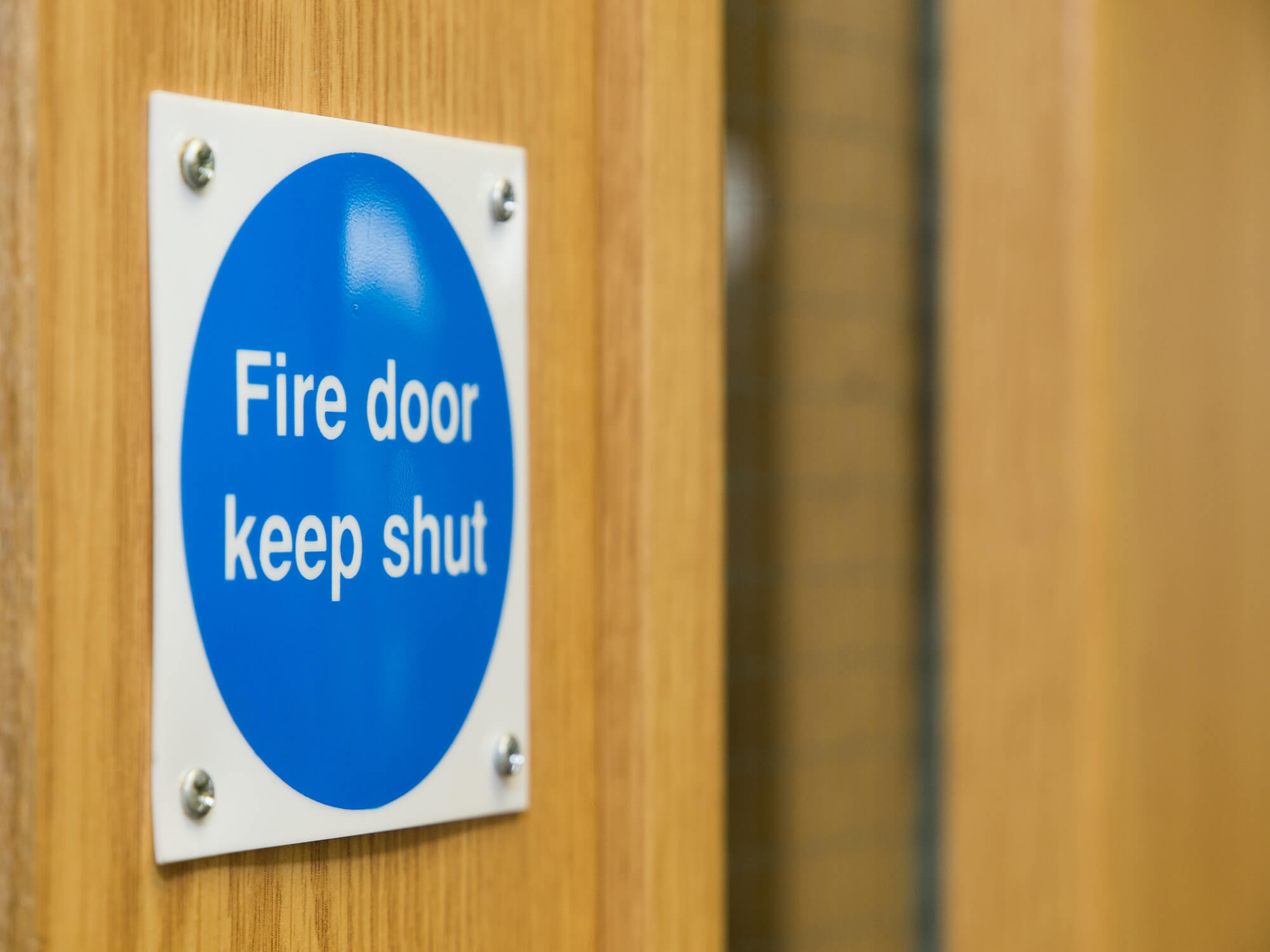
Fire doors, compartmentation and smoke control are often central to residential fire safety. In flats, care homes, student accommodation and mixed-use buildings, these measures help limit fire and smoke spread and protect routes used for escape or firefighting.
A fire risk assessment or residential compliance review may consider whether:
- flat entrance doors and doors to risk rooms are suitable;
- fire doors close properly and have suitable hardware, seals and gaps;
- service penetrations or risers affect compartmentation;
- smoke control systems are present, maintained and understood;
- fire stopping defects require further investigation;
- records of inspection, testing and maintenance are available.
If doors are a concern, see our fire door inspection and survey guide.
Fire Alarm, Detection and Emergency Lighting
Fire detection, alarms and emergency lighting should reflect the building type, escape strategy and occupant risk. A small low-risk residential building may need a different approach from a care home, student accommodation block, HMO or high-rise residential building.
The fire risk assessment should consider whether detection and warning arrangements are suitable, whether systems are being tested and maintained, and whether records are available. Emergency lighting may also be required where escape routes would be unsafe if normal lighting failed.
For related guidance, see our emergency lighting regulations guide.
Building Works, Refurbishment and Change of Use
BS 9991:2024 is particularly useful where residential buildings are being altered, extended, refurbished or changed in use. Building work can affect escape routes, compartmentation, fire doors, alarm systems, smoke control, resident access, temporary fire safety arrangements and contractor management.
Fire safety should be reviewed before work starts, during higher-risk phases and after completion. This is especially important where the building remains occupied during works or where works affect common parts, flat entrance doors, risers, plant rooms, external walls or escape routes.
A pre-works fire safety review can help identify issues that may need to be considered by designers, contractors, managing agents, residents and responsible persons.
BS 9991:2024, the Fire Safety Act and Fire Safety Regulations
BS 9991:2024 sits alongside legal duties and other statutory guidance. It does not replace the need to comply with fire safety legislation, building regulations or duties placed on responsible persons.
The Fire Safety Act 2021 clarified that, for buildings containing two or more domestic premises, the Fire Safety Order applies to the building’s structure, external walls and flat entrance doors. The Fire Safety (England) Regulations 2022 guidance explains additional duties for certain residential buildings in England.
In practical terms, responsible persons should make sure fire risk assessments are suitable, current and supported by appropriate inspection, maintenance and management records.
When Should You Get a BS 9991 Fire Safety Review?
You may need a fire safety review where BS 9991:2024 or wider residential fire safety guidance is relevant to a building, project or management issue.
Common triggers include:
- a fire risk assessment is due for review;
- the existing report refers to older guidance and key risks may have changed;
- there are concerns about fire doors, escape routes, smoke control or compartmentation;
- residential refurbishment, extension or change of use is planned;
- the building has sleeping occupants, vulnerable residents or complex evacuation arrangements;
- there are enforcement, insurer, lender, resident or managing agent concerns;
- you need a clearer action plan for residential fire safety compliance.
What Should a Residential Fire Safety Review Include?
The scope should be agreed before the assessment starts. A practical review may include a site inspection, review of available fire safety documents, discussion of management arrangements and a written report setting out findings and recommended actions.
Depending on the building and agreed scope, the review may cover:
- common parts and escape routes;
- flat entrance doors and relevant fire doors;
- fire alarm and detection arrangements;
- emergency lighting;
- smoke control systems and maintenance records;
- firefighting access and facilities;
- compartmentation concerns visible during inspection;
- resident information and management procedures;
- records of inspection, testing and maintenance;
- prioritised actions for the responsible person.
Our Residential Fire Safety Assessment Support
Fire Risk Assessment Network can help arrange residential fire risk assessments and fire safety reviews for landlords, managing agents, freeholders, housing providers, care operators, developers and responsible persons across the UK.
Assessments can help identify whether existing fire safety arrangements are suitable for the building and whether further action is needed. This may include fire door inspections, emergency lighting reviews, fire alarm considerations, escape route management, compartmentation concerns, resident information or wider fire safety management issues.
Where a more detailed design, fire engineering or specialist technical review is needed, the fire risk assessment can help identify the issue and support the next stage of advice.
Get Help With Residential Fire Safety
If you manage or own a block of flats, HMO, care home, student accommodation building or mixed-use residential property, we can help arrange a suitable fire risk assessment or fire safety compliance review.
Frequently Asked Questions About BS 9991:2024
What is BS 9991:2024?
BS 9991:2024 is the current British Standard code of practice for fire safety in the design, management and use of residential buildings. It gives guidance for residential buildings including flats, residential accommodation blocks, specialised housing and care homes.
Does BS 9991:2024 replace BS 9991:2015?
Yes. BS 9991:2024 superseded BS 9991:2015, which has been withdrawn. Older reports or strategies may still refer to the 2015 version, but current reviews should consider whether newer guidance is relevant.
Does BS 9991:2024 apply to existing buildings?
BS 9991:2024 is especially relevant to design, management and use of residential buildings. For existing buildings, it may help inform fire risk assessment reviews, refurbishment planning, change of use, management procedures and decisions about whether existing precautions remain suitable.
Is BS 9991:2024 the same as a fire risk assessment?
No. BS 9991:2024 is a code of practice, while a fire risk assessment is a building-specific assessment of fire risks and precautions. However, BS 9991:2024 may be relevant when assessing or reviewing residential fire safety arrangements.
What buildings does BS 9991:2024 cover?
BS 9991:2024 covers residential buildings including dwellings, flats, maisonettes, blocks of flats, residential accommodation blocks, specialised housing and care homes.
Do blocks of flats need a BS 9991 review?
Not every block of flats needs a separate BS 9991 review, but the principles may be relevant where fire risk assessments, fire strategies, fire doors, smoke control, escape routes, refurbishment works or management arrangements need to be reviewed.
Can BS 9991:2024 help with fire door issues?
Yes, BS 9991:2024 includes residential fire safety guidance that can be relevant to fire doors, compartmentation and escape routes. A specific fire door inspection may still be needed where door condition, installation or defects need detailed assessment.
Who can help with BS 9991:2024 compliance?
A competent fire risk assessor, fire safety consultant or fire engineer may be needed depending on the scope. Fire Risk Assessment Network can help arrange fire risk assessments and residential fire safety reviews for landlords, managing agents, housing providers and responsible persons.
Last updated