HMO fire safety is one of the most important responsibilities for landlords, licence holders and managing agents. Houses in multiple occupation usually carry a higher fire risk than standard single-family rented homes because unrelated occupants share kitchens, escape routes, facilities and common areas.
This guide explains the main HMO fire safety requirements for landlords and property managers, including fire risk assessments, fire alarms, fire doors, escape routes, emergency lighting, extinguishers, fire blankets, records and common council licensing issues.
Fire Risk Assessment Network can help arrange HMO fire risk assessments and related fire safety support for landlords, letting agents, managing agents, freeholders and property portfolios across the UK.
Quick Answer: What Fire Safety Does an HMO Need?
An HMO usually needs a suitable and sufficient fire risk assessment, clear escape routes, appropriate fire detection and alarm provision, suitable fire doors or protected routes where required, emergency lighting where needed, fire safety information for occupiers, and maintenance records showing that fire safety measures are being checked and kept in working order.
The exact requirements depend on the HMO type, number of storeys, layout, occupancy, whether cooking facilities are shared or inside rooms, local licensing standards and the findings of the fire risk assessment. Larger or higher-risk HMOs normally need a more robust fire alarm system, stronger fire separation and more detailed management records.
What Is an HMO?
An HMO, or house in multiple occupation, is usually a property occupied by people who form more than one household and share facilities such as a kitchen, bathroom or toilet. Many HMOs need a licence, especially where five or more people from more than one household occupy the property, although local councils can apply additional licensing schemes to smaller HMOs in some areas.
Fire safety standards for HMOs are often stricter than for ordinary rented homes because escape routes, kitchens, bedrooms and common parts are used by several unrelated people. Poor management, blocked escape routes, wedged fire doors, damaged alarms or cooking risks can quickly increase the danger to occupants.
Who Is Responsible for HMO Fire Safety?
The landlord, licence holder, managing agent or person with control of the HMO will usually have fire safety responsibilities. In many cases they will be the responsible person for the common parts and fire safety arrangements under fire safety law.
GOV.UK landlord safety guidance explains that landlords must follow safety regulations, provide smoke alarms on each storey, make sure tenants have access to escape routes and provide fire alarms and extinguishers if the property is a large HMO.
Tenants also have responsibilities. They should not damage alarms, wedge open fire doors, block escape routes, store combustible materials in common areas or interfere with fire safety equipment.
Do HMOs Need a Fire Risk Assessment?
Yes, many HMOs need a suitable and sufficient fire risk assessment. Local councils commonly require fire risk assessments for licensed HMOs, and fire safety law applies to common parts of buildings containing two or more domestic premises.
The GOV.UK fire safety guidance for those with legal duties explains that the Fire Safety Order applies to workplaces and common parts of buildings containing two or more domestic premises. It places duties on responsible persons to undertake and record a fire risk assessment and maintain general fire precautions.
For HMO landlords, the assessment should consider the actual property, layout and management arrangements. It should not be a generic form copied from another building.
What Should an HMO Fire Risk Assessment Cover?
An HMO fire risk assessment should consider both physical fire precautions and how the property is managed day to day. The assessor should look at how a fire could start, who could be harmed, how occupants would escape and whether existing precautions are suitable.
A suitable HMO fire risk assessment may review:
- property layout, number of storeys and occupancy;
- escape routes, final exits and whether routes are protected;
- fire doors, frames, closers, seals, gaps and condition;
- fire alarm and detection provision;
- emergency lighting where required;
- shared kitchens, cooking risks and fire blankets;
- electrical intake cupboards, meter cupboards and service risers;
- storage, refuse, combustible materials and housekeeping;
- heating, electrical appliances and landlord-provided equipment;
- fire separation between risk rooms, bedrooms and escape routes;
- fire-fighting equipment where required;
- resident information, notices and management procedures;
- inspection, testing and maintenance records;
- licensing conditions or local authority HMO standards.
HMO Fire Alarm Requirements
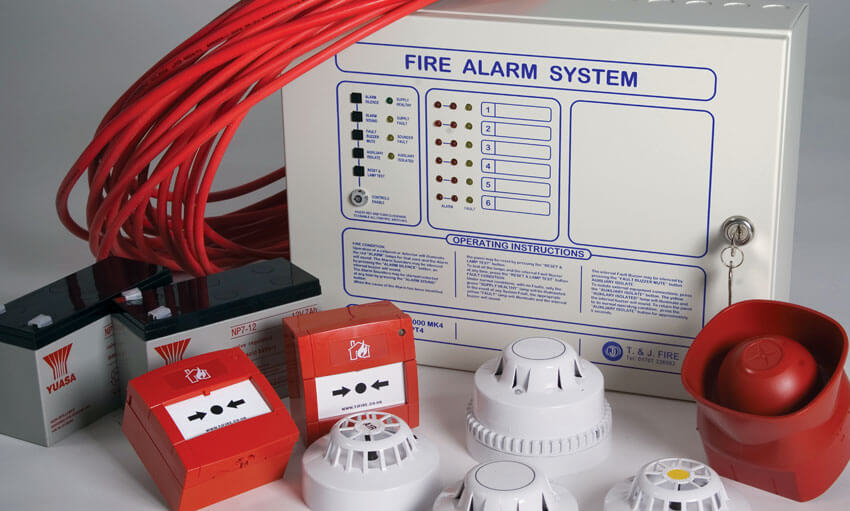
HMO fire alarm requirements depend on the property type, size, storey height, layout and risk. A small shared house may need a different system from a larger bedsit HMO or a multi-storey property with cooking facilities inside individual rooms.
Local authority HMO standards often refer to alarm grades and categories from BS 5839-6, such as Grade D1 or D2 systems for some smaller HMOs, and Grade A systems for larger or higher-risk HMOs. The correct system should be based on the risk assessment, local licensing standards and the property layout.
| HMO type | Typical alarm consideration |
|---|---|
| Small shared house | Interlinked smoke alarms on escape routes and heat detection in kitchens may be required, depending on layout and local standards. |
| Bedsit HMO | More extensive detection may be needed because occupants live separately and cooking arrangements can increase risk. |
| Three or more storeys | Higher levels of detection and alarm provision are commonly required, often with more robust systems and management records. |
| Cooking facilities in rooms | Additional detection and controls may be needed where cooking risk is inside bedrooms or bedsit rooms. |
Alarm systems should be tested and maintained, and records should be kept. Some councils publish specific HMO alarm testing frequencies and may ask to inspect the log book during licensing or compliance checks.
HMO Fire Doors and Protected Escape Routes
Fire doors are often one of the most important fire safety measures in HMOs. They help protect escape routes, hold back smoke and fire, and give occupants time to leave the building.
Depending on the layout and risk, fire doors may be required to bedrooms, kitchens, lounges, cupboards, cellars or other risk rooms opening onto the escape route. They may need suitable self-closing devices, intumescent strips, smoke seals, appropriate hinges, suitable glazing and correct gaps.
Common HMO fire door problems include:
- fire doors wedged open or closers disconnected;
- large gaps around the door leaf;
- missing or damaged intumescent strips and smoke seals;
- damaged frames or poorly fitting doors;
- inappropriate locks or key-operated locks on escape routes;
- lightweight hollow doors where fire-resisting doors are required;
- poorly installed or unverified replacement doors.
If fire doors are already a concern, see our fire door inspection and survey guide.
Means of Escape in HMOs
Escape routes should allow occupants to get out safely if there is a fire. In HMOs, escape routes are particularly important because occupants may be sleeping, may not know each other and may not respond in the same way during an emergency.
The fire risk assessment should consider:
- whether the escape route is clear and protected;
- whether final exit doors can be opened without a key;
- whether stairs, landings and hallways are free from storage;
- whether doors onto escape routes are suitable;
- whether occupants have enough warning from alarms;
- whether emergency lighting is needed;
- whether the escape strategy is realistic for the occupants and layout.
Emergency Lighting in HMOs
Emergency lighting may be required where escape routes are long, complex, poorly lit, internal, multi-storey or used by occupants unfamiliar with the building. It may also be needed where normal lighting could fail and leave escape routes unsafe.
Not every small HMO needs a full emergency lighting system, but the decision should be justified by the fire risk assessment and local licensing expectations. Larger HMOs, multi-storey properties and buildings with complex escape routes are more likely to need emergency lighting.
For broader guidance, see our emergency lighting regulations guide.
Fire Extinguishers and Fire Blankets in HMOs
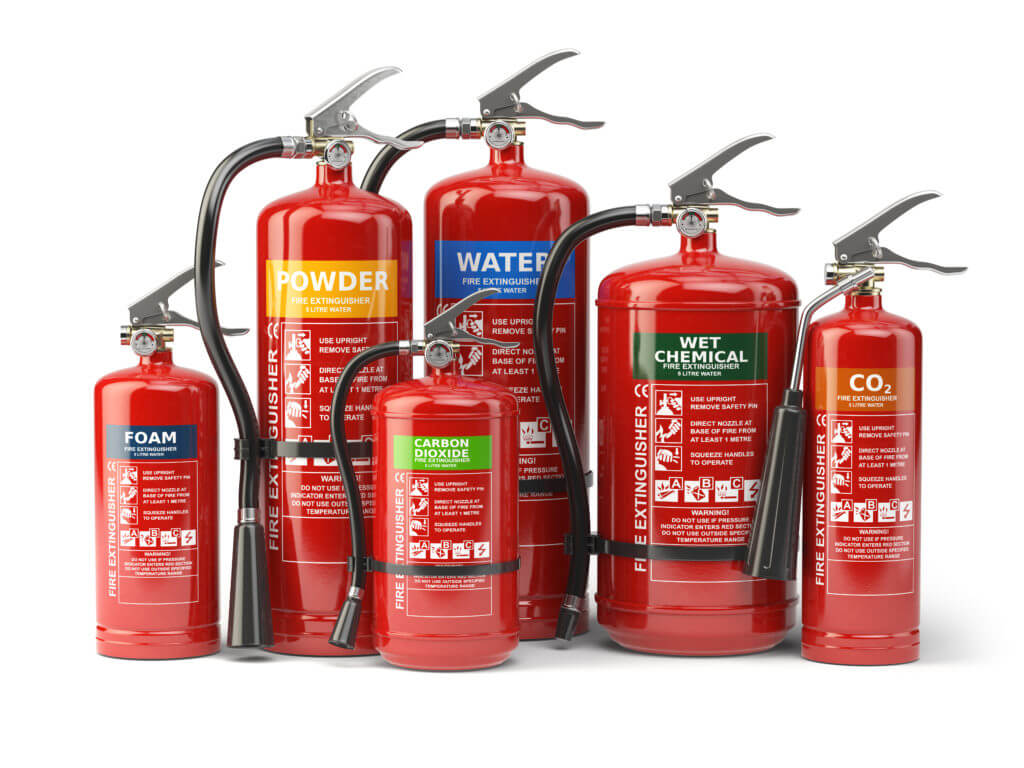
Fire extinguishers and fire blankets may be required in some HMOs, especially larger HMOs, licensed HMOs or properties with shared kitchens and higher cooking risks. Local council standards often set minimum expectations, but the final approach should reflect the property-specific fire risk assessment.
Where extinguishers are provided, they should be suitable, correctly located, maintained and supported by appropriate instructions. Fire blankets are commonly expected in shared kitchens.
For servicing and maintenance guidance, see our fire extinguisher servicing guide.
HMO Licensing and Local Council Fire Safety Standards
HMO licensing is enforced by local authorities, and local standards can vary. Councils often publish HMO amenity and fire safety standards covering alarms, doors, kitchens, fire blankets, emergency lighting, escape routes and management records.
For example, council HMO standards commonly distinguish between small shared houses, bedsit-type HMOs, larger multi-storey HMOs and properties where cooking facilities are provided inside rooms. Higher-risk layouts usually require stronger fire precautions.
Landlords should check the standards for the local authority where the property is located. A professional fire risk assessment can help identify whether the property is likely to meet licensing expectations and what improvements may be needed.
HMO Fire Safety Records and Log Books
Records are important because HMO fire safety is not only about installing equipment. Landlords and managing agents also need to show that fire safety measures are being checked, maintained and managed.
Useful HMO fire safety records include:
- fire risk assessment and review records;
- fire alarm testing and maintenance records;
- emergency lighting test records where installed;
- fire door inspection or repair records;
- extinguisher servicing records where extinguishers are provided;
- resident fire safety information;
- maintenance actions and completion evidence;
- licence conditions and correspondence with the council.
Common HMO Fire Safety Failures
Common failures found in HMOs include:
- out-of-date or generic fire risk assessments;
- missing, damaged or untested smoke alarms;
- fire doors wedged open or not closing properly;
- escape routes blocked by furniture, bikes, waste or tenant belongings;
- poor kitchen fire safety and missing fire blankets;
- combustible storage in cupboards, halls, stairs or meter areas;
- faulty or absent emergency lighting;
- missing records and weak inspection routines;
- key-operated locks that could delay escape;
- landlords relying on old licensing paperwork instead of current conditions.
Need an HMO Fire Risk Assessment?
If you manage or let an HMO, we can help arrange a suitable fire risk assessment and identify practical actions for alarms, fire doors, escape routes, emergency lighting, extinguishers and records.
How Often Should HMO Fire Risk Assessments Be Reviewed?
An HMO fire risk assessment should be reviewed regularly and whenever there is reason to believe it is no longer valid. This includes changes to layout, occupancy, tenancy arrangements, building work, alarm systems, fire doors, escape routes or after a fire safety incident.
Some councils advise annual review for licensed HMOs, or review at change of tenancy if this happens sooner. The assessment does not always need to be fully rewritten each year, but the review should be recorded and any actions should be tracked to completion.
How Much Does an HMO Fire Risk Assessment Cost?
HMO fire risk assessment costs depend on the size, layout, number of storeys, number of bedrooms, complexity of escape routes, existing fire precautions, location and reporting requirements.
A small, straightforward shared house will usually cost less than a larger bedsit HMO, multi-storey property or portfolio of licensed HMOs. Costs may also increase where the assessor needs to review fire doors in detail, inspect several buildings, comment on licensing conditions or produce a more detailed action plan.
For wider pricing guidance, see our fire risk assessment cost guide.
HMO Fire Safety Checklist
Use this checklist as a starting point before booking an assessment or reviewing an existing property.
| Area | Question to ask |
|---|---|
| Fire risk assessment | Is there a suitable, current HMO fire risk assessment and action plan? |
| Alarms | Are smoke and heat alarms suitable for the HMO type and tested regularly? |
| Fire doors | Do required doors close properly and have suitable seals, gaps, frames and hardware? |
| Escape routes | Are halls, stairs and final exits clear, protected and openable without delay? |
| Emergency lighting | Is emergency lighting needed, and if installed, is it tested and recorded? |
| Kitchens | Are cooking risks controlled and are fire blankets provided where required? |
| Records | Are alarm tests, lighting tests, door checks, servicing and repairs recorded? |
| Tenants | Have occupiers been given fire safety information and instructions? |
Our HMO Fire Safety Assessment Service
Fire Risk Assessment Network helps landlords, licence holders, letting agents and managing agents arrange HMO fire risk assessments and related fire safety support across the UK.
Assessments can help identify whether the property has suitable precautions for the layout, occupancy and local licensing expectations. The report should provide clear findings and practical actions so you know what needs to be repaired, improved, tested or reviewed.
We can help with:
- HMO fire risk assessments;
- licensed HMO fire safety reviews;
- fire door inspection and defect reporting;
- alarm, emergency lighting and extinguisher review;
- portfolio assessments for landlords and managing agents;
- action plans following council, insurer or fire authority concerns.
Frequently Asked Questions About HMO Fire Safety
Does an HMO need a fire risk assessment?
Many HMOs need a suitable and sufficient fire risk assessment, especially licensed HMOs and properties with common parts. The assessment should be specific to the property and reviewed regularly or when circumstances change.
Who is responsible for fire safety in an HMO?
The landlord, licence holder, managing agent or person with control of the HMO will usually be responsible for fire safety arrangements. Tenants also have duties not to interfere with fire safety measures or block escape routes.
What fire alarms are required in an HMO?
Alarm requirements depend on the HMO type, size, layout, number of storeys and risk. Smaller shared houses may need interlinked alarms, while larger or higher-risk HMOs may need more extensive systems. Local licensing standards should also be checked.
Do HMO bedroom doors need to be fire doors?
Bedroom doors may need to be fire-resisting doors in many HMOs, especially where they open onto protected escape routes or the property is larger or higher risk. Requirements depend on layout, risk assessment and local HMO standards.
Does an HMO need emergency lighting?
Emergency lighting may be needed where escape routes are long, complex, poorly lit, internal or multi-storey. The fire risk assessment should justify whether emergency lighting is required and what testing records should be kept.
Do HMOs need fire extinguishers?
Some HMOs need fire extinguishers and fire blankets, especially larger or licensed HMOs and properties with shared kitchens. The provision should be based on the fire risk assessment and local licensing standards.
How often should an HMO fire risk assessment be reviewed?
An HMO fire risk assessment should be reviewed regularly and whenever layout, occupancy, use, fire precautions or management arrangements change. Some councils advise annual review for licensed HMOs or review at change of tenancy if sooner.
What records should HMO landlords keep?
Landlords should keep fire risk assessments, review notes, alarm test records, emergency lighting records, fire door checks, extinguisher service records, repair evidence, resident information and any licensing correspondence.
Can the council enforce HMO fire safety requirements?
Yes. Local councils can set and enforce HMO licensing standards, while fire and rescue authorities can enforce duties under fire safety law in relevant premises. Poor fire safety can lead to licence issues, enforcement notices, penalties or prosecution.
Last updated