Fire extinguishers are life safety equipment — but only if they are maintained, accessible and in working order when needed.
In the UK, portable fire extinguishers should be visually checked at least monthly and serviced every 12 months by a competent person, with additional extended servicing or overhaul intervals depending on the extinguisher type and construction.
If you’re a Responsible Person, landlord, managing agent, facilities manager or business owner, a clear servicing plan helps you stay compliant, reduce risk, and demonstrate due diligence.
Quick Answer: How Often Should Fire Extinguishers Be Serviced?
Most UK premises should follow this baseline schedule:
- Monthly visual checks (by the Responsible Person or a nominated person)
- Annual basic service every 12 months (by a competent fire extinguisher technician)
- Extended service / overhaul at 5 or 10 years depending on extinguisher type (BS 5306-3 intervals)
Contents
- 1 Quick Answer: How Often Should Fire Extinguishers Be Serviced?
- 2 What Standard Applies In The UK?
- 3 Fire Extinguisher Servicing Frequency Table (BS 5306-3 Intervals)
- 4 Monthly Checks vs Annual Servicing (What’s The Difference?)
- 5 What Is An “Extended Service” Or “Overhaul”?
- 6 Who Is Responsible For Fire Extinguisher Servicing?
- 7 What Happens If An Extinguisher Is Used?
- 8 Common Reasons Extinguishers Fail Inspections
- 9 When Should A Fire Extinguisher Be Replaced?
- 10 Conclusion
- 11 Frequently Asked Questions
- 11.1 How often should fire extinguishers be serviced in the UK?
- 11.2 Do fire extinguishers need monthly checks?
- 11.3 Is annual fire extinguisher servicing a legal requirement?
- 11.4 How often do CO₂ extinguishers need servicing?
- 11.5 What happens during a fire extinguisher service?
- 11.6 Do fire extinguishers expire?
What Standard Applies In The UK?
The recognised servicing and maintenance intervals for portable fire extinguishers are set out in BS 5306-3.
Under the Regulatory Reform (Fire Safety) Order 2005, the Responsible Person must ensure that fire safety equipment is maintained in efficient working order. Following BS 5306-3 is the recognised way to demonstrate compliance with this duty for portable fire extinguishers.
BS 5306-3 also makes clear that visual inspections should be carried out at least once a month (and more frequently where site conditions require).
Fire Extinguisher Servicing Frequency Table (BS 5306-3 Intervals)
| Extinguisher Type | Basic Service | Extended Service | Overhaul / Hydraulic Test |
|---|---|---|---|
| Water-based (including foam / water-based) | Every year | Every 5 years | — |
| Powder | Every year | Every 5 years | — |
| Powder (primary sealed) | Every year | Every 10 years | — |
| Clean agent | Every year | — | Every 10 years |
| CO₂ | Every year | — | Every 10 years |
Primary sealed powder extinguishers are factory-sealed units designed to reduce internal contamination, which is why they typically require extended servicing at 10-year intervals rather than 5 years.
Note: Some sector guidance (e.g. marine) can specify additional testing conditions for certain CO₂ cylinders, but for typical UK premises, BS 5306-3 intervals are the baseline used by service providers and auditors.
Monthly Checks vs Annual Servicing (What’s The Difference?)
A lot of “non-compliance” comes from confusing checking with fire extinguisher servicing.
Monthly visual checks (Responsible Person / nominated staff)
These are quick checks to confirm extinguishers are:
- In the correct location and visible
- Accessible and not obstructed
- Not obviously damaged or leaking
- Still in date and with safety pin/seal intact
- Pressure indicator (if present) shows correct range
In higher-risk environments (such as construction sites, industrial premises or areas exposed to weather), more frequent visual inspections may be necessary.
(Your technician can provide a simple checklist for your fire log book.)
Annual servicing (competent technician)
An annual service is a more thorough inspection carried out by a competent person, typically including:
- Checking condition, pressure/weight, hose/nozzle condition
- Looking for signs of corrosion, tampering or discharge
- Verifying suitability and signage/location
- Updating service label and recording service in the fire log book
Servicing should be carried out by a competent person with appropriate training, and many businesses choose a third-party certified provider (such as BAFE-registered companies) for additional compliance assurance.
What Is An “Extended Service” Or “Overhaul”?
These are the deeper maintenance steps required at longer intervals.
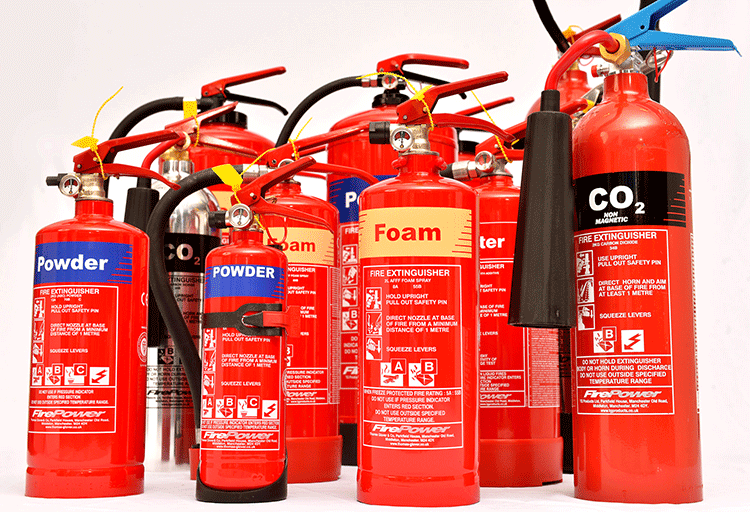
Extended service (commonly 5-year interval for many water/foam/powder units)
Typically involves additional internal examination and/or discharge testing steps beyond the basic annual service (depending on extinguisher type and manufacturer guidance).
Overhaul / hydraulic test (commonly 10-year interval for CO₂ and some other types)
This is a higher-level integrity test to ensure the pressure vessel remains safe and compliant.
Where extended servicing is uneconomical or the extinguisher is in poor condition, replacement may be the safest and most cost-effective option.
Who Is Responsible For Fire Extinguisher Servicing?
In UK workplaces and shared residential areas, responsibility sits with the Responsible Person under the Regulatory Reform (Fire Safety) Order 2005. This includes ensuring portable fire extinguishers are properly maintained and available for use.
In practice, that means:
- You arrange annual servicing by a competent provider
- You ensure monthly checks are completed and recorded
- You keep servicing records (service label + fire log book)
Records of inspection and servicing should be retained as part of the premises’ fire safety documentation and may be requested during audits or enforcement visits.
BAFE also reinforces that it’s the duty of the Responsible Person to ensure extinguishers are maintained regularly by a competent person.
What Happens If An Extinguisher Is Used?
Any fire extinguisher that has been discharged — even partially — must be inspected and typically refilled or replaced immediately. A discharged unit cannot be relied upon for future incidents, and leaving it in place may create a false sense of security.
Common Reasons Extinguishers Fail Inspections
Across real-world sites, common issues include:
- Annual service overdue / missing service label
- Extinguishers obstructed or moved from designated locations
- Corrosion at base or cylinder damage
- Incorrect extinguisher type for the risks present
- Missing signage or poor siting (especially in HMOs and older buildings)
These are all quick wins that a servicing visit will identify and help you rectify.
When Should A Fire Extinguisher Be Replaced?
You may need replacement when:
- A unit fails an annual service due to condition (corrosion, damage, leaks)
- Extended service / overhaul is due and replacement is more economical
- The building use changes and the extinguisher type/coverage is no longer appropriate
- The extinguisher has been discharged (even partially)
A competent technician can advise whether service, extended service, overhaul or replacement is the right path.
Conclusion
Fire extinguishers are only effective if they are properly maintained.
In the UK, this means carrying out regular monthly visual checks and arranging annual servicing by a competent technician, alongside extended servicing or overhaul at the correct intervals in accordance with BS 5306-3.
For Responsible Persons, landlords and managing agents, a clear servicing schedule is not just good practice — it demonstrates compliance, supports fire risk assessments and ensures equipment will function if an emergency occurs.
If you are unsure whether your extinguishers are in date or compliant, professional servicing provides clarity, documentation and peace of mind.
Frequently Asked Questions
How often should fire extinguishers be serviced in the UK?
Fire extinguishers should receive a basic service every 12 months by a competent person. In addition, visual checks should be carried out at least monthly. Extended servicing or overhaul may be required every 5 or 10 years depending on the extinguisher type.
Do fire extinguishers need monthly checks?
Yes. UK guidance under BS 5306-3 recommends that extinguishers are visually inspected at least once a month to ensure they are in place, undamaged, accessible and showing correct pressure (where applicable).
Is annual fire extinguisher servicing a legal requirement?
Fire extinguishers must be maintained in efficient working order under UK fire safety law. Annual servicing in accordance with BS 5306-3 is the recognised standard method of meeting this requirement.
How often do CO₂ extinguishers need servicing?
CO₂ extinguishers require an annual basic service and a hydraulic pressure test or overhaul typically every 10 years. The exact interval should follow BS 5306-3 and manufacturer guidance.
What happens during a fire extinguisher service?
A competent technician will inspect the extinguisher’s condition, check pressure or weight, examine hoses and seals, confirm correct siting, update service labels and record the visit in the fire log book.
Do fire extinguishers expire?
Fire extinguishers do not have a fixed “expiry date,” but they must be serviced annually and may require extended servicing at 5 or 10 years. Units in poor condition or that fail inspection may need replacement.