The term “suitable and sufficient” sits at the heart of UK fire safety law, yet it is one of the most misunderstood requirements. A fire risk assessment is not judged by its length, format, or how quickly it was completed — it is judged on whether it is adequate for the premises, the risks present, and the people affected.
A fire risk assessment that is not suitable and sufficient may be treated as invalid, potentially exposing the Responsible Person to enforcement action, prosecution, and significant penalties.
This guide explains what makes a fire risk assessment suitable and sufficient, how the standard is applied in practice, and how enforcing authorities assess compliance.
In practice, a fire risk assessment is considered suitable and sufficient when it accurately reflects the premises, the risks present, and the people who may be affected.
Quick Answer: What Makes a Fire Risk Assessment Suitable and Sufficient?
A suitable and sufficient fire risk assessment is one that accurately reflects the premises, the people at risk and the fire safety arrangements in place. It should identify relevant hazards, evaluate escape routes and fire precautions, record significant findings, set practical actions and be reviewed when the building, occupancy or risk changes.
What Does “Suitable and Sufficient” Mean in Fire Safety Law?
Under the Regulatory Reform (Fire Safety) Order 2005, the Responsible Person must ensure that a suitable and sufficient fire risk assessment is carried out and kept under review.
The law does not prescribe a fixed format, template, or level of detail. Instead, “suitable and sufficient” means the assessment must:
- Identify all relevant fire hazards
- Properly assess the risk to people
- Take account of how the premises are actually used
- Reflect the level of risk and complexity
- Lead to appropriate fire safety measures
- Be kept up to date and acted upon
In simple terms, a suitable and sufficient fire risk assessment is one that is fit for purpose.
Key Elements of a Suitable and Sufficient Fire Risk Assessment
While no two buildings are identical, a suitable and sufficient fire risk assessment will typically include the following core elements.
Identification of Fire Hazards
All relevant sources of ignition, fuel, and oxygen must be identified, including those arising from how the premises are used.
Assessment of Risk to People
The assessment must consider:
- Who may be affected by a fire
- How people would escape
- Whether vulnerable occupants are present
- How evacuation would work in practice
Evaluation of Fire Safety Measures
Existing fire precautions must be assessed, including:
- Means of escape
- Fire detection and warning systems
- Emergency lighting
- Fire doors and compartmentation
- Fire-fighting equipment
- Fire Safety Management
A suitable assessment considers not just physical measures, but how fire safety is managed on an ongoing basis, including maintenance, training, and procedures.
Clear Findings and Actions
The assessment must produce meaningful findings and practical, prioritised recommendations that can be acted upon.
Proportionate to the Premises
A central principle of suitability and sufficiency is proportionality.
A small, low-risk office does not require the same depth of assessment as a complex, multi-storey residential building or a care environment. Equally, a generic or “tick-box” assessment is unlikely to be sufficient for higher-risk or complex premises.
A fire risk assessment must be:
- Detailed enough to address real risks
- Proportionate to the size, use, and occupancy of the building
- Focused on what actually matters for safety
Over-engineering low-risk premises or under-assessing high-risk buildings can both result in non-compliance.
What Should a Suitable and Sufficient Assessment Cover?
| Area reviewed | What should be considered |
|---|---|
| Fire hazards | Ignition sources, combustible materials, work processes, storage, electrical equipment and housekeeping. |
| People at risk | Staff, visitors, contractors, residents, sleeping occupants and anyone who may need assistance to escape. |
| Escape routes | Travel distances, final exits, protected routes, emergency lighting, signage, door operation and route management. |
| Fire precautions | Fire alarm systems, fire doors, compartmentation, extinguishers, smoke control and other protective measures. |
| Management arrangements | Staff training, fire drills, maintenance records, contractor control, logbooks and responsibility for actions. |
| Significant findings | Clear defects, risk-based priorities, recommended actions, timescales and evidence needed to close actions out. |
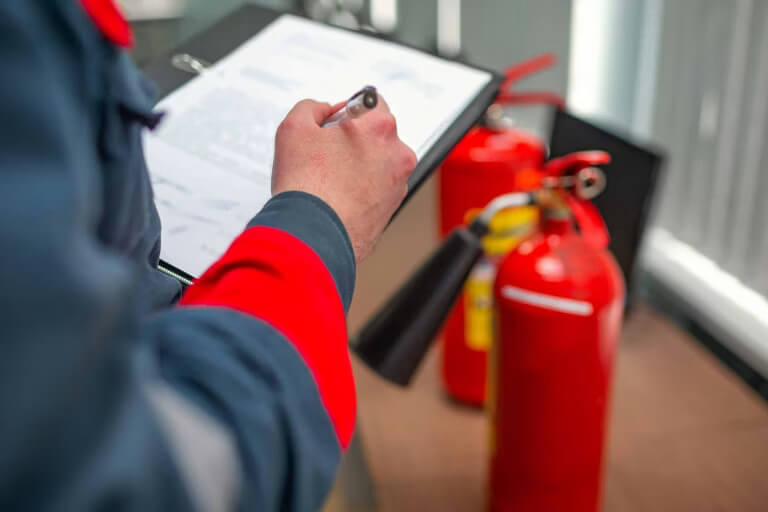
Competence of the Assessor
A fire risk assessment cannot be suitable and sufficient if it is not carried out by a competent person.
Competence includes:
- Knowledge of fire safety principles
- Understanding of relevant legislation
- Experience of similar premises
- Ability to identify hazards and assess risk realistically
While the Responsible Person may appoint others to assist, legal responsibility remains with the Responsible Person. If an assessment is inadequate due to lack of competence, enforcement action may still follow.
Evidence, Findings, and Action
A suitable and sufficient fire risk assessment must be capable of being used in practice, not just filed away.
This means it should:
- Clearly identify significant findings
- Set out realistic remedial actions
- Prioritise actions based on risk
- Be supported by records where required
- Be reviewed and updated when necessary
An assessment that identifies issues but is never acted upon may still be considered insufficient.
Common Reasons Fire Risk Assessments Are Found Insufficient
Enforcing authorities commonly find fire risk assessments insufficient where they:
- Are generic templates with no site-specific detail
- Fail to identify significant fire hazards
- Do not consider vulnerable occupants
- Ignore how the building is actually used
- Are out of date or no longer reflect the premises
- Contain recommendations that are unclear or impractical
- Are not reviewed following changes or incidents
A suitable and sufficient assessment must reflect real-world conditions, not assumptions.
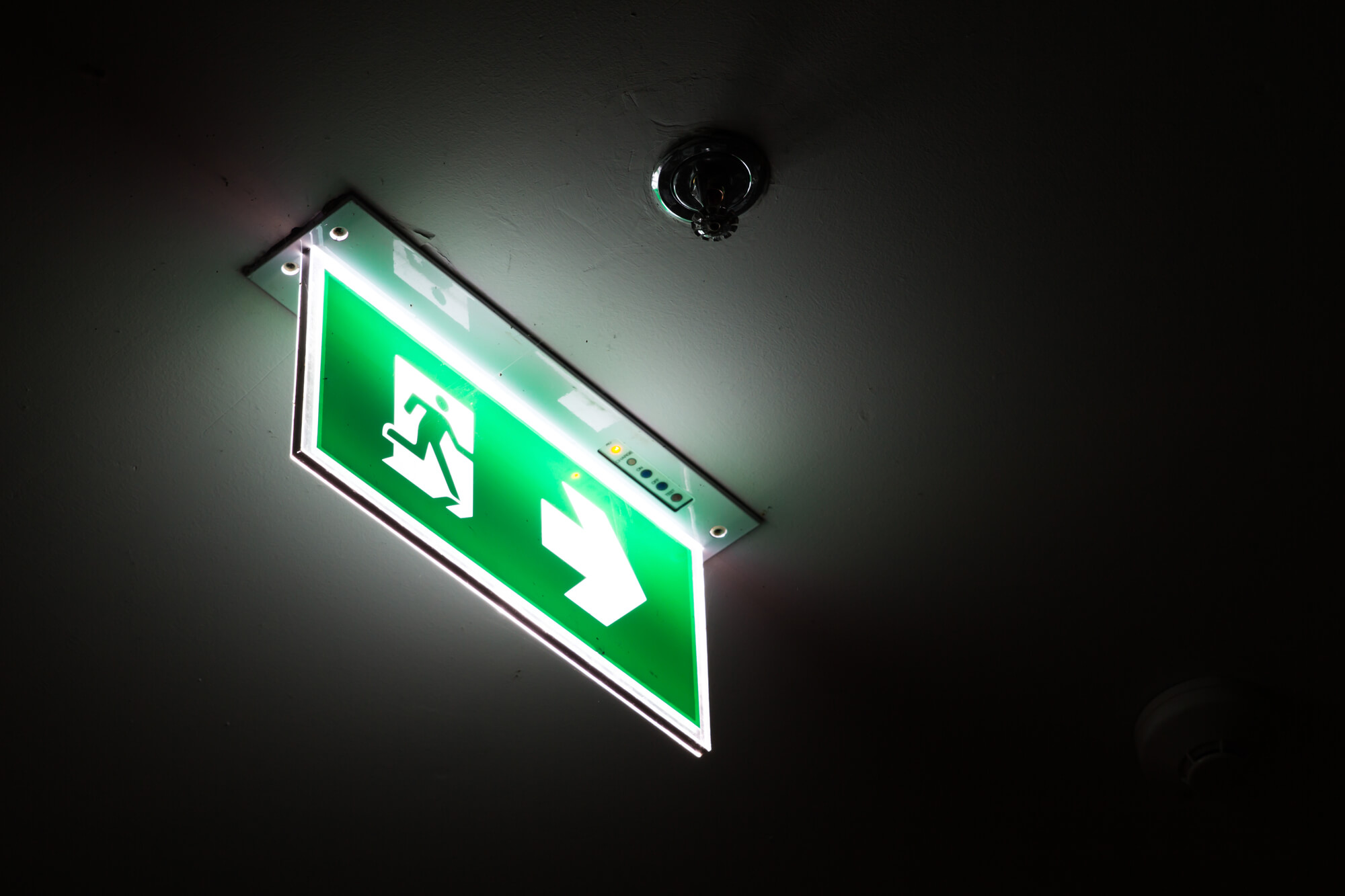
How Recent Legislation Affects “Suitable and Sufficient”
Recent legislation has reinforced what must be considered within a suitable and sufficient fire risk assessment, particularly in residential settings.
The Fire Safety Act 2021 clarified that relevant fire risk assessments must consider:
- The building structure
- External walls
- Flat entrance doors opening onto common parts
The Fire Safety (England) Regulations 2022 introduced additional duties in certain residential buildings, increasing scrutiny around inspections, information sharing, and record keeping.
These changes do not alter the meaning of “suitable and sufficient” — they reinforce the expectation that assessments fully reflect the building and its risks.
Warning Signs an Assessment May Not Be Sufficient
- It reads like a generic template and contains little site-specific detail.
- It does not explain who is at risk or how people would escape.
- It ignores fire doors, compartmentation, emergency lighting, alarms or management records.
- It gives vague recommendations without priorities, timescales or practical next steps.
- It has not been reviewed after building works, layout changes, occupancy changes, incidents or enforcement concerns.
- It does not identify who carried out the assessment or why they were competent for that type of premises.
Unsure Whether Your Fire Risk Assessment Is Suitable?
If your current assessment is old, generic, unclear or missing practical actions, Fire Risk Assessment Network can help you arrange a competent review.
We can support responsible persons, landlords, managing agents and businesses with fire risk assessments for commercial, residential and mixed-use premises.
Related guidance: what a fire risk assessment includes, competent assessors, significant findings and action plans.
Conclusion
A fire risk assessment is suitable and sufficient when it accurately reflects the premises, the people at risk, and the level of fire safety required. There is no single format or checklist that guarantees compliance.
What matters is that the assessment is proportionate, competent, up to date, and acted upon. Understanding this standard is essential for Responsible Persons seeking to meet their legal duties and protect life.
If you require a professional fire risk assessment or advice on whether your existing assessment is suitable and sufficient, contact Fire Risk Assessment Network today.
Frequently Asked Questions
What does “suitable and sufficient” mean in a fire risk assessment?
“Suitable and sufficient” means that a fire risk assessment adequately identifies fire hazards, properly evaluates risks to people, reflects how the premises are actually used, and results in appropriate fire safety measures. The assessment must be proportionate to the level of risk and kept under review.
Who decides whether a fire risk assessment is suitable and sufficient?
Ultimately, enforcing authorities such as the fire and rescue service determine whether a fire risk assessment is suitable and sufficient. Responsibility for ensuring this standard is met rests with the Responsible Person.
Can a template fire risk assessment be suitable and sufficient?
A template fire risk assessment may be suitable for very simple, low-risk premises if it is properly completed and tailored. Generic or tick-box assessments that do not reflect the specific premises or risks are unlikely to be considered sufficient.
Does the competence of the assessor affect whether an assessment is sufficient?
Yes. A fire risk assessment cannot be suitable and sufficient if it is carried out by someone who lacks the necessary knowledge, training, or experience. Competence is a key factor considered by enforcing authorities.
What happens if a fire risk assessment is not suitable and sufficient?
If a fire risk assessment is found to be unsuitable or insufficient, enforcing authorities may issue enforcement notices, require a new assessment, or pursue prosecution. In serious cases, this can result in unlimited fines or imprisonment.
Last updated