The Responsible Person is the individual or organisation legally responsible for fire safety in premises covered by the Regulatory Reform (Fire Safety) Order 2005. In practice, this can include employers, owners, landlords, occupiers, freeholders, managing agents, building managers, facilities managers and others with control of the premises.
Understanding who the Responsible Person is matters because the duties are legal duties. The Responsible Person must make sure fire risks are assessed, suitable fire precautions are in place, records are kept, people are informed and fire safety arrangements are reviewed.
This guide explains who can be the Responsible Person, what duties apply, how responsibility works in shared premises, whether duties can be delegated, and when competent fire safety support should be arranged.
Quick Answer
The Responsible Person is normally the employer, owner, landlord, occupier or person with control of the premises or common parts. There can be more than one Responsible Person in shared buildings. Fire safety tasks can be delegated to competent people, but the legal duty to make sure fire safety is properly managed remains with the Responsible Person.
Who Is the Responsible Person Under Fire Safety Law?
The Responsible Person is the person or organisation with control of the premises, or control of activities carried out there. The role is defined under the Regulatory Reform (Fire Safety) Order 2005, which applies to most non-domestic premises and the common parts of multi-occupied residential buildings.
The Responsible Person may be:
- An employer
- A building owner
- A landlord or freeholder
- An occupier or tenant with control of premises
- A managing agent or building manager
- A facilities manager
- A company, partnership, public body or other organisation
The key question is control. A job title alone does not decide responsibility; what matters is who controls the premises, activities, common parts, maintenance or fire safety arrangements.
What Premises Does the Responsible Person Duty Apply To?
The Fire Safety Order applies to most non-domestic premises and the common areas of multi-occupied residential buildings. This includes workplaces, shops, offices, warehouses, factories, schools, care homes, hotels, HMOs, blocks of flats, mixed-use buildings and premises used by the public.
In blocks of flats and HMOs, the duty normally applies to the common parts, such as entrance halls, corridors, staircases, plant rooms, risers, shared escape routes and relevant parts of the building structure where fire safety law applies.
What Are the Main Duties of the Responsible Person?
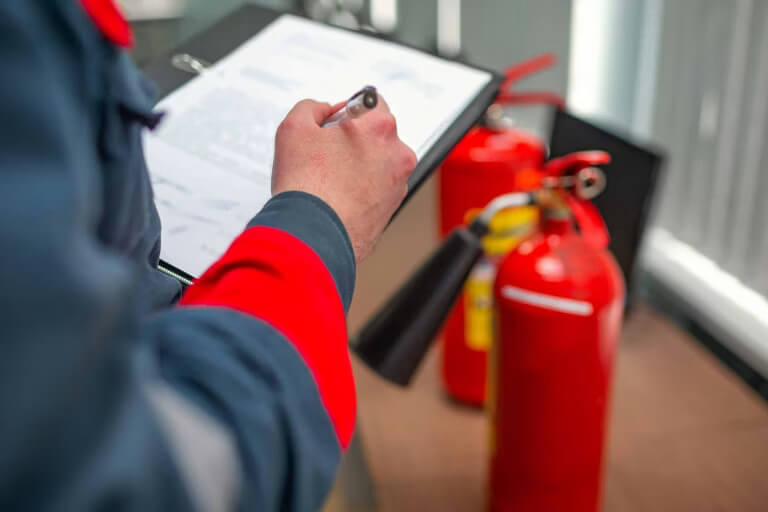
The Responsible Person must take general fire precautions and manage fire safety in a way that protects relevant persons from fire risk.
- Carry out and record a suitable and sufficient fire risk assessment
- Review and update the assessment when needed
- Record fire safety arrangements
- Implement appropriate fire safety measures
- Maintain fire precautions in efficient working order
- Provide information, instruction and training where required
- Plan for emergencies and evacuation
- Cooperate and coordinate with other duty holders
- Share relevant fire safety information where required
- Keep evidence of checks, servicing, remedial actions and reviews
Do Fire Risk Assessments Have to Be Written Down?
Yes. Following Section 156 of the Building Safety Act 2022, Responsible Persons must record their completed fire risk assessment in full and record their fire safety arrangements where the Fire Safety Order applies.
This replaced the older, more limited position where recording was commonly described in relation to five or more employees, licensing or alterations notices. Older wording should no longer be relied on for current compliance content.
Responsible Person vs Competent Person
The Responsible Person is the duty holder. A competent person is someone appointed to help with fire safety tasks, such as carrying out a fire risk assessment, reviewing fire doors, advising on evacuation arrangements or checking compliance records.
| Role | Meaning |
|---|---|
| Responsible Person | Has legal responsibility for fire safety in premises or areas under their control. |
| Competent Person | Has suitable training, knowledge, experience and ability to help carry out specific fire safety tasks. |
The Responsible Person can appoint competent support, but they should still make sure the work is suitable, actions are understood and significant findings are acted on.
Can Fire Safety Duties Be Delegated?
Fire safety tasks can be delegated, but legal accountability cannot simply be handed away. A landlord, employer, owner or management company may instruct a managing agent, assessor or contractor to help, but the duty holder must still take reasonable steps to ensure fire safety is properly managed.
This is why contracts, management agreements, appointment records and evidence of completed actions matter. They help show who controls what, who was appointed, and what was done in response to identified risk.
In shared premises, there may be more than one Responsible Person. This is common in multi-let offices, shopping centres, mixed-use buildings, industrial estates and residential blocks with commercial units.
Each duty holder must cooperate and coordinate with the others so the whole building remains safe. For example, a tenant may control their own unit, while the landlord or managing agent controls common escape routes, plant rooms, fire alarm maintenance or shared fire safety systems.
Responsible Persons in Residential Buildings
In multi-occupied residential buildings, fire safety duties usually apply to common parts and relevant parts of the building covered by the Fire Safety Order. The Fire Safety Act 2021 clarified that, for buildings containing two or more domestic premises, the structure, external walls and flat entrance doors must be considered where relevant.
In England, the Fire Safety (England) Regulations 2022 introduced additional operational duties for certain residential buildings, including resident information, fire door information, fire door checks in buildings over 11 metres, and additional requirements for high-rise residential buildings.
See also our guides for managing agents, block managers and housing associations.
Accountable Person vs Responsible Person
In higher-risk residential buildings, Building Safety Act duties may also apply to Accountable Persons and the Principal Accountable Person. These are separate legal roles from the Responsible Person under the Fire Safety Order, but in some buildings the same organisation may hold more than one role.
Where both regimes apply, building safety information should be coordinated so fire risk assessments, resident engagement, golden thread information, safety case information and ongoing fire safety management are aligned.
What Happens If the Responsible Person Does Not Comply?
Fire and rescue authorities can inspect premises and take enforcement action where duties are not met. This may include alterations notices, enforcement notices, prohibition notices, prosecution, fines and, in serious cases, imprisonment.
Common issues include no fire risk assessment, outdated assessments, poor action tracking, blocked escape routes, defective fire doors, poor records, lack of maintenance evidence and failure to coordinate in shared buildings.
How Fire Risk Assessment Network Can Help
Fire Risk Assessment Network can help Responsible Persons arrange suitable fire risk assessments, reviews and related compliance support for commercial, residential and mixed-use premises. We can also help duty holders understand when further support may be needed for fire doors, evacuation plans, emergency lighting, fire alarm systems, compartmentation or enforcement concerns.
Need Help With Responsible Person Duties?
If you are unsure whether you are responsible, whether your fire risk assessment is current, or what actions you need to take next, Fire Risk Assessment Network can help arrange suitable fire safety support.
Frequently Asked Questions
Who is classed as the Responsible Person under fire safety law?
The Responsible Person is normally the employer, owner, landlord, occupier or person with control of the premises or common parts. In some buildings, more than one person or organisation may have duties.
Can there be more than one Responsible Person?
Yes. Shared and multi-occupied buildings often have more than one Responsible Person. Duty holders must cooperate, coordinate and share relevant fire safety information.
Can the Responsible Person delegate fire safety duties?
The Responsible Person can appoint competent people to help with fire safety tasks, but legal accountability cannot simply be delegated away.
Does the Responsible Person need a written fire risk assessment?
Yes. Responsible Persons must record the completed fire risk assessment in full and record their fire safety arrangements where the Fire Safety Order applies.
Is a managing agent the Responsible Person?
A managing agent may be the Responsible Person where they have control of common parts, maintenance, management or fire safety arrangements. The answer depends on the management agreement and practical control.
What happens if the Responsible Person fails to comply?
Failure to comply can lead to enforcement notices, prohibition notices, prosecution, fines and, in serious cases, imprisonment.
Last updated