Emergency lighting plays a critical role in protecting occupants when normal lighting fails, whether due to a power cut, fire, or other emergency. A sudden loss of lighting can leave people disorientated, increase the risk of injury, and hinder safe evacuation.
As a landlord, managing agent, employer, or other duty holder, you have a legal responsibility to ensure that suitable emergency lighting is provided, maintained, and tested where required.
Emergency lighting is not optional where it is required to support safe evacuation. It forms part of a building’s fire safety arrangements and must be appropriate to the premises, its use, and the people who may need to evacuate. The requirement for emergency lighting, and the type provided, should be determined through a suitable and sufficient fire risk assessment.
This guide explains the current legal requirements for emergency lighting in the UK, how British Standards apply, and what Responsible Persons need to do to remain compliant.
Contents
- 1 Emergency Lighting Explained
- 2 Emergency Lighting Regulations in the UK
- 3 British Standards for Emergency Lighting
- 4 Types of Emergency Lighting
- 5 Standby Lighting
- 6 Emergency Lighting Power Supply Types
- 7 Maintained and Non-Maintained Emergency Lighting
- 8 Emergency Lighting Duration Requirements
- 9 Emergency Lighting Placement Requirements
- 10 Emergency Lighting Brightness Levels
- 11 Testing and Maintenance of Emergency Lighting
- 12 Why Emergency Lighting Is Important
- 13 Conclusion
- 14 Frequently Asked Questions
- 14.1 What Is Emergency Lighting?
- 14.2 Is Emergency Lighting a Legal Requirement in the UK?
- 14.3 Who Is Responsible for Emergency Lighting Compliance?
- 14.4 How Is the Need for Emergency Lighting Determined?
- 14.5 What British Standards Apply to Emergency Lighting?
- 14.6 How Long Must Emergency Lighting Stay On During a Power Failure?
- 14.7 How Often Does Emergency Lighting Need to Be Tested?
- 14.8 Does Emergency Lighting Need to Be Reviewed?
Emergency Lighting Explained
Emergency lighting is lighting that operates automatically when the normal mains power supply fails. Its purpose is to enable occupants to safely evacuate a building or reach a place of relative safety.
Emergency lighting systems are designed to:
- Illuminate escape routes and exits
- Reduce panic during power failure
- Support safe movement within the building
- Assist Fire and Rescue Service operations
Emergency Lighting Regulations in the UK
The legal requirement for emergency lighting is set out under Article 14 of the Regulatory Reform (Fire Safety) Order 2005, which requires that:
“Emergency routes and exits must be indicated by signs, and emergency routes and exits requiring illumination must be provided with emergency lighting of adequate intensity in the event of failure of the normal lighting.”
Responsibility for compliance rests with the Responsible Person, which may include:
- Employers
- Building owners
- Landlords
- Managing agents
- Anyone with control over the premises
Emergency lighting requirements must be identified, recorded, and reviewed as part of the fire risk assessment process.
 British Standards for Emergency Lighting
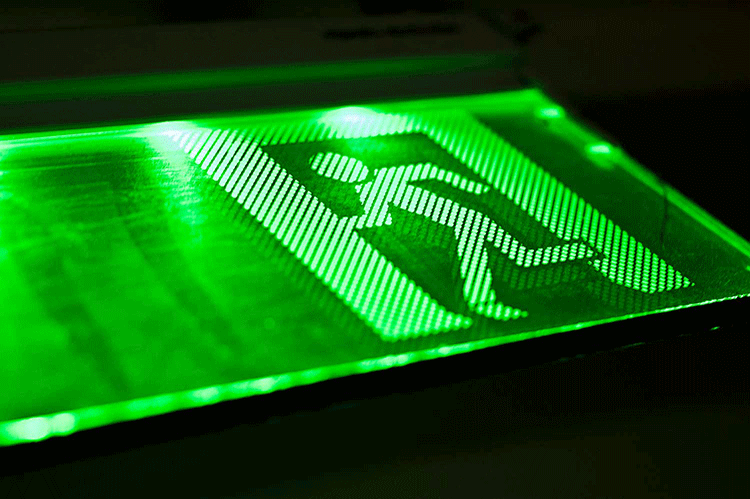 British Standards for Emergency Lighting
While legislation sets the duty, British Standards provide recognised guidance on how emergency lighting should be designed, installed, and maintained.
The primary standards include:
- BS 5266-1 – Code of practice for emergency lighting
- BS EN 50172 / BS 5266-8 – Emergency escape lighting systems (testing and maintenance)
These standards apply to a wide range of premises, including:
- Offices and workplaces
- Residential buildings
- Schools and colleges
- Hospitals and care homes
- Hotels and licensed premises
- Shops, museums, and public buildings
British Standards represent minimum requirements. Higher specifications may be necessary depending on risk, occupancy, or building complexity.
Types of Emergency Lighting
Emergency Escape Lighting
Emergency escape lighting is the part of the system provided to ensure occupants can safely evacuate or reach a place of safety.
It is subdivided into:
Escape Route Lighting
- Illuminates defined escape routes
- Includes emergency bulkheads and illuminated exit signs
- Ensures routes can be safely followed
Open Area (Anti-Panic) Lighting
- Reduces panic in open spaces
- Enables occupants to locate escape routes
High-Risk Task Area Lighting
- Allows dangerous processes to be shut down safely
- Used where sudden darkness could present a serious risk
Standby Lighting
Standby lighting enables normal activities to continue during power failure.
Standby lighting is not a legal requirement under fire safety legislation and is typically provided for business continuity rather than life safety.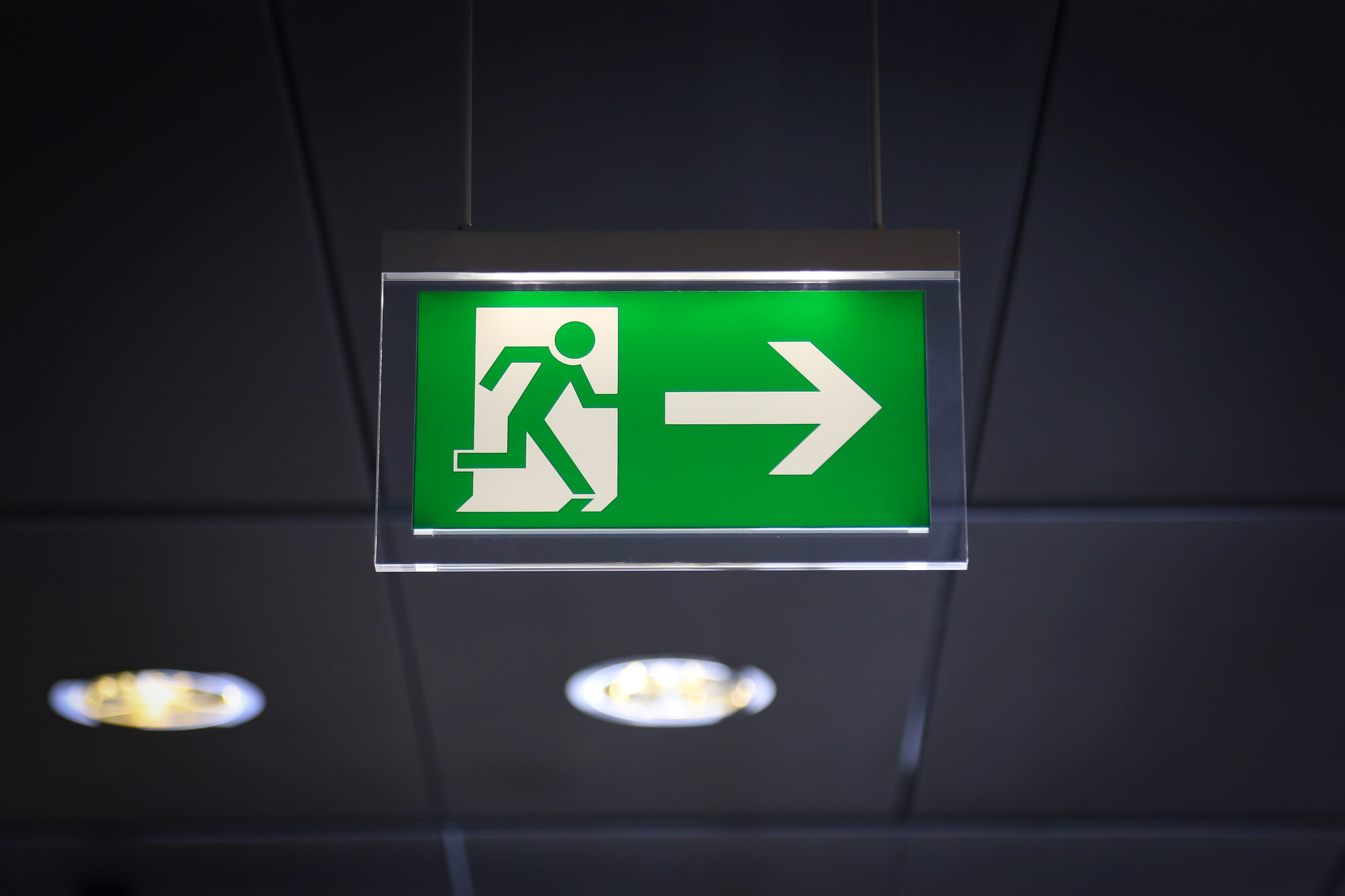
Emergency Lighting Power Supply Types
Emergency lighting systems are commonly powered by:
Self-Contained (Single Point) Luminaires
- Individual luminaires with integral batteries
- Easier and cheaper to install
- Batteries affected by local conditions
Central Battery Systems
- Centralised power source
- Easier monitoring and testing
- Higher installation cost
The choice of system should be justified by the fire risk assessment.
Maintained and Non-Maintained Emergency Lighting
Maintained Emergency Lighting
- Remains illuminated at all times
- Switches to battery power during mains failure
- Common in cinemas, theatres, bars, and public venues
Non-Maintained Emergency Lighting
- Illuminates only when mains power fails
- Common in offices and workplaces
- Must operate for the required duration
Emergency Lighting Duration Requirements
Emergency lighting systems must remain illuminated for a minimum period depending on building use.
- Minimum duration: 1 hour – Where occupants evacuate immediately and do not re-enter
- Minimum duration: 3 hours – Where occupants may remain in the building or re-enter
The required duration must be justified within the fire risk assessment.
Emergency Lighting Placement Requirements
Emergency lighting should be positioned to illuminate:
- Escape routes and exits
- Changes in direction
- Stairways and changes of level
- Fire alarm call points
- Fire-fighting equipment, such as fire extinguishers
- First aid points
The positioning of luminaires and signage must ensure occupants can clearly identify escape routes.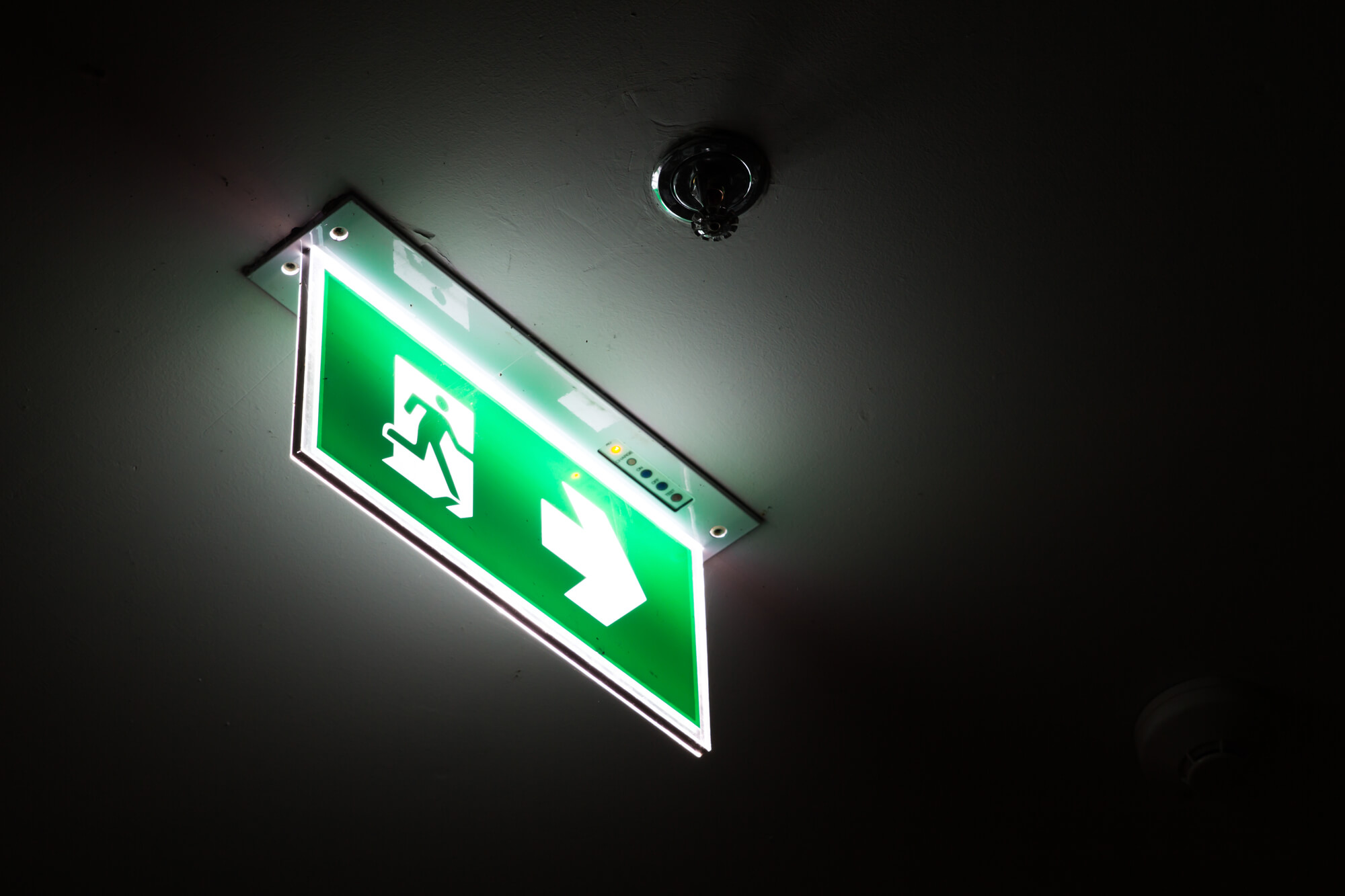
Emergency Lighting Brightness Levels
BS 5266-1 recommends:
- Minimum 1 lux along the centre line of escape routes
- Minimum 0.5 lux for open areas (anti-panic lighting)
Illumination levels should reflect:
- Occupancy type
- Building use
- Risk profile
Testing and Maintenance of Emergency Lighting
Emergency lighting must be tested and maintained to ensure it will operate when required.
Testing Frequencies
- Daily – Visual checks of central power indicators (where applicable)
- Monthly – Functional tests to ensure luminaires operate
- Annually – Full duration discharge test
All tests must be recorded, and defects must be rectified promptly.
Why Emergency Lighting Is Important
Emergency lighting:
- Reduces risk of injury
- Supports safe evacuation
- Prevents panic during power failure
- Forms a key part of legal fire safety compliance
Failure to provide adequate emergency lighting may result in enforcement action.
Conclusion
Emergency lighting is a legal requirement where necessary to support safe evacuation. The need for emergency lighting, its design, duration, and maintenance must be determined through a suitable and sufficient fire risk assessment.
At Fire Risk Assessment Network, we support building owners, landlords, and managing agents with competent fire risk assessments, regulatory guidance, and practical fire safety solutions.
Correctly specified and maintained emergency lighting helps protect life, supports compliance, and ensures safe evacuation in an emergency.
Frequently Asked Questions
What Is Emergency Lighting?
Emergency lighting is lighting that operates automatically when the normal mains power supply fails. Its purpose is to enable occupants to safely evacuate a building or reach a place of relative safety during an emergency.
Is Emergency Lighting a Legal Requirement in the UK?
Yes. Emergency lighting is a legal requirement where necessary to support safe evacuation. The duty arises under the Regulatory Reform (Fire Safety) Order 2005 and must be assessed and recorded within the fire risk assessment.
Who Is Responsible for Emergency Lighting Compliance?
The responsibility lies with the Responsible Person. This is usually the employer, building owner, landlord, managing agent, or anyone with control of the premises.
How Is the Need for Emergency Lighting Determined?
The need for emergency lighting is determined through a fire risk assessment. The assessment considers building layout, occupancy, escape routes, and fire safety measures to establish whether emergency lighting is required and to what extent.
What British Standards Apply to Emergency Lighting?
The primary standards are BS 5266-1, which covers emergency lighting design and installation, and BS EN 50172 / BS 5266-8, which cover testing, inspection, and maintenance.
How Long Must Emergency Lighting Stay On During a Power Failure?
Emergency lighting must remain illuminated for:
- At least 1 hour where occupants evacuate immediately and do not re-enter, or
- At least 3 hours where occupants may remain in the building or re-enter after power is restored
The required duration must be justified by the fire risk assessment.
How Often Does Emergency Lighting Need to Be Tested?
Emergency lighting should be:
- Checked daily where central power supplies are used
- Functionally tested monthly
- Fully duration tested annually
All tests must be recorded, and faults must be rectified promptly.
Does Emergency Lighting Need to Be Reviewed?
Yes. Emergency lighting arrangements should be reviewed regularly as part of the fire risk assessment process, particularly if there are changes to the building, occupancy, use, or fire safety systems.